

Minister: Harapan Kita Hospital Achieves Financial Independence and BPJS Patient Subsidies
-
News
-
10 minutes ago
This article was translated by AI. Read the original article on Kompas.com. See Original
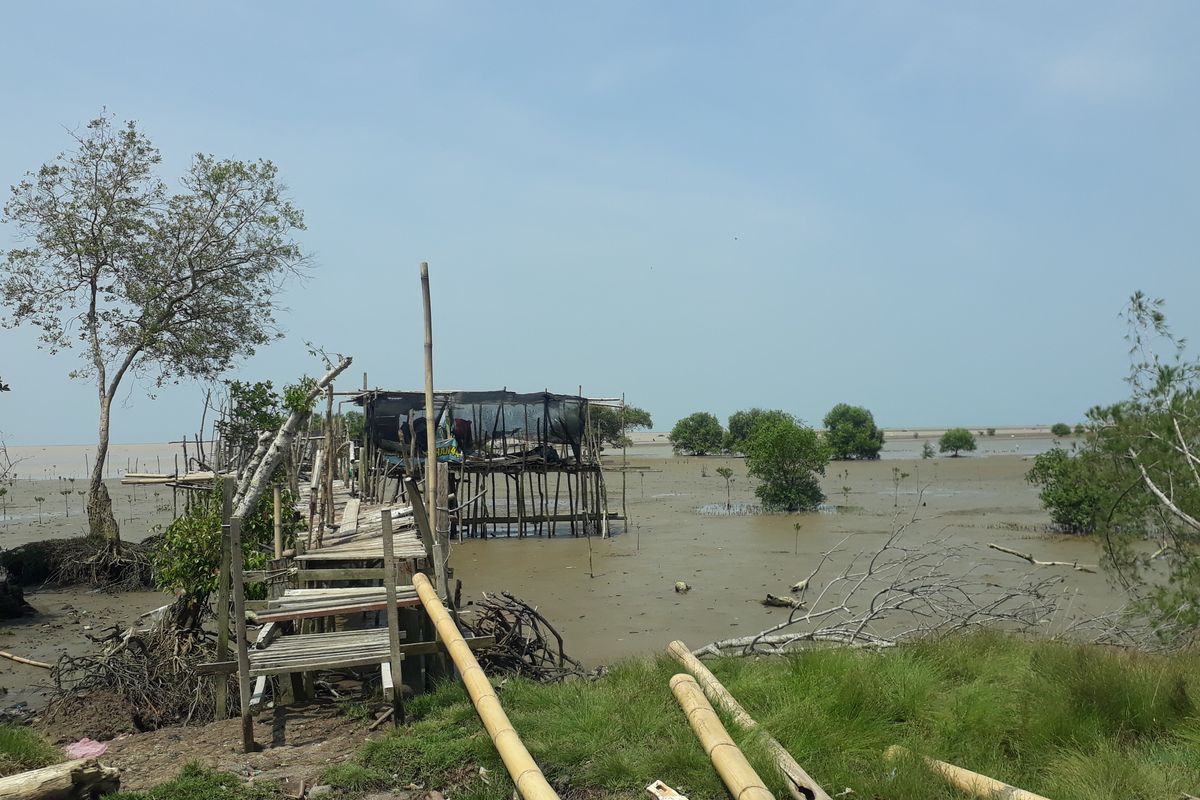
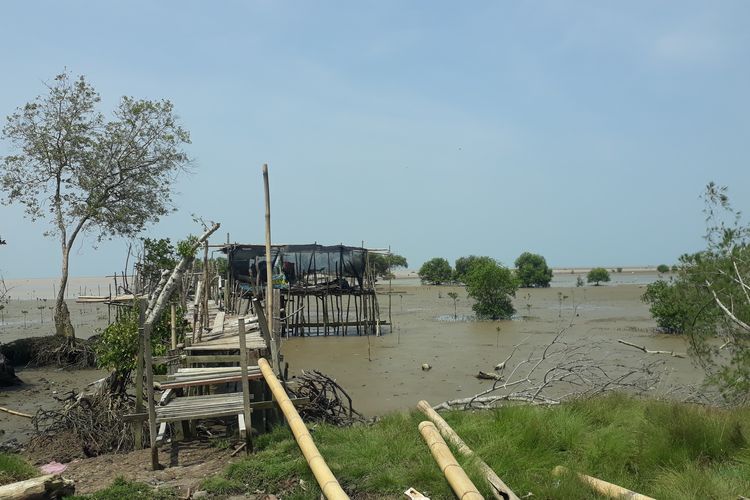
MEDAN, KOMPAS.com - Poniati and Sukamto, two among dozens of residents, succeeded in resisting an oil palm corporation that had taken over protected forest land on the coastal area of Sei Tuan Village, Pantai Labu District, Deli Serdang Regency, North Sumatra.
The 28-hectare land is now managed by Poniati and Sukamto through the independent Farmers and Fishermen Group (Kelompok Tani Nelayan or KTN Mandiri), which was officially recognized by the government in 2018, following a prolonged conflict with the company.
To this day, they continue protecting the area by replanting mangrove trees. Moreover, the 27 members of KTN Mandiri hope this will become an enterprise to support their family livelihoods.
Poniati (61), who has lived in the area for over 35 years—long before the oil palm company took control—recalled the night clashes between residents and thugs during the conflict, which even resulted in fatalities. They were unable to work during that period.
“We couldn’t go to the sea to catch crabs, fish, or anything because they forbade us to enter the area,” Poniati tearfully recalled during an interview after the M4CR PPIU North Sumatra Media Visiting event at the mangrove nursery in Sei Tuan Village on Thursday (17/9/2026).
The Mangroves For Coastal Resilience Project (M4CR) Provincial Project Implementation Unit (PPIU) North Sumatra is part of a national mangrove rehabilitation program organized at the provincial level.
“Unable to go to the sea, my husband and I lost our jobs. We ended up selling four cattle just to buy rice and other necessities,” Poniati added, noting that her husband sometimes stayed away overnight, guarding alongside other villagers.
Decades of struggle finally paid off. They regained access to the area and were granted management rights, although the mangrove forest had been cleared and replaced with oil palm plantations. Consequently, crabs, fish, and shrimp became scarce, forcing fishermen to row boats further out to sea.
The hard work of Poniati and Sukamto is far from over as they continue to find ways to restore the mangrove forest, aiming to bring back the natural habitat for crabs, fish, and shrimp closer to the community.
“Four years after 2018, I started learning to plant mangrove seedlings. That’s my ongoing pursuit, while my husband goes out to sea,” said Poniati, who is raising six grandchildren with her husband.
She explained that mangrove seedlings can only be sold after 1.5 years, at prices ranging from Rp 2,000 to Rp 2,500 per polybag. The seedlings are also purchased by M4CR PPIU North Sumatra to be replanted in Sei Tuan Village.
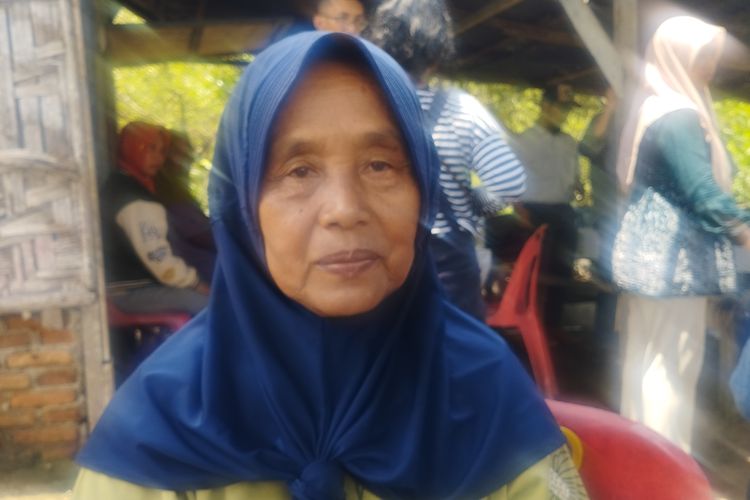 Poniati shares about the life of residents living on the coastal area in Sei Tuan Village, Pantai Labu District, Deli Serdang Regency, North Sumatra, Thursday (17/9/2026).
This routine continues as a source of income to cover daily needs for her grandchildren and husband. However, buyers are not always available, sometimes requiring months to sell the seedlings.
Additionally, Poniati has to consider her grandchildren’s school expenses, which her mangrove nursery efforts alone cannot fully support. She and her group truly depend on mangrove conservation for their livelihoods.
They are still waiting for the government’s promise to develop programs producing batik and coffee using mangrove-based materials.
“Many of the women here pin their hopes on the mangroves,” Poniati said, adding that some mangroves have grown large.
Sukamto (58), Chairman of KTN Mandiri, and his colleagues have shown great care for the coastal area by restoring mangrove forests.
He shared that approximately 60 hectares of former oil palm plantations have been converted back into mangrove forests, with another 28 hectares currently being planted.
The planting process is assisted and guided by the Ministry of Forestry through M4CR PPIU North Sumatra.
“Up till now, M4CR has been present to accompany and mentor us. Since 2024, we have planted a total of 101,640 seedlings on those 28 hectares. Because of this success, we might receive grant funding later,” Sukamto said.
During planting, KTN Mandiri members receive daily wages under a 50-day contract from M4CR, which are directly transferred to their personal accounts.
Regarding maintenance, they continuously monitor the plants for pest infestations, such as by the soft crab (commonly called Cuyu), which damages young seedlings by eating their leaf tips.
“If any seedlings are damaged, we replant them. All work is voluntary and self-funded,” Sukamto explained.
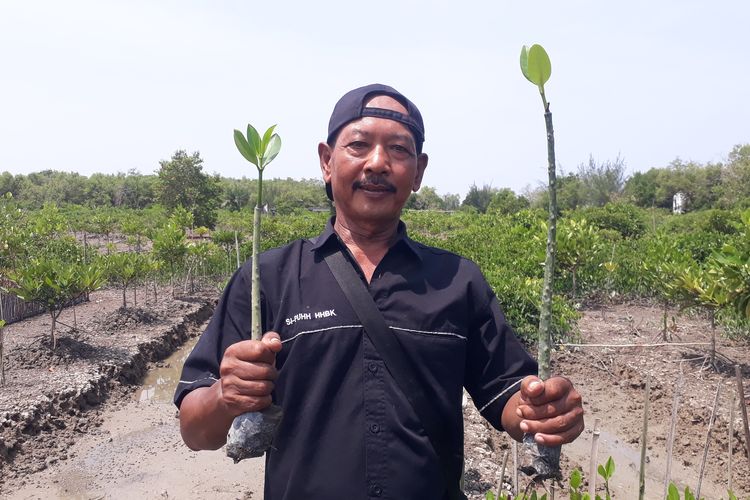 Chairman of the independent Farmers and Fishermen Group (KTN Mandiri), Sukamto, holds mangrove seedlings ready for planting on the coastal area in Sei Tuan Village, Pantai Labu District, Deli Serdang Regency, North Sumatra, Thursday (17/9/2026).
Through this program, KTN Mandiri members have found new hope as it provides profitable work, benefiting not only ecological sustainability but also economic livelihood—especially since not all villagers have permanent jobs.
The villagers noted that they can only catch crabs or fish during a 14-day period of high tide; outside that window, the tide is low, making it difficult to find seafood.
Monthly earnings average around Rp 2.5 million, which is considered very good.
“Yes, that's about the average. But once the mangroves grow bigger, we hope our income will increase,” Sukamto remarked.
Sei Tuan Village Head Parningotan Marbun also expressed that the farmers' group has been dedicated to environmental conservation and deserves attention from the President, North Sumatra Governor, and Deli Serdang Regent.
“I see that they are overlooked. Sometimes I hear household disputes due to the lack of daily income,” Parningotan said, attending the event.
He added that the group needs equipment to dig several ditches that could serve as habitats for crabs, fish, and shrimp during low tide, so they can continue to catch seafood to bring home.
So far, Parningotan has coordinated with both previous and current Deli Serdang Regents regarding providing such tools, but they require permits from the Ministry of Forestry or its representatives in North Sumatra.
“In your condition, even earning Rp 1 million is not possible, meaning you live below the poverty line. So I hope for attention so they can at least bring home one or two kilograms of rice,” Parningotan emphasized.
Meanwhile, PPIU Manager Reza Nasution stated that M4CR works with KTN Mandiri on mangrove rehabilitation, improving coastal community livelihoods, and social sustainability.
Rehabilitation is necessary because the government has observed increasing coastal erosion across Indonesia’s shores.
“That is why we need measures to regrow mangroves,” Reza said.
Additionally, the project aims to enhance economic potential, including crab farming and goat breeding, through financial support. Sustainability is also key to fostering community environmental awareness.
He added that the M4CR project operates in four provinces: North Sumatra, Riau, East Kalimantan, and North Kalimantan. In North Sumatra, it covers six regencies: Langkat, Deli Serdang, Serdang Bedagai, Batubara, Asahan, and North Labuhanbatu.