

Prabowo Gathers Gerindra Cadres in Hambalang, Dasco and KDM Attend
-
News
-
2 hours ago
This article was translated by AI. Read the original article on Kompas.com. See Original
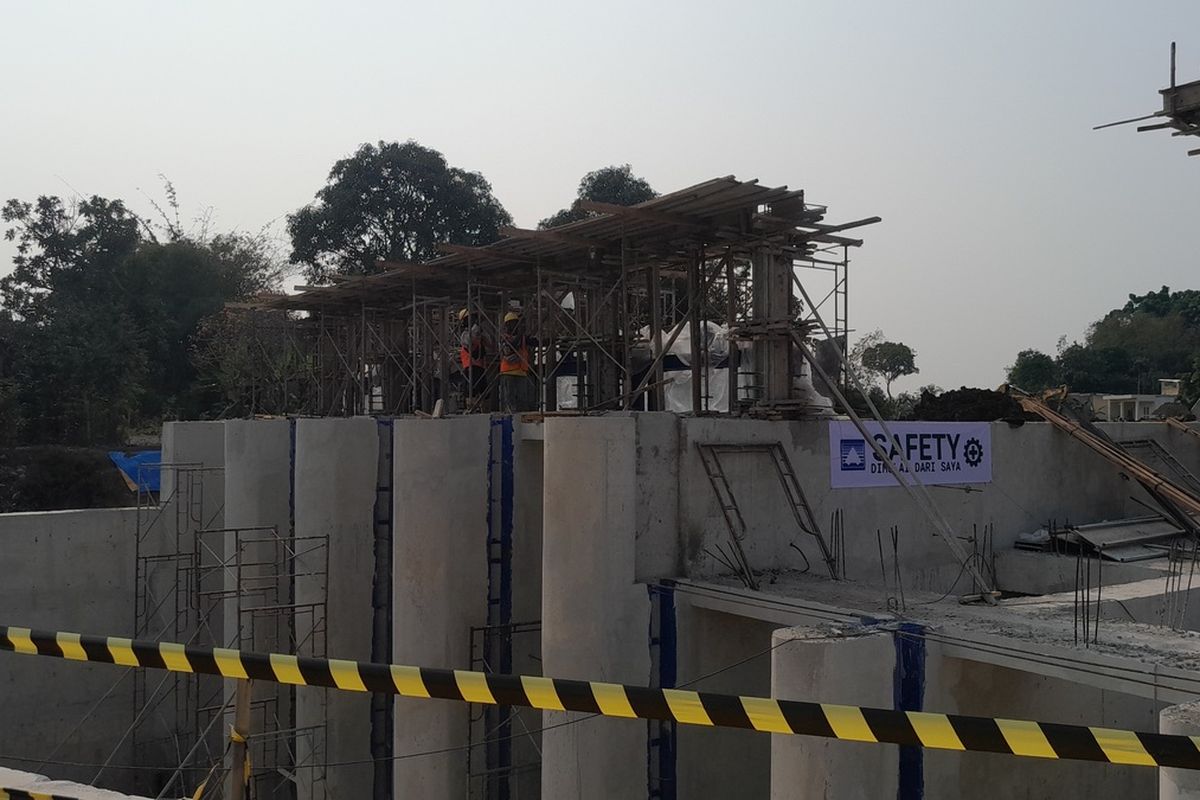
KARAWANG, KOMPAS.com - Deputy Speaker of the Indonesian House of Representatives Saan Mustopa highlighted the significant economic losses caused by flooding that has plagued the Karangligar area in Telukjambe Barat District, Karawang Regency, for years. At least 300 hectares of rice fields are affected by the floods.
Saan noted that with an average production of 7 tons of unhusked rice per hectare, around 2,100 tons of unhusked rice could be impacted whenever flooding occurs.
"A total of about 300 hectares. 300 hectares of rice fields are affected. If the average is just 7 tons per hectare, multiply by 300 hectares," Saan said during an inspection of the flood control pumping station in Karangligar on Friday (18/9/2026).
The losses increase further when factoring in the amount of milled rice lost due to crops failing to be harvested from prolonged flooding.
Saan also emphasized that the flooding issue in Karangligar is not only about material losses but also about the psychological burden on the community.
"This is more about commitment, support, and our willingness to free our people from all the burdens they endure," he stated.
According to Saan, residents of Karangligar and surrounding areas have struggled with flooding for decades.
In fact, based on information he received, floods in the area have persisted for around 25 years.
He compared the flooding in Karangligar with his own experience of flooding in northern Karawang. Floods in northern Karawang usually recede quickly, whereas in Karangligar, water can remain stagnant for months.
"Here, it’s flooded. One month, two months, it never clears up here. And in a year, it can happen four times," he explained.
He observed that flood management in Karangligar is starting to show progress. Infrastructure projects such as floodgates and pumping stations have reached about 80 percent completion, with a target to finish by October 2026.
Saan hopes all the work can be completed soon so that when the rainy season arrives, Karangligar will no longer be a perpetually flooded area.
"So the only thing left is addressing any issues that may arise. Hopefully, the next rainy season will see no more flooding in Karangligar," he said.
Director of Water Resources (SDA) at the Ministry of Public Works Arnold Aristoteles Paplapna Ritiauw explained several factors that make Karangligar prone to flooding.
One factor is the backwater phenomenon – the flow of water returning into Karangligar via drainage channels.