

Sugiono Ensures State Will Secure Future for Families of Fallen Karhutla Volunteers
-
News
-
56 minutes ago
This article was translated by AI. Read the original article on Kompas.com. See Original
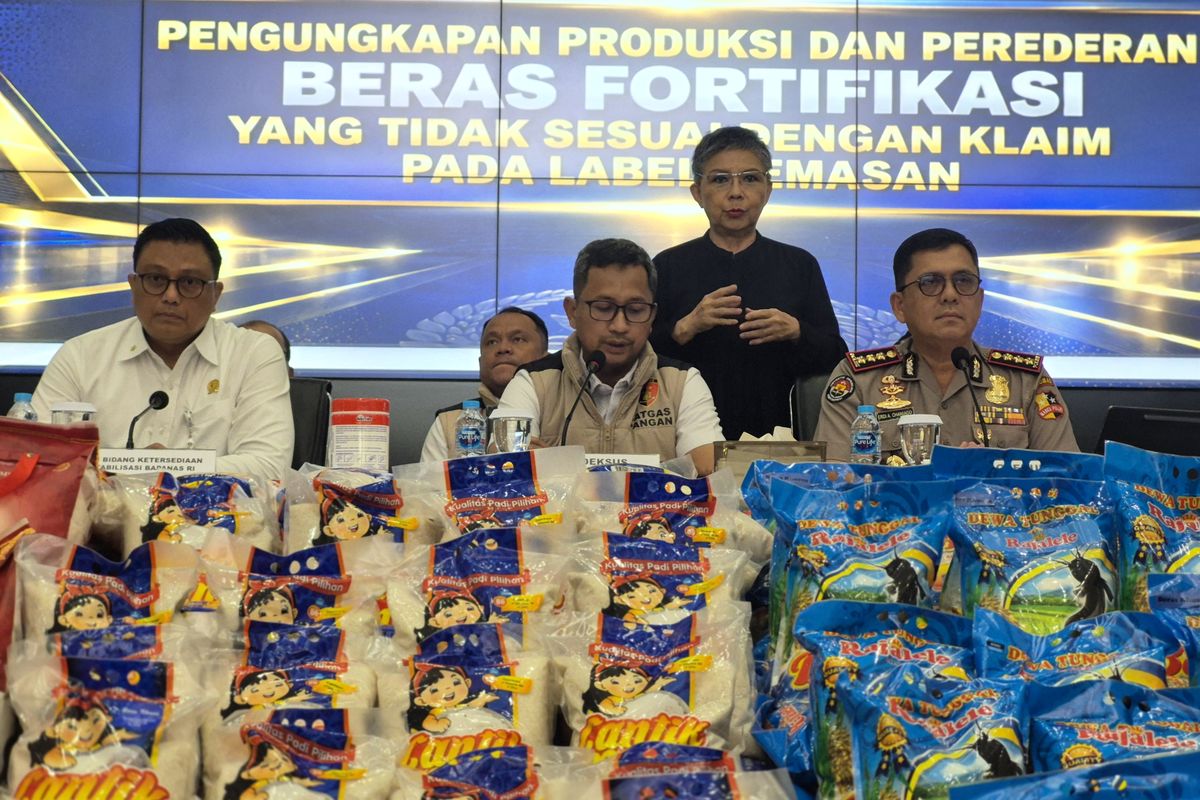
JAKARTA, KOMPAS.com - The National Food Agency (Bapanas) has discovered zinc levels in fortified rice that exceed 120 percent of the standard during laboratory examinations.
Hermawan, Deputy for Food Availability and Stabilization at Bapanas, stated that this finding is concerning due to the potential negative health effects of excessive zinc intake.
"We need to inform you that the recent laboratory results showed that zinc levels, particularly zinc, exceeded 120 percent. The normal intake should be only 40 milligrams of zinc per day for a healthy individual," said Hermawan during a press conference at the National Police Headquarters in Jakarta on Wednesday (21/10/2026).
He explained that excessive zinc in the body can trigger various symptoms in a short period, including nausea, vomiting, abdominal pain, diarrhea, and dizziness.
Meanwhile, continuous high-dose zinc consumption can hinder copper absorption in the body.
"What are the consequences of excess zinc? In a short time, it can cause nausea, vomiting, abdominal pain, diarrhea, and dizziness," Hermawan stated.
"Also, if the dosage is truly high and consumed continuously, it can inhibit copper absorption, leading to anemia, tingling, numbness, and other balance disorders," he added.
Hermawan praised the swift actions taken by the National Police’s Criminal Investigation Agency (Bareskrim Polri) in uncovering suspicions surrounding the circulation of fortified rice with non-compliant content.
Previously, Bareskrim Polri had been investigating allegations of consumer protection violations concerning the production and trade of fortified rice, which purportedly did not conform to the nutritional claims on packaging.
Director of Special Economic Crimes at Bareskrim Polri, Kombes Suhasto, reported that laboratory tests on samples from five brands of fortified rice indicated discrepancies in quality and nutritional content compared to the information provided on the packaging.
"Samples from the five brands were collected by officers from Bapanas (National Food Agency) RI, which has certification, and underwent laboratory testing that showed that the quality and nutritional content of these five brands do not meet the label claims," said Suhasto.
The five brands in question are Idola Hijau Fortifikasi, Idola Merah Fortifikasi, Raja Lele, Cantik Manis, and Wijaya Kusuma.
In light of these findings, the National Food Agency (Bapanas) reported the matter to Bareskrim Polri for legal processing.
Investigators subsequently elevated the case from investigation to prosecution after finding at least two pieces of evidence.
"Bareskrim Polri investigators have questioned 12 witnesses, including the reporter, who is from Bapanas RI; the Director of PT DTA; and the Head of Production at PT DTA," he explained.