
Government Invites Public to Monitor the Filling of Vice President Position to Replace Gibran
-
News
-
3 minutes ago
This article was translated by AI. Read the original article on Kompas.com. See Original
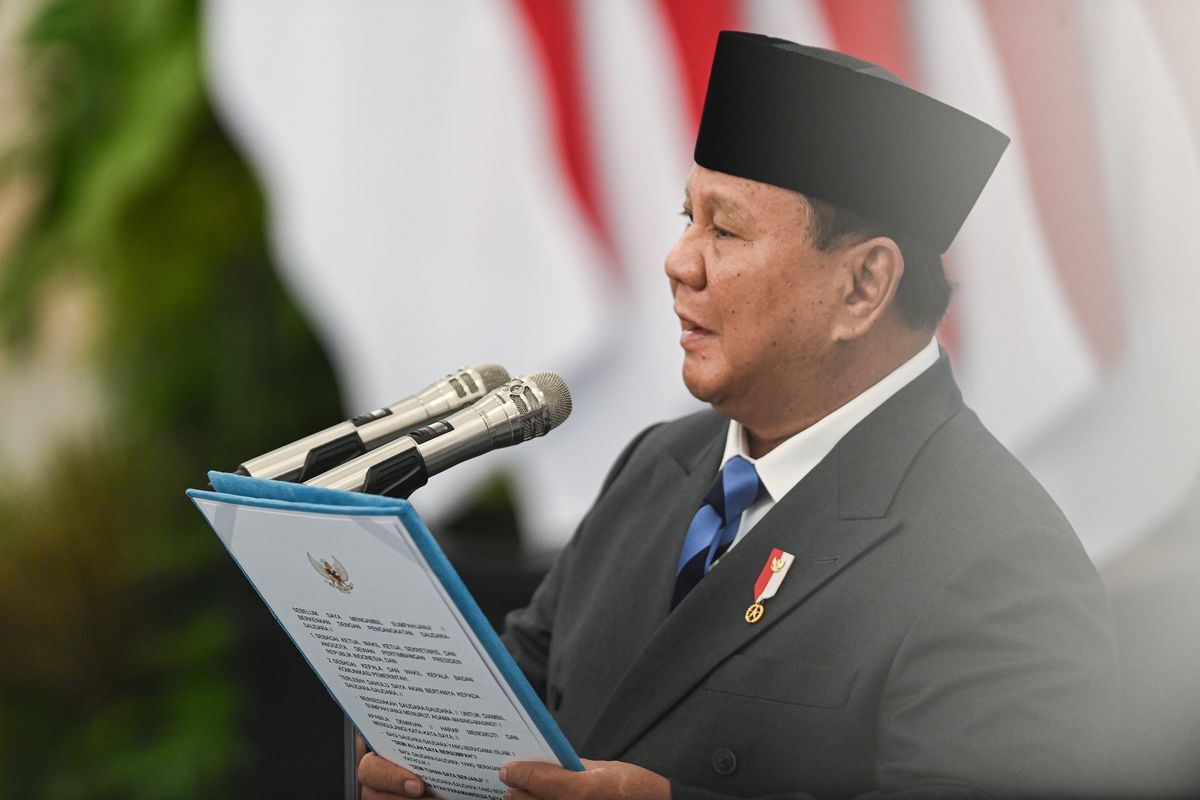
NOT LONG after the Election Bill Working Committee (Panja RUU Pemilu) was formed, political parties voiced their support for President Prabowo Subianto to run again in the presidential and vice-presidential elections in 2029.
The Golkar Party struck the drum through one of its deputy chairpersons.
Before long, like a choir, the deputy chairpersons of the National Awakening Party (PKB) and the National Mandate Party (PAN) took similar steps.
Even PAN's deputy chairman, Viva Yoga Mauladi, nudged his coalition partners.
"What needs to be questioned are those parties that are still undecided, still calculating, still on wait and see mode," said the PAN leader, who was appointed as the Deputy Minister of Transmigration (detik.com, 12/10/2026).
What is going on? Although the 2029 elections are still far away, why are political parties already affirming a two-term bid for Prabowo?
On the other hand, why are the parties signaling a distancing from Gibran Rakabuming Raka?
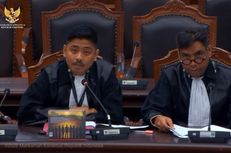
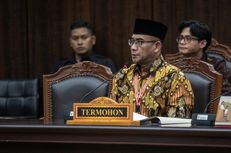
The answer to the last question is quite simple. The education credentials of Gibran, which have been addressed by the Constitutional Court, have made political parties keep a safe distance from him, the current vice president.
The Constitutional Court did not disqualify Gibran, but its ruling has become a loose ball.
The history of vice presidents during the Reformation era has also not favored the second-in-command.
This also holds true for Jusuf Kalla, vice president during Susilo Bambang Yudhoyono's era, who was considered successful.
Even as the second man, JK's (2004-2009) actions captivated the public: from leading the policy shift from kerosene to liquefied petroleum gas to mediating in Aceh.
With that credit, JK ran for the 2009 presidential election 'reluctantly.'
Initially intending to continue in the two-term position with SBY, his duet partner instead chose another figure, Boediono, as his vice presidential candidate.
The conclusion of JK's bid for the 2009 presidential election was partnering with Wiranto. However, this pair, along with the Megawati Soekarnoputri-Prabowo Subianto duo, lost to SBY-Boediono.
With questions surrounding Gibran's high school-equivalent diploma—and the discourse of impeachment against him growing—it is quite difficult for Gibran to turn the tide. His legitimacy has dwindled.
Spotlight for him seems nearly impossible to overshadow the nation's captain (RI 1).
If he does not get ousted or stays safe from encroachments by parties in the DPR, in my opinion, Gibran will most likely only be competing for the vice presidential slot in the upcoming 2029 election.
Meanwhile, Prabowo, like SBY and Joko Widodo in the past, is steering the ship towards the 2029 election.
It is logical and necessary for Golkar, PKB, and PAN to assert their stance early—while the administration is still in its second year.
There are several possibilities. First, the three political parties do not have cadres deemed suitable to be promoted as presidential candidates for the 2029 election.