
A Series of Rebuttals by Former KPU Chairman on the Article Enabling Gibran's Candidacy in the 2024 Presidential Election
-
News
-
5 minutes ago
This article was translated by AI. Read the original article on Kompas.com. See Original

JAKARTA, KOMPAS.com - The number 11 has emerged in discussions regarding the addition of seats in the House of Representatives (DPR) to enhance the representation of the people's voices in the 2029 elections. Where does this number 11 come from?
The proposal to add 11 seats in the DPR has come to the forefront within discussions on the revision of the Election Law.
This suggestion arose during the first meeting of the Working Committee (Panja) on the Draft Election Law held behind closed doors on Thursday (8/10/2026).
While linked to strengthening representation, the addition of DPR members is not seen as a panacea for political representation issues.
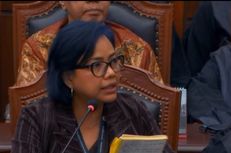
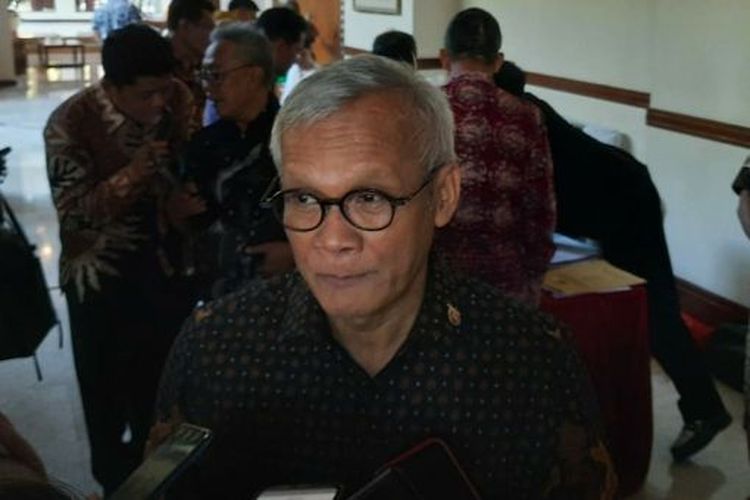
"Adding seats in the DPR should not be considered a solution to the problem of political representation," said the Director of the Democracy and Electoral Empowerment Partnership (DEEP) Indonesia, Neni Nur Hayati, to Kompas.com on Saturday (10/10/2026).
Neni Nur Hayati believes that the addition of seats should be based on academic studies and data that indicate a genuine issue in the distribution of representation.
According to Neni, such a policy could be justified only if there are significant demographic changes, a population growth that is not proportionally accommodated, or proven disparities in representation among electoral districts.
Conversely, without adequate studies, adding seats risks creating institutional burdens without addressing foundational issues.
She emphasized that any change in the number of seats should stem from a clear problem definition, rather than purely political interests.
Neni questioned what representation issues the addition of 11 seats aims to resolve.
The DPR and the government, she pointed out, need to clarify whether there are electoral districts that systematically experience a lack of representation or if some have a relatively excessive number of seats compared to their population.
Additionally, the origin of the number 11 must also be explained transparently.
"Why is the solution to add 11 seats? Where does that number come from, and what is the methodology behind it?" Neni asked.
Another question that needs answering is who would benefit most from this change.
The addition of seats should aim to improve representation of communities that have been underserved, rather than advantage certain regions that already possess stronger political bargaining positions.
Neni assessed that a larger number of parliament members does not automatically mean that community aspirations will be more accommodated.
According to her, the effectiveness of representation still relies on the legislative, oversight, and budgeting functions of DPR members.
One critical issue in the reorganization of electoral districts is to ensure that seat allocation does not produce disparities in the value of votes between different districts.
Neni explained that seat allocation should use the most current, verified population data that is publicly accessible.