
Government Invites Public to Monitor the Filling of Vice President Position to Replace Gibran
-
News
-
3 minutes ago
This article was translated by AI. Read the original article on Kompas.com. See Original
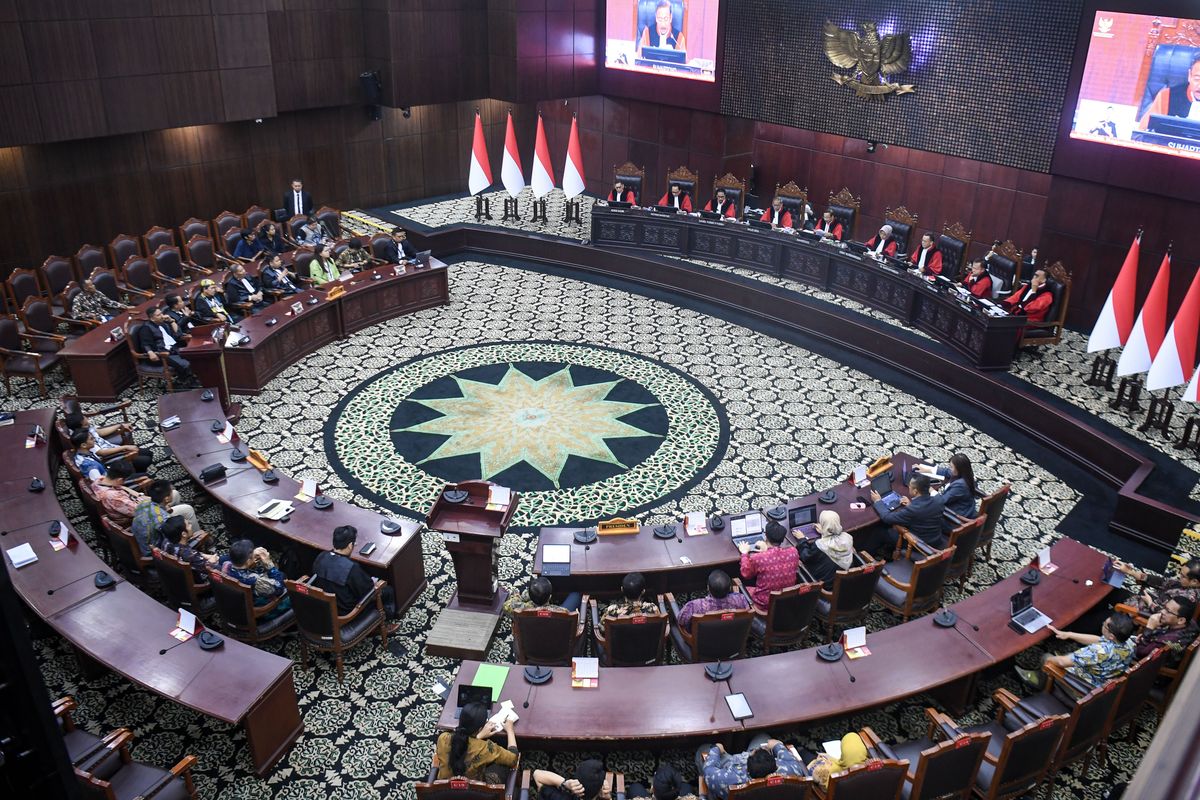
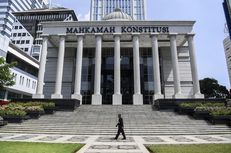
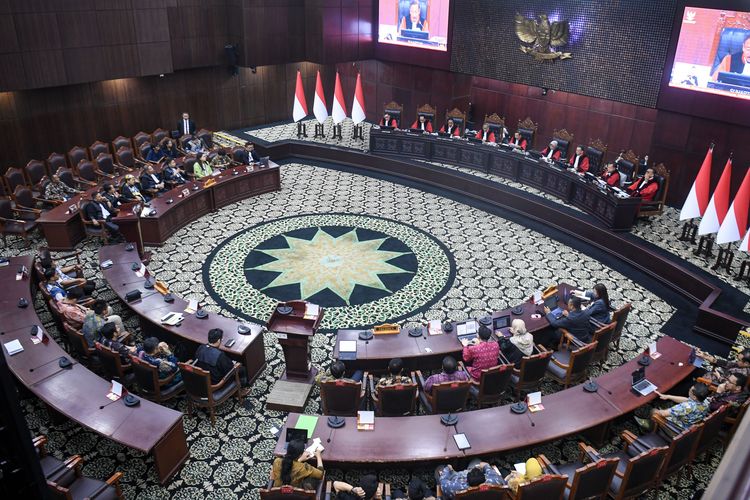
JAKARTA, KOMPAS.com - Constitutional Judge Arsul Sani emphasized that the education requirements for presidential and vice-presidential candidates (capres-cawapres) represent an open legal policy and fall under the authority of lawmakers.
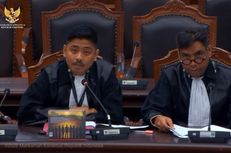
“The Constitutional Court has fundamentally established, at least in two rulings, that regulations regarding requirements, including Article 169 letter r, are an open legal policy," said Arsul during the hearing to review Article 169 letter r of the Election Law, case number 370/PUU-XXIV/2026, held on Thursday (8/10/2026).
Arsul explained that while open legal policies can be contested, it must be grounded on claims of violations of specific principles.
“For example, principles of morality, rationality, causing intolerable injustice, violating the principle of people's sovereignty, and so forth,” Arsul added.
He noted that these aspects were not reflected in the request for judicial review.
Arsul insisted that if the petitioners genuinely wish to challenge the article, there needs to be convincing arguments demonstrating that the aforementioned principles have been violated.
In this case, Arsul also questioned the constitutional harm suffered by the petitioners.
This is because the petitioners already possess high school diplomas, and the article does not prevent citizens with high school diplomas from becoming presidential or vice-presidential candidates.
“Since all of you have high school diplomas, what you should consider is where your constitutional loss lies with the enforcement of this provision?” Arsul asked.
The petitioners include Alfian Maulani, Syamsul Jahidin, Ria Merryanti, Dimas Yoga Pratama, and Kharisma Joemanta Soerbakti.
They argue that there are phrases in the article that introduce alternative interpretations, leading to legal uncertainty and violating Article 22D of the 1945 Constitution.
Consequently, the petitioners request a definitive interpretation from the Constitutional Court on the challenged article and ask to replace the phrase “or other equivalent schools” with “or senior high school or equivalent.”
They also request that the Constitutional Court amend the explanation of the article to state, “Equivalence in education with Senior High School is determined by the Government based on statutory regulations.”