

Assessing the High Logistics Costs of the Archipelago
-
News
-
20 minutes ago
This article was translated by AI. Read the original article on Kompas.com. See Original
JAKARTA, KOMPAS.com - Criminal law expert from Trisakti University, Abdul Fickar Hadjar, highlighted several weaknesses in the implementation of the juvenile justice system in Indonesia.
According to Fickar, the revisions to the Juvenile Justice System Law (UU SPPA) and the Child Protection Law need to be directed to ensure the objectives of justice and child protection are achieved.
"Generally, the weaknesses of a system, including the juvenile justice system, lie in the application of the system ideally. Therefore, changes to the system (UU SPPA and UU PA) should focus on facilitating the achievement of the goals of juvenile justice and child protection," Fickar told Kompas.com on Saturday (28/11/2026).
Fickar explained that one of the issues that needs attention is the suboptimal implementation of diversion.
Diversion refers to the transfer of resolving a child's case from the criminal justice process to an alternative resolution process.
Fickar stated that the implementation of diversion still faces several challenges, from law enforcement's understanding of restorative justice, lack of agreement among parties, to the low success rate of diversion in various regions.
In fact, this mechanism is a crucial instrument in the juvenile justice system to ensure that case resolution does not always end in criminal sentencing.
Aside from the diversion issue, Fickar noted that limited facilities and specialized human resources pose problems in the implementation of the juvenile justice system.
He cited the limited and uneven geographical distribution of certified juvenile judges, community supervisors at Correctional Centers (Bapas), Women and Child Protection Units (PPA), as well as children’s placement institutions like Social Welfare Organizing Institutions (LPKS) and Special Institutions for Children (LPKA).
"As a result, children are at risk of being placed in facilities that are not fully child-friendly," Fickar said.
Fickar also pointed out the trend of using detention and prison sentences in handling children's cases.
In practice, detention or prison sentences are still frequently applied in various cases, including theft and drug offenses.
He emphasized that the approach to children in conflict with the law should prioritize rehabilitation over punishment.
"There should be more emphasis on rehabilitation," he stated.
Another area needing improvement is child support and the protection of children's rights during legal proceedings.
Fickar mentioned that not all children in conflict with the law, whether as perpetrators or victims, receive adequate legal, psychological, and social support from the outset of the investigation.
Victimized children often face administrative hurdles and a lack of certainty in fulfilling their rights to recovery.
Furthermore, coordination among law enforcement agencies and relevant institutions also needs to be strengthened.
Fickar believes that differing understandings and weak coordination between the police, prosecutors, courts, Bapas, and social services can hinder the smooth handling of children's cases, including in data recording of cases.
He also raised concerns about the debate surrounding the norms and age limits for children within the criminal justice system.
This issue includes the age limit for children, criminal responsibility, age classification, and the balance between the best interests of the child and justice for victims.
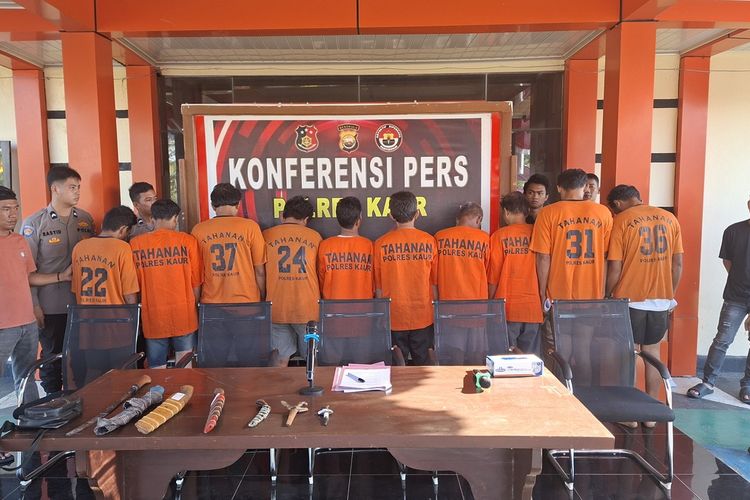 A group of minors on motorcycles were named suspects by Polresta Bengkulu some time ago.
Previously reported, Deputy Speaker of the DPR, Sufmi Dasco Ahmad, said that the DPR will soon push for the revisions of the Child Protection Law and the Juvenile Justice System Law.
Dasco mentioned that revising these two laws is necessary following a surge in bullying cases involving children, whether in schools, public spaces, or cyberspace.
"We will push for the immediate processing of the Child Protection Law and juvenile justice laws as quickly as possible," Dasco said during the International Children's Day celebration at the Parliament Complex, Senayan, Jakarta, on Friday (20/11/2026).
According to Dasco, the revision of both laws is urgently needed to improve the handling of bullying cases against children.
He also called on various parties, including schools, victims' families, child protection organizations, and student councils, to provide input to the Legislative Body (Baleg) of the DPR during the discussion process.
"In the making of any legislation, there should be public participation, and we hope that all parties, such as schools, student councils, victims' families, and child protection agencies, provide comprehensive feedback to the legislative body," said the Gerindra Party politician.

























