

Assessing the High Logistics Costs of the Archipelago
-
News
-
20 minutes ago
This article was translated by AI. Read the original article on Kompas.com. See Original
THERE is a case that, with increased attention, becomes increasingly unclear. The alleged wiretapping of President Prabowo Subianto is now demonstrating such a situation.
Almost every week, new names emerge, accompanied by narratives that are not completely connected to previous statements.
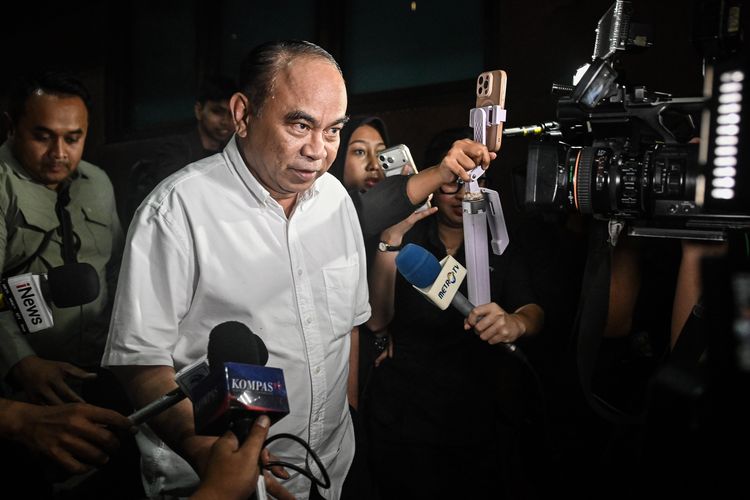
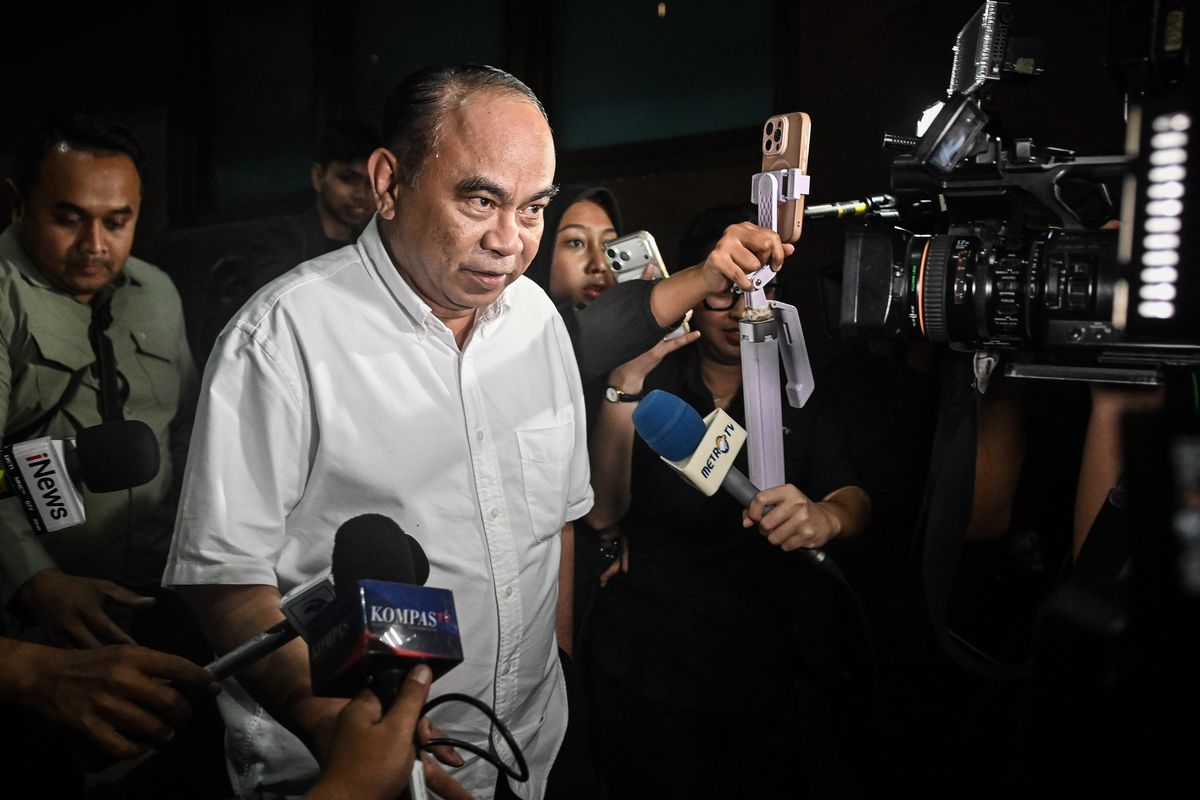
On Friday (27/11/2026), the Criminal Investigation Agency (Bareskrim) interrogated Budi Arie Setiadi, former Minister of Communication and Information and now Chairman of Projo, as a witness in the alleged treason case.
Brigadier General Susatyo Purnomo Condro, the Director of General Crimes, confirmed the interrogation but did not disclose the questions posed.
On the same day, the Head of Government Communication Agency, Syahganda Nainggolan, indicated that nickel businessman Arif Kurniawan is suspected to be one of the intellectual actors behind the treason.
According to him, intellectual actors are always linked with politics and oligarchy.
These two pieces of information come from different directions but are both associated with the same case.
The public is receiving new names and allegations, while the relationship between the two is yet to be clearly explained.
The public, following developments from the beginning, has every right to feel confused.
On November 12, National Police Chief General Suyudi Ario Seto revealed to Commission III of the DPR that Listyo Sigit allegedly acted as the end user, or the final recipient of the wiretap results, and subsequently used the information to manipulate others.
Five days later, the Police Chief announced that Listyo and several others were not yet designated as suspects of treason.
On November 23, the Head of Bareskrim, Police Commissioner General Asep Safrudin, announced six suspects of treason. The police linked the alleged motives to a desire to maintain the police chief's position.
Four days later, public attention shifted to a businessman who was alleged to have indications of being an intellectual actor.
This shift in details necessitates a more comprehensive explanation.
The individual previously identified as the end recipient of the wiretap information has yet to provide testimony in the ethical hearing.
On November 26, Listyo did not attend the interrogation.
In fact, he stated in 2024 that anyone, regardless of rank, should face strict actions if they committed violations.
His absence deprived the official forum, which should serve as an accountability space, of the chance to hear his explanation directly.
It's essential to distinguish that these various statements do not automatically negate one another.
One can have a dual interest in retaining a position while being linked to a businessman with business interests.
However, this possibility remains a hypothesis. Relationships, motives, and an individual's role must be proven through evidence, not concluded from public statements.
The involvement of a businessman in an alleged treason against the President certainly requires a clear explanation.
Business interests, for instance, could be one area of inquiry for investigators.
Yet, until now, there has been no open construction explaining the connection between the nickel issue and the treason allegations.
Pieces of information regarding Arif are indeed available from other cases.
The Attorney General's Office is investigating allegations of corruption in nickel governance in Southeast Sulawesi and raided six locations suspected to be affiliated with him on November 5.
The Attorney General's Office referred to Arif as the controller and beneficiary of several mining companies. He is also reported to be currently missing from Indonesia.
On November 9, Special Crimes Director Kuntadi stated that Arif remained a witness.
Regarding the possibility of Listyo being an enabler, investigators stated they have not moved in that direction.
This means the corruption case involving nickel and the treason allegations are still on different investigative paths. The relationship between the two has yet to be explained through publicly testable evidence.
From this lack of clarity, suspicion grows. Some people begin to question whether the businessman is being used as a scapegoat to protect others.
Such allegations lack evidence and cannot be treated as conclusions. However, public queries do not arise without context.
Arif is known in the nickel industry. His name began to gain public attention through the Attorney General's case in early November, while the Police Chief's explanation regarding the wiretap sequence earlier primarily highlighted internal Police affairs.
This directional shift requires explanation. Questions about Arif's relationship with the treason allegations are not a defense of him.
The nickel matter must still be processed according to the law, while the treason allegations should be proven through separate investigations.
The next issue is who made the accusation and in what capacity.
Syahganda heads the government communication agency, not an investigative agency, prosecution, or court.
He used the term indication and stated that the identity of the intellectual actors is still being investigated.
He also differentiated roles, stating that the police handle legal matters, while the Intelligence Agency seeks the intellectual actors.
Intelligence information can serve as preliminary material for investigations. However, such information does not automatically become proof in court.
Names announced from the podium are far more quickly ingrained in public memory than ongoing legal proceedings.
When an official refers to someone as an intellectual actor, the boundary between suspicion and conclusion must be carefully maintained.
Syahganda also called Arif one of the biggest oligarchs who has fled, possibly to China, without providing the evidence supporting that claim.
The term oligarch certainly attracts attention. It is often used to explain the relationship between power and capital but cannot replace proof regarding someone's role in a crime.
The public indeed wants overarching economic power and unchecked political influence to be monitored.
However, fighting against oligarchy must not become a reason to hurl baseless accusations.
Law requires evidence, not just labels easily accepted due to the public's anger towards inequality.
Budi Arie, who was interrogated as a witness, also needs to be placed according to his legal status.
Witness interrogations are part of the evidence-gathering process, not a determination of guilt.
The public requires an explanation regarding the relevance of his interrogation to the main case, not just an additional name in the series of news reports.
The government and the police have a responsibility to communicate a complete case construction as long as it does not interfere with the investigation.
The public needs to know who did what, how the relationships among parties were built, what motives are being investigated, and what evidence underpins each allegation.
Official statements should follow the development of evidence, not precede the investigator's conclusions.
This demand is not a defense of Listyo, Budi Arie, Arif, or any other names mentioned in the case.
If there are efforts to overthrow the President through actions qualifying as treason, that matter must be seriously addressed.
The criminal threat is severe, so evidence must be meticulously gathered and should not rely on changing narratives.
This confusion is not merely a matter of government communication.
It relates to public trust in law enforcement.
Citizens have the right to understand the developments of the case without being forced to piece together the links among names themselves.
Each time the narrative shifts without adequate explanation, the public sphere becomes increasingly filled with assumptions.
A person's name can receive a social sentence before the actual relationships and roles are unveiled.
If Arif indeed plays a role as an intellectual actor, provide the evidence and take the case to court.
If the involvement of others is proven, treat them with the same legal standards.
The state must not allow a case of this magnitude to depend on podium statements with various changing narratives.

























