
Minister Arifah Ensures Justice for the Family of Bullying Victim in Malang
-
News
-
21 minutes ago
This article was translated by AI. Read the original article on Kompas.com. See Original
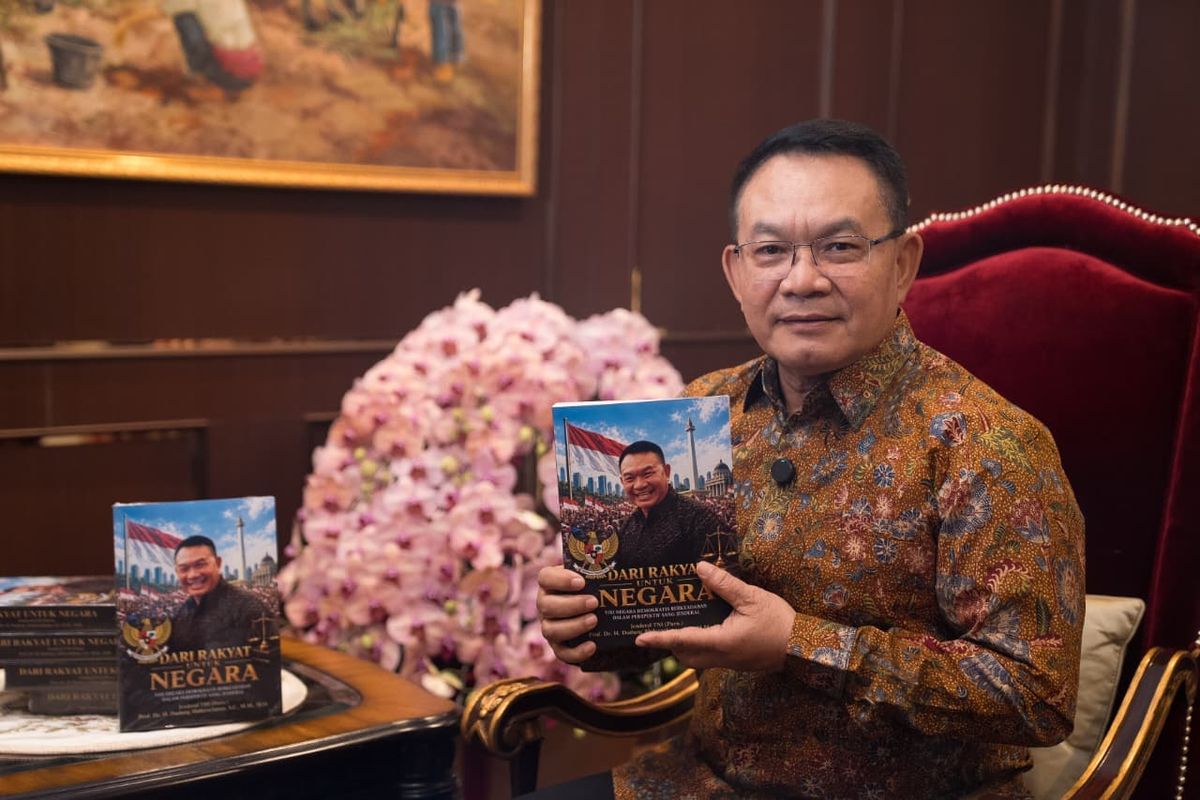
JAKARTA, KOMPAS.com - Coordinating Minister for Political, Legal, and Security Affairs Dudung Abdurachman emphasized that a nation's strength is not solely determined by its defense and security capabilities, but also by the trust its people have in the government.
According to Dudung, a strong country is not one that instills fear in its citizens, but one that can earn their trust and love.
"A strong nation is not one that is feared by its people. A strong nation is one that is trusted and loved by its people," said Dudung in a statement on Saturday (28/11/2026).
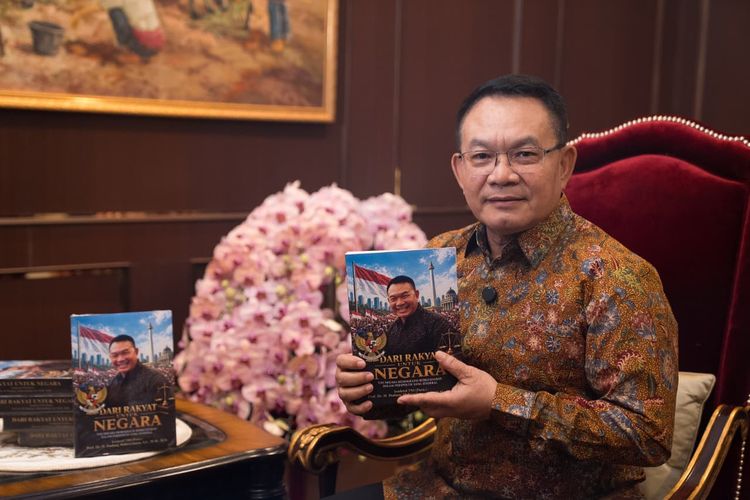
Dudung made these remarks as a reflection on his book titled "From the People for the Country: A Vision of a Civilized Democratic State from the Perspective of the General," at the Office of the Coordinating Ministry for Political, Legal, and Security Affairs in Jakarta on Friday (27/11/2026).
He stated that a nation's strength is also determined by the enforcement of the constitution, integrity, professionalism, and accountability of its officials.
Additionally, Dudung asserted that all powers and authorities of the state should be dedicated to serving the people's interests.
He noted that power is a mandate that should not be used to pursue personal or group interests.
Therefore, a leader must be willing to engage directly with the community, listen to their aspirations, understand their hardships, and provide solutions through policies that deliver tangible benefits.
"Leaders should not only feel close to the people when in front of the camera. Proximity to the people must be proven through actions and policies that truly provide benefits," he emphasized.
Furthermore, Dudung highlighted the challenges of democracy amidst the developments in information technology.
He expressed concern over the proliferation of fake news, misinformation, hate speech, and polarization that could potentially divide society.
According to him, freedom of expression in democracy must be accompanied by responsibility, ethics, respect for the law, and a spirit of preserving national unity.
Dudung stated that differing opinions and political choices are part of democratic life that must be respected.
However, these differences should not overshadow the sense of brotherhood among citizens.
"We may have differing opinions. We may have different political choices. That is part of democracy, but we should not let those differences cause us to lose that sense of brotherhood as fellow citizens of this nation," he remarked.
Dudung affirmed that the success of democracy cannot solely be measured by the conduct of elections or high economic growth.
He asserted that democracy should also be evaluated by how far society achieves justice, welfare, and equitable access to education, health, and opportunities for advancement.
He called on all state officials to embody four characteristics of a nation: one that listens to its people, is present to serve, can ensure prosperity, and is loved by its citizens.
Dudung stressed that governance must always focus on the interests of the community, not merely on exercising power.
"Let us build this country with a spirit of togetherness. Let us uphold democracy with integrity. Let us enforce the law with justice. Let us exercise power with responsibility," he stated.
"And most importantly, never forget that the ultimate goal of all state administration is the welfare of the people," Dudung concluded.

























