

Prabowo Affirms He Is Not Anti-Corporation: We Need a Good and Responsible Private Sector
-
News
-
7 minutes ago
This article was translated by AI. Read the original article on Kompas.com. See Original
THE APPOINTMENT of former National Police Chief General Listyo Sigit Prabowo and five other police officers as suspects in the alleged coup against President Prabowo Subianto's government raises serious issues within Indonesia's constitutional order.
This case goes beyond illegal wiretapping or the contest for the police chief position. There are allegations of a much larger political conspiracy aimed at undermining the President's ability to govern effectively.
The Criminal Investigation Agency (Bareskrim) stated that the suspects' motive was to maintain the position of the police chief by diminishing public trust in the Prabowo administration.
Investigators have also revealed suspicions of collusion, wiretapping, mobilizing external parties, and attempts to exploit demonstrations.
However, the fundamental question remains: is Listyo Sigit the main actor or merely an executor of a broader political design?
In organized political crimes, it's crucial to differentiate between operational perpetrators, controllers, order-givers, and beneficiaries.
If the wiretapping of President Prabowo was indeed conducted systematically, utilizing a network of personnel and civilians, and aimed at incapacitating the government, it would be illogical for the investigation to conclude with just six police officers.
Who engineered the political interests? Who issued the orders? Who provided political support, funding, networks, and protection?
Who stands to gain if President Prabowo loses his ability to govern?
These questions suggest the potential presence of intellectual actors above the operational executors.
Former President Joko Widodo should also be considered as a line of inquiry if evidence linking him to these events is found.
The historical relationship between Jokowi and Listyo, including Listyo's appointment as police chief during his presidency, is a context worth investigating, though not definitive evidence of criminal involvement.
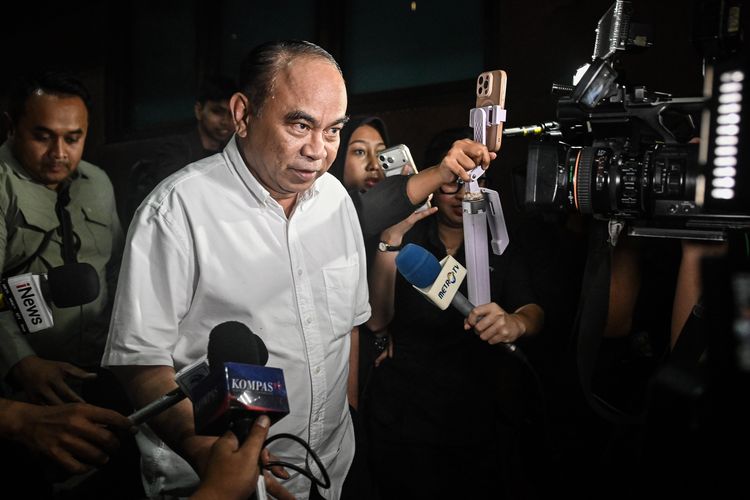
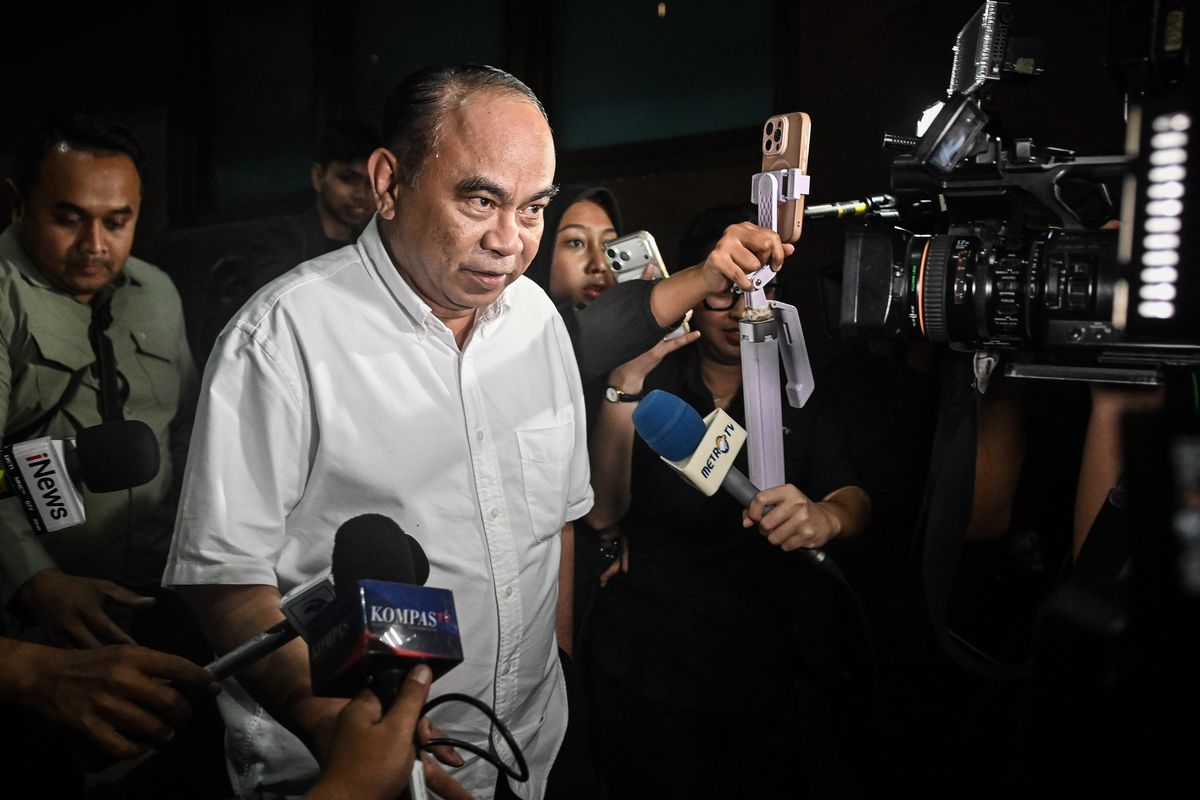
Moreover, Bareskrim has interrogated Budi Arie Setiadi and Devid Agus Yunanto, former aides to Jokowi, as witnesses.
This examination opens the door to exploring potential links between civil networks and the alleged operations. Although the witness status does not automatically translate to being a suspect in the coup case.
Based on Article 160 of Law No. 1 of 2023 concerning the Criminal Code, coup is defined as an intention to execute an attack that has been prepared.
Article 191 stipulates coup against the President includes efforts to incapacitate the President from governing. Further, Article 193 discusses coup with the intention of overthrowing the government.
Therefore, if the wiretapping was merely conducted to retain the police chief position, the coup element is not satisfied.
However, if the wiretapping was part of a political operation to incapacitate President Prabowo and topple his administration, it poses a potential threat against the constitutional power (UUD 1945).
This is where investigators must establish the relationship between the orders, the execution of the wiretapping, the mobilization of networks, the political motives, and the ultimate goals of the operation.
Criminal accountability does not conclude with identifying who acted but must also trace who instructed, orchestrated, or participated.
The police must avoid an investigation that only results in field actors. Limiting the case to Listyo Sigit with motives of maintaining the police chief position risks minimizing the coup case if higher intellectual actors exist.
In this context, Jokowi cannot be above examination if relevant evidence is found.
Conversely, Jokowi should not be deemed guilty solely due to political or personal ties with the suspects. The law must operate based on evidence, not assumptions or political pressure.
It is extremely dangerous in the enforcement of political crimes, such as this coup, if the criminal law is applied selectively for the interests of power, leading to the minimization of the case to merely ground-level actors rather than their intellectual orchestrators.
In this alleged coup involving Listyo Sigit and others, the police should be bold enough to dig deeper, potentially involving the National Intelligence Agency (BIN) to broaden the scope of perpetrators.
Since it is rare for a coup to be executed solely by a police institution without involving political activists, civil society, donors, and intellectuals.
Thus, this coup case, being an extraordinary political crime where the penalties in the Criminal Code start at a minimum of 20 years imprisonment, lifelong imprisonment, or even the death penalty for the actors, cannot fairly conclude with just the individual police officers under Listyo Sigit's command.
If this is where the investigation stops, it will have detrimental effects on law enforcement because the law will fail to uncover the deepest roots within the oligarchic power circles attempting to overthrow legitimate authority.
This case serves as a significant test of the police’s independence. President Prabowo, as the figure allegedly targeted by the operation, is also the head of government overseeing the police institution.
Therefore, investigations must be safeguarded from becoming a political tool against his political opponents.
Independent oversight, transparency in case construction, investigations into communication flows and funding, as well as witness protection, are necessary. All parties must receive the right to defense and the presumption of innocence.
Uncovering a coup means seeking all chains of accountability, not merely identifying a number of suspects.
Let’s not allow the police to successfully arrest the executors while the planners remain concealed.
Because in a state governed by law, one must not only have the courage to punish those beneath but lose the ability to act when the investigation approaches the centers of power.
Unraveling a coup must reach the roots, not minimize the case to protect the true instigators.