

Prabowo to State Bank Executives: You Manage the People's Money, Visit the Fields Occasionally
-
News
-
6 minutes ago
Writer
This article was translated by AI. Read the original article on Kompas.com. See Original
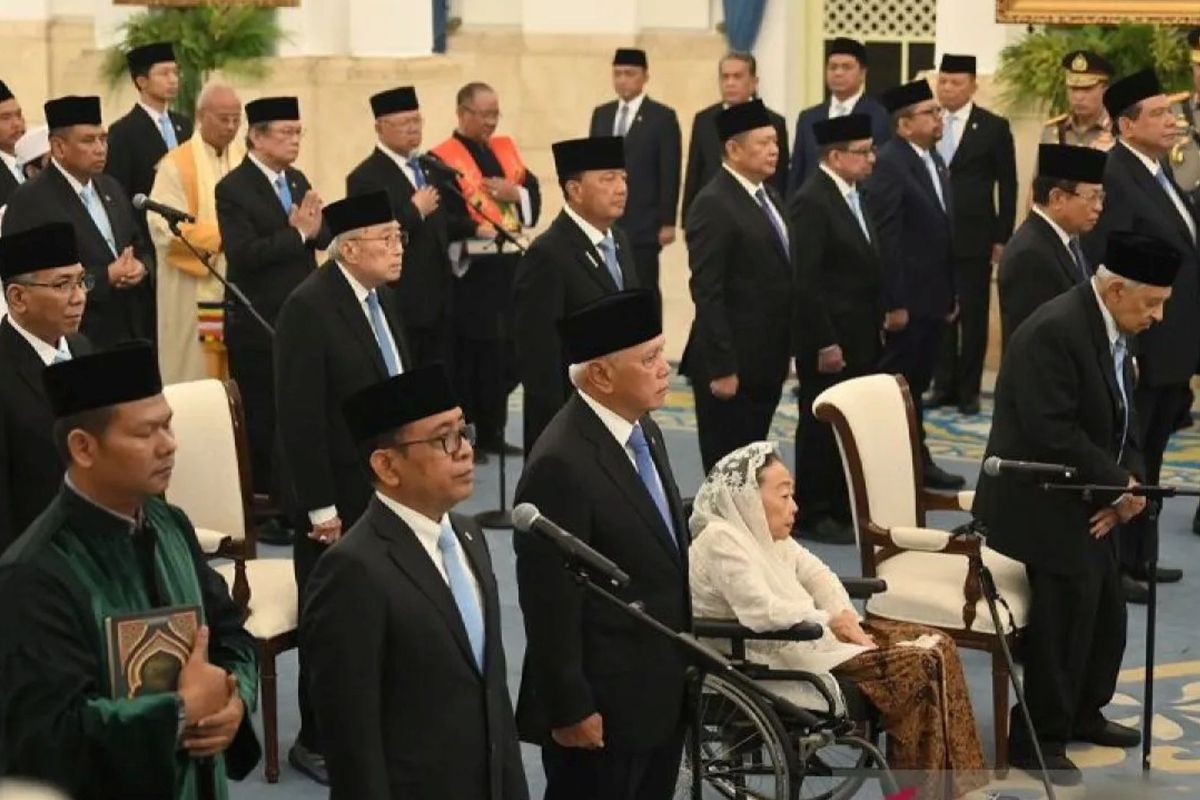
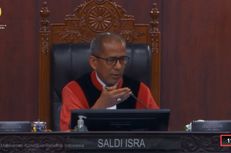
JAKARTA, KOMPAS.com - Constitutional Judge Saldi Isra questioned the differences between the Presidential Advisory Council (Wantimpres), Presidential Special Advisors, and Presidential Special Envoys.
This question was raised by Saldi during the trial of case number 389/PUU-XXIV/2026, which tests the constitutionality of Article 7, paragraph 1 of the Wantimpres Law concerning the limit on the number of Wantimpres members.
"Apart from Wantimpres, there are other advisory bodies around the President, such as Presidential Special Advisors. What is their total number?" Saldi asked during the session held on Thursday (26/11/2026).
Saldi questioned what distinguishes Wantimpres from the Presidential Special Advisors within a presidential system.
He further inquired about the differences in their roles in daily operations.
He then mentioned the roles of the Special Envoy, Special Advisors, and Wantimpres.
"What differentiates the roles of the Special Envoy or Special Advisors from the Presidential Advisory Council? There are Special Envoys, Special Advisors, and Wantimpres. Please provide us with an overview regarding these matters," he added.
In addition to questioning the structural and functional differences of these presidential advisory bodies, he also inquired about the performance of the previous Wantimpres members.
He emphasized the need for clarification to ascertain whether the previous Wantimpres struggled, necessitating an increase in membership.
"Could we be provided with a clearer picture of the workload of Wantimpres in the past, which justifies either an increase in its members or a larger allowance for the President compared to before?" he added.
He also asked why the government and DPR changed the maximum membership limit of Wantimpres from the previous nine members to accommodate the President's needs.
This question was directed at government representative Romi Yudianto, Special Advisor to the Minister of Law for Economic and Social Affairs.
Romi stated that he would respond to the judges' inquiries with written answers.
This case was initiated by constitutional activist Muhammad Riziq Maulana.
He argued that the absence of a limit on the number of Wantimpres members in the contested law could burden the state budget.
"The lack of a limit on Wantimpres members directly results in an unquantifiable burden on the state budget," Riziq stated during the preliminary hearing for case number 389/PUU-XXIV/2026 on Monday (27/10/2026).
Riziq is challenging Article 7, paragraph (1) of the Wantimpres Law, which states,
"The Presidential Advisory Council of the Republic of Indonesia consists of a Chair who also serves as a member and several other members whose number is determined based on the President's needs while considering the effectiveness of state administration."
Since there is no maximum limit specified in that article, he requested that the Constitutional Court restore the maximum number of Wantimpres members to nine, as having too many is considered burdensome to the state finances.
Representing the government, Romi Yudianto stated that the number of Wantimpres members is not explicitly limited but is implicitly regulated in Article 23, paragraph (1) of the Constitution, which outlines principles of transparent and accountable state financial management.
He explained that the President's authority to determine the number of Wantimpres members aligns with the Finance Minister's authority, aiming to ensure effective and efficient state financial management.
He noted that the determination of Wantimpres membership is based on the President's needs and the effective administration of government.
DPR representative from Commission III, Martin Daniel Tumbelaka, clarified that determining Wantimpres membership is not an absolute authority of the President.
"Rather, it is an authority that must be accountable based on rational needs and the goals of governance, as long as the number determined by the President is essential for effective governance," Martin stated in the session, as quoted from a YouTube broadcast by MKRI on Friday (27/11/2026).
He explained that the parameters for determining the number of Wantimpres members relate to Article 5 of the Wantimpres Law, which allows the President to make adjustments.
"The DPR RI explains that adjustments can be made according to the evolving needs of governance, including considerations in legal, diplomatic, international relations, digital transformation, energy, food, environmental issues, and other strategic fields as they relate to the exercise of state power," Martin added.