
Student in Malang Dies from Assault, Ministry of Education Urged to Improve Violence Prevention System
-
News
-
3 minutes ago
This article was translated by AI. Read the original article on Kompas.com. See Original
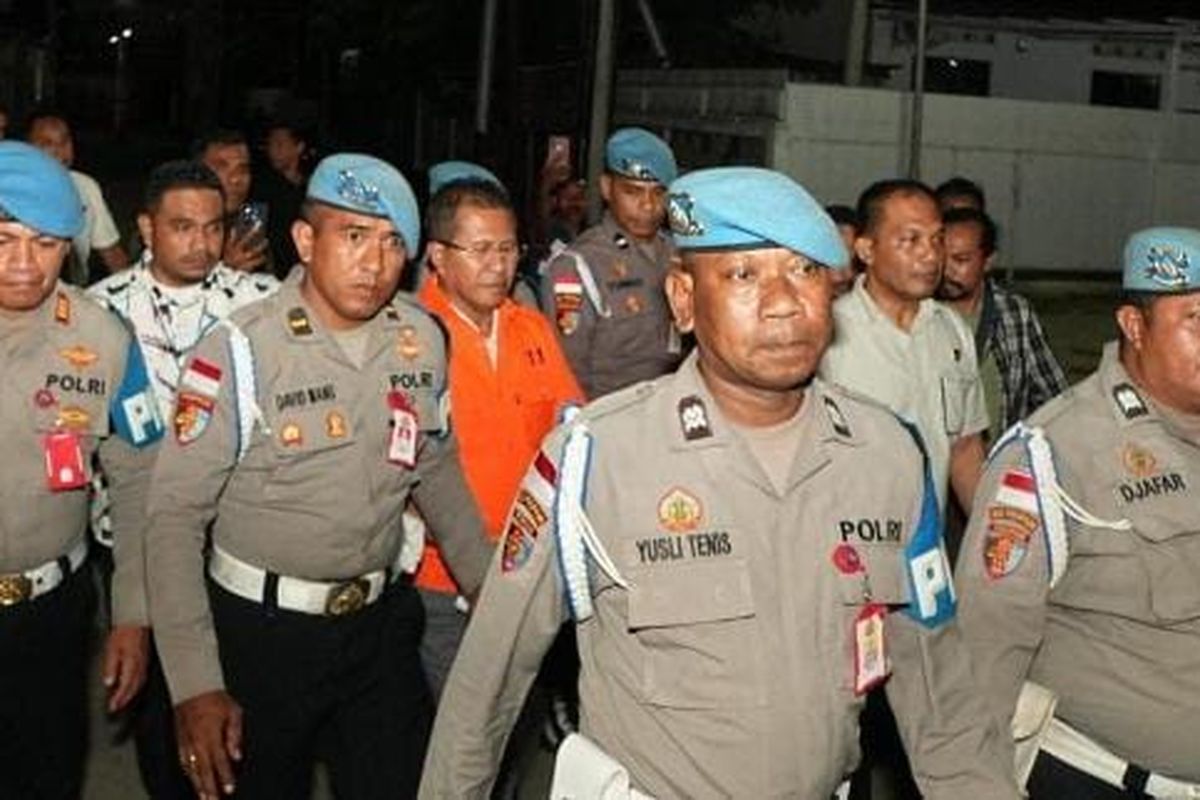
CASE of alleged sexual violence involving Kupang Regent Yosef Lede as a suspect reveals issues that may have long been hidden behind the walls of local government bureaucracy.
Power, which should be used to serve the public, is instead alleged to be wielded as a tool to suppress and exploit the more vulnerable.
This is not merely a matter of deviant behavior from an official; it is a wake-up call regarding the weak protections afforded to victims of sexual violence within local government environments.
This case should not be viewed as an isolated incident. We must ask further: do similar practices occur in other regions but remain unreported due to victims' fears of coming forward?
Has local bureaucracy provided safe spaces for employees to reject harassment and sexual violence perpetrated by superiors?
This question is crucial because local government environments are fraught with power dynamics. A regional leader holds significant authority over the apparatus beneath them.
They can influence appointments, promotions, transfers, assignments, and the career continuity of an employee. In such positions, the relationship between superiors and subordinates is not always equitable.
This power imbalance can create room for intimidation, harassment, and even sexual violence.
Victims may realize they are being treated inappropriately but choose to remain silent for fear of losing their job, position, career opportunities, or facing pressure from the work environment.
Especially if the perpetrator is an official with political and administrative power.
Thus, the issue of sexual violence in local government is not just a matter of personal morality. It is an issue of governance, abuse of power, and protection of human rights.
I support the proposal from Muhammad Khozin, a member of Commission II of the DPR, for the Ministry of Home Affairs to issue regulations that encourage the establishment of a Task Force for the Prevention and Handling of Sexual Violence in local government environments. These regulations can be included in the Minister of Home Affairs Regulation (Permendagri).
Why should the Ministry of Home Affairs intervene? Because it is the supervising body for local government administration.
The ministry has regulatory instruments and guidance to ensure that local governments not only meet development targets but also create bureaucratic environments that are safe, healthy, and free from violence.
This task force must be established at both the provincial and regency/city levels. Its members should be from various sectors to prevent it from becoming an internal institution easily influenced by the interests of local leaders.
The Regional Secretary can be appointed as the chair, with members from various related local government agencies, as well as representatives from the personnel department, inspectors, offices dealing with women's empowerment and child protection, community leaders, and academics.
Involving external elements is vital for maintaining objectivity and preventing conflicts of interest.
The task force will have at least three main functions. First, education and outreach. Civil servants (ASN), government contract employees (PPPK), honorary staff, and all parties working within the local government must gain an understanding of forms of sexual violence, boundaries of professional behavior, and rights and obligations in the workplace.
Prevention must start from changing bureaucratic culture, not just from hanging banners or holding ceremonial activities.
Second, early detection. The task force must be able to recognize signs of harassment and sexual violence, including intimidating behavior that leverages the superior-subordinate relationship.
Oversight must not only wait for cases to surface publicly. There must be mechanisms for periodic monitoring and evaluation of the work environment in local government.
Third, opening up safe and easily accessible complaint channels. Victims and witnesses should be able to report incidents without fearing retaliation, transfer, demotion, or pressure from those being reported.
Every complaint must be handled professionally, maintaining the victim's confidentiality while ensuring their safety and recovery.
In executing its handling functions, the task force must collaborate with law enforcement and relevant agencies.
It is necessary to stress that this task force is not a law enforcement agency and does not assume the authority of law enforcement officials.
If any indications of criminal acts are found, the case must be forwarded to the police in accordance with legal provisions.
Meanwhile, aspects of victim protection, support, and administrative follow-up should be coordinated with the appropriate authorities.
The establishment of the task force must not end with the issuance of the Permendagri and the formation of the organizational structure.
We do not need a new agency that is busy holding meetings, creating reports, and exhausting budgets without resolving issues.
There are several prerequisites for the task force to be truly effective. First, independence in receiving and addressing complaints. The task force must not be under the control of individuals who could potentially become the subjects of complaints.
Second, guarantees of protection for victims and witnesses. Third, clear handling procedures, including timelines for responding to complaints.
Fourth, periodic evaluations by the Ministry of Home Affairs to measure and account for the task force's performance.
We can learn from universities. Campuses have introduced task force mechanisms for the prevention and handling of sexual violence.
The presence of such units is critical because the power dynamics between lecturers and students can create opportunities for harassment and sexual violence.
Local government environments face similar challenges, often with even more complex power structures.
If students on campuses need protection from the abuse of power by lecturers, local government employees require protection from the abuse of power by officials.
There must be no assumption that someone in a political or administrative position is immune from ethical and legal scrutiny.
Of the 546 autonomous regions in Indonesia, the case revealed in Kupang should serve as a moment for national reform.
We cannot assume that only one region faces this issue; similar practices may exist in others, but never surface because victims choose silence.
This is where the urgency of forming the task force lies. The state must not wait until another victim dares to speak up before taking action.
The government must provide a system that allows victims to receive protection from the outset.
Regional leaders are elected to lead and serve the interests of the community, not to treat subordinates or anyone within their reach at their discretion.
Public office is not a license for intimidation, harassment, or even sexual violence.
We often talk about bureaucratic reform in terms of efficiency, digitalization, meritocracy, and performance improvement.
However, there is one fundamental aspect that must not be overlooked: the safety and dignity of individuals within the bureaucracy itself.
A modern bureaucracy must not only be efficient in service delivery but also ensure that everyone works without fear of their superiors.
The integrity of officials cannot merely be measured by administrative compliance and developmental achievements, but also by their ability to uphold the dignity and safety of those they lead.
Therefore, the Ministry of Home Affairs must take initiative promptly. Do not wait for similar cases to explode elsewhere.
Issue the Permendagri, form the task force, establish complaint mechanisms, and ensure every victim receives protection.
Let local autonomy that should bring services closer and strengthen democracy not give birth to local powers that are difficult to oversee.
Regions should be autonomous in managing their affairs but not in treating people arbitrarily.
Unchecked power can become an instrument of oppression. And a bureaucracy that silences victims is, in fact, protecting the perpetrators.