

Choosing a New Vice President: Voting or Deliberation?
-
News
-
9 minutes ago
This article was translated by AI. Read the original article on Kompas.com. See Original
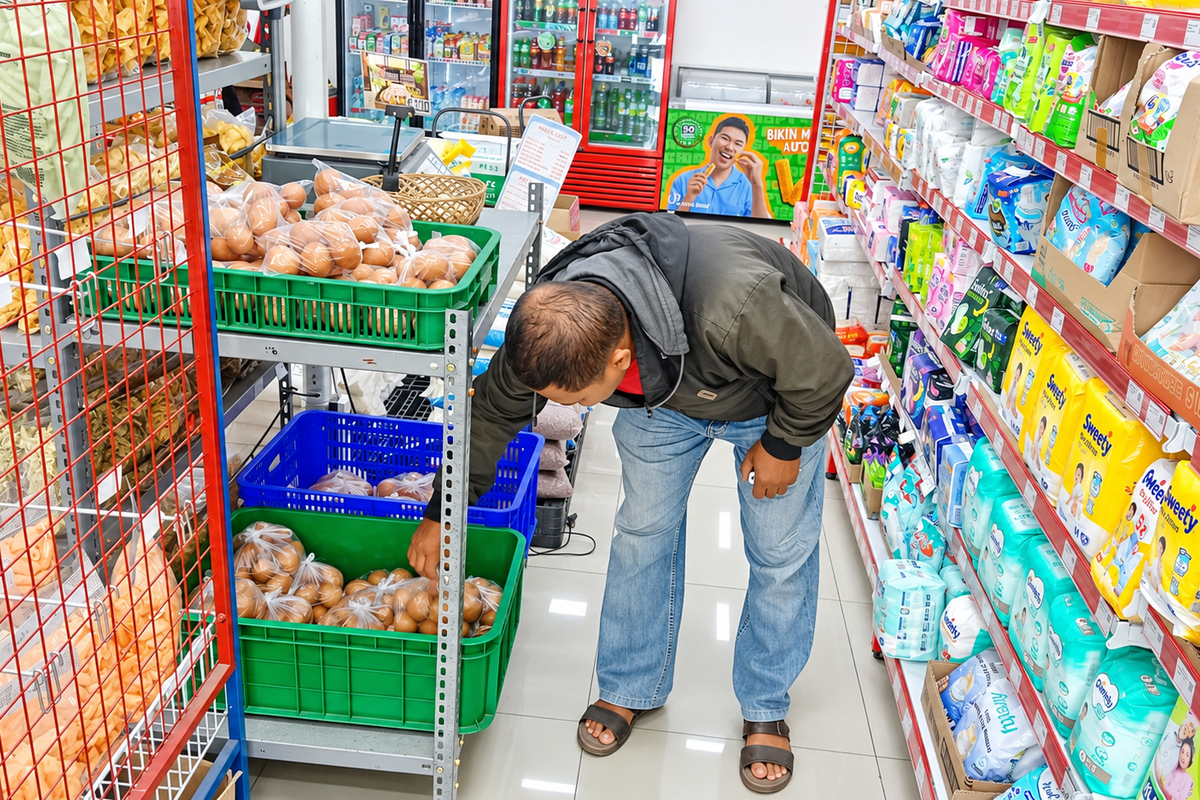
BOYOLALI, KOMPAS.com – Maintaining affordable prices for essential goods is one of the primary focuses of the Red and White Village Cooperative (KDMP) Metuk, located in Metuk Village, Mojosongo District, Boyolali Regency, Central Java.
To achieve this, the cooperative not only relies on supplies from large distributors but also partners with local rice mills and provides wholesale services for convenience stores in the surrounding village.
One ongoing collaboration involves sourcing rice from a milling facility located about 100 meters from the KDMP Metuk outlet.
The mill buys rice paddy from local farmers, processes it into rice, and then supplies the results to the cooperative for resale to the community.
Gunawan, the Deputy Manager of KDMP Metuk, explained that this collaboration is part of the cooperative’s efforts to build a food supply chain involving local business actors.
"So, this mill buys the paddy from local farmers. Then they process it, and we buy the milled rice," Gunawan said in an interview with Kompas.com on Monday (23/11/2026).
In addition to this mill, KDMP Metuk collaborates with another facility that supplies red rice and organic white rice. The rice is typically procured twice a week, or up to three times depending on demand.
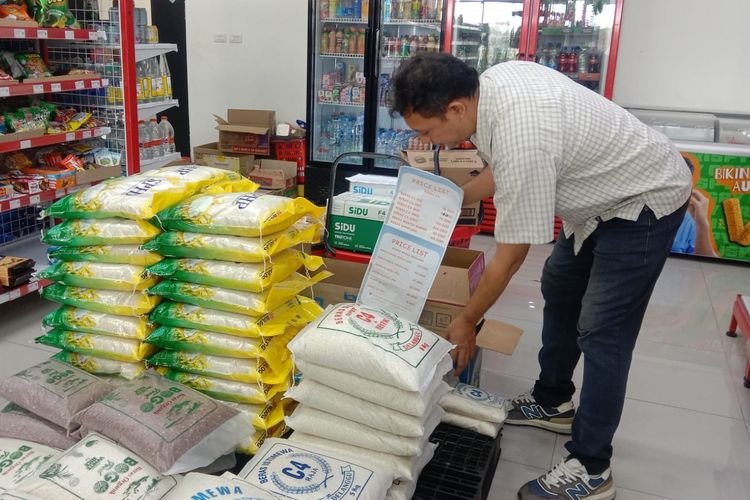 In addition to local rice, KDMP Metuk also provides rice from the Stabilization Supply and Price of Food (SPHP) program from Bulog.
All rice purchases from the two mills are made on a buy-out basis. This means that the cooperative buys products to resell, rather than merely receiving consigned goods from suppliers.
Beyond local rice, KDMP Metuk also offers rice from the Stabilization Supply and Price of Food program (SPHP) from Bulog, alongside other essential goods such as cooking oil, eggs, sugar, and flour.
Particularly for SPHP rice, the selling price adheres to government regulations. According to the National Food Agency (Bapanas) information from September 2026, village cooperatives are among the official distribution channels with a maximum retail price (HET) in Java set at Rp 12,500 per kilogram.
The availability of local rice and SPHP provides options for residents to meet their food needs according to the types and prices available at the cooperative store.
In addition to ensuring supply, KDMP Metuk employs a distinct strategy in setting selling prices for essential goods.
Gunawan stated that the cooperative strives to purchase items in bulk to obtain wholesale pricing from distributors. This purchasing approach also opens up opportunities for additional discounts if the quantity ordered reaches certain targets.
With lower purchase prices, the cooperative can offer more competitive selling prices to consumers.
However, prices are not set arbitrarily. Before determining selling prices, the management conducts surveys at local markets, minimarkets, and convenience stores in the surrounding village.
The survey results then serve as benchmarks to ensure that the prices of items sold remain affordable, without creating too significant a price gap compared to local vendors.
"At the retail front, the price difference (of KDMP products) with village stores is not substantial. It’s usually around Rp 500 to a maximum of Rp 1,000," Gunawan noted.
According to Gunawan, maintaining competitive prices is also a consideration when the prices of staple goods from suppliers increase, particularly rice, eggs, and sugar.
Instead of immediately raising selling prices, the cooperative attempts to maintain them by reducing profits from these goods.
"We strive to hold the prices steady. Even if we must increase them, it will be a little," he explained.
Gunawan cited an example where profit, originally Rp 500 per item, can be reduced to Rp 300 when supply prices rise.
This reduction in profit can be supported by selling other products with larger margins, such as cosmetics and body care items.
This method is chosen because customers typically do not only buy one type of item while shopping. Besides staples, consumers also purchase various other household necessities.
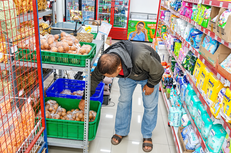
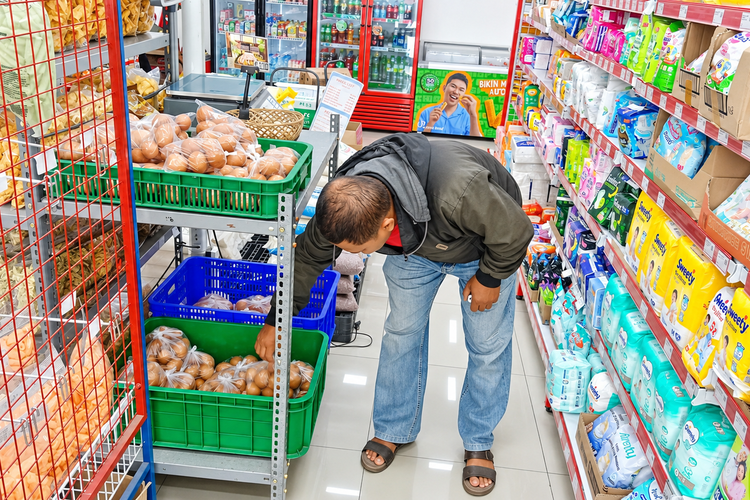
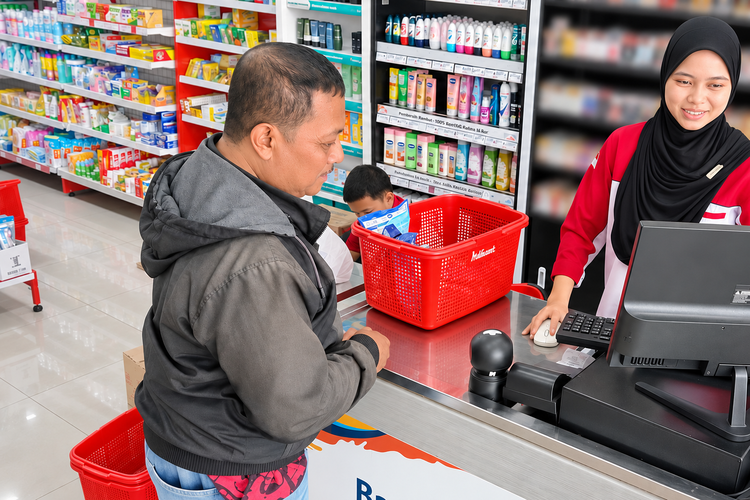 Visitors shopping at KDMP Metuk.
For residents, the price of goods is not the only consideration. The presence of the store in the village also makes it easier for them to meet daily needs without incurring travel costs to markets or wholesale centers that are further away.
Fahmi Cahyaningrum, one of the buyers at KDMP Metuk, noted the positive shopping experience with more affordable prices.
Fahmi mentioned coming to the cooperative to buy 3-kilogram LPG gas. He believes the prices are more affordable compared to several other places.
"The prices are quite reasonable. The gas is also cheaper here than elsewhere. It’s significantly cheaper here," Fahmi said.
Although a Rp 500 to Rp 1,000 price difference per item appears small, Fahmi emphasized that when residents buy several items at once, those savings can accumulate and allow for other household needs.
Fahmi hopes that the cooperative can continue to assist the public in obtaining their daily needs at more affordable prices.
"I hope it continues to help the small people because the prices are more affordable," he remarked.
The effort to keep prices reasonable does not lead KDMP Metuk to solely focus on direct sales to residents.
Since it began operations, the cooperative has also sought to involve convenience stores that have traditionally been places for residents to purchase daily necessities.
Gunawan stated that the management does not want the presence of KDMP Metuk to be viewed as a competitor that threatens the small traders' businesses.
"We shouldn’t let the presence of the Red and White Cooperative be seen as a threat to convenience stores and local shops," he said.
With this consideration, the management visits several stores to understand which items are most frequently purchased by customers and where traders usually source their supplies.
From these communications, KDMP Metuk offers wholesale purchasing options for various necessities, such as cooking oil, sugar, and instant noodles.
Through this service, store owners can acquire items at wholesale prices to resell to customers while still considering their profit margins.
Currently, about four convenience stores regularly source supplies from KDMP Metuk. Merchants merely need to send a list of required items, and the cooperative delivers the orders.
Hesti Prihananti, the owner of Toko Berkah, a convenience store operating for 12 years, is one of the traders utilizing this service.
Before collaborating with KDMP Metuk, Hesti used to buy stock from nearby markets all the way to Solo. However, this activity consumed considerable time as she had to leave the store to shop.
Now, essential supplies such as rice, cooking oil, instant noodles, and flour are obtained from KDMP Metuk.
Hesti admits that she was initially worried that the cooperative's presence would threaten small stores like hers, especially since the cooperative has greater capital and facilities.
"We were concerned that if the selling prices were lower, it could potentially put us out of business, especially smaller stores," Hesti said in an interview with Kompas.com on Thursday (26/11/2026).
However, after collaborating, she finds that the selling prices at her store remain competitive compared to the cooperative. Hesti sets the price difference for several products at only around Rp 200 to Rp 300.
Additionally, her store located about two to three kilometers from KDMP Metuk retains customers' options for shopping at closer locations.
Another advantage Hesti experiences is the ease of stocking without having to go to the market or a wholesale center.
She simply contacts the cooperative's management via phone or WhatsApp to relay her required items. The orders are then delivered directly to her store and paid for upon receipt.
Even when ordering just two cartons of cooking oil, Hesti noted that the cooperative is still willing to deliver.
"With the village cooperative, it can be delivered. This way, I don't have to struggle to close the store; I can handle other things at home. The store doesn't need to close (because I have to go out to shop for supplies)," Hesti explained.
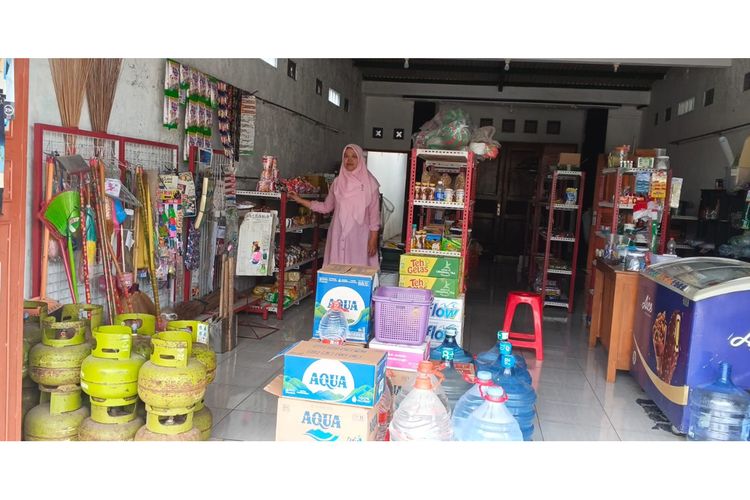 Hesti Prihananti, owner of Toko Berkah, who has run a convenience store for 12 years. Currently, Hesti's store partners with KDMP Metuk.
This convenience is significant for Hesti, who manages her store without employee assistance. She can continue serving customers while also running a side business making snacks.
For her snack business, Hesti also purchases some raw materials from KDMP Metuk, particularly cooking oil and flour.
Going forward, she hopes that the cooperation with the cooperative can develop in both directions. Besides sourcing supplies and raw materials, Hesti would like to have broader opportunities to market her snack products through KDMP Metuk.
She also hopes that the cooperative will continue to maintain selling prices in a way that doesn't create competition that burdens small shops in the vicinity.
Meanwhile, KDMP Metuk's wholesale cooperation has also attracted merchants from other districts. However, Gunawan acknowledged that this service is not yet operational as the cooperative is still assessing distribution costs and the need for additional labor.
Aside from partnering with merchants, KDMP Metuk also engages neighborhood mothers' groups and Family Welfare Empowerment (PKK) teams to facilitate collective purchases of essential goods.
Residents can compile orders through group coordinators. If several people need the same items, purchases can be combined into larger quantities to achieve wholesale prices.
For instance, several residents needing instant noodles can purchase a box collectively and later divide it according to their individual needs.
This method provides residents the opportunity to procure items more economically without having to buy large quantities individually.
In addition to serving basic necessities, KDMP Metuk also opens up marketing space for micro, small, and medium enterprise (UMKM) products from Metuk Village or surrounding areas.
The products marketed are quite diverse, ranging from herbal remedies, salted eggs, sambal pecel, yogurt, cassava chips, spinach chips, catfish fritters, to various snacks.
According to Gunawan, most of the UMKM products are bought directly by the cooperative for resale. Only certain products, such as bread, are marketed on a consignment basis.
To expand the market, the management does not only rely on sales at the outlet but also participates in fairs and events organized by the Boyolali Regency government.
Promotion is also conducted through communication groups among neighborhood mothers and PKK members. Leading up to holidays, several UMKM products are also packaged into gift hampers to make them more appealing to buyers.
Apart from processed food products, KDMP Metuk had previously tried to diversify its offerings of fresh food, particularly vegetables.
At the beginning of its operations in October 2025, the cooperative supplied around 35 to 40 types of vegetables. These supplies were sourced from farmers and traders in several areas, including the agricultural region of Cepogo, Boyolali.
Gunawan stated that vegetable sales at that time received a quite positive response from the community. However, this initiative lasted only about two months due to limitations in storage facilities.
This is because vegetables require special handling to remain fresh. Without adequate cooling facilities, certain types of vegetables can quickly degrade in quality.
According to Gunawan, vegetables like mustard greens can only last about two days, while some others, such as potatoes and eggplants, are relatively more durable.
This situation prompted the cooperative to temporarily halt vegetable sales rather than endure the risk of unsold goods degrading.
Nevertheless, Gunawan indicated that a network of vegetable suppliers is still available. The cooperative hopes to resume selling fresh products once adequate space and refrigeration facilities are available.
"In the future, if we can sell vegetables again (and have sufficient storage equipment), we want to present them in a more appealing way, resembling fresh products sold in supermarkets," Gunawan explained.
The various services implemented by KDMP Metuk have also led to increased sales activity since the cooperative began operating fully in October 2025.
Gunawan explained that in the first three months, the cooperative's daily revenue fluctuated between Rp 3 million to Rp 5 million.
From January to March 2026, revenue ranged from Rp 4 million to Rp 5 million per day, before climbing again in the following months.
In recent months, daily sales can reach around Rp 7 million to Rp 9 million, although this figure does not remain constant every day.
Regarding monthly revenue over the last four to five months, it has reportedly reached approximately Rp 280 million, rising from about Rp 170 million to Rp 190 million during the early operational phase.
To sustain sales, the cooperative also aims to adjust the types of goods available based on consumer demand.
The management typically records items requested by customers. If the same product is sought after by multiple people, the cooperative will consider adding it to the inventory.
This way, product procurement doesn’t solely depend on distributor offerings but also considers community needs.
As business continues to grow, KDMP Metuk also plans to strengthen its food supply chain by building its own rice mill.
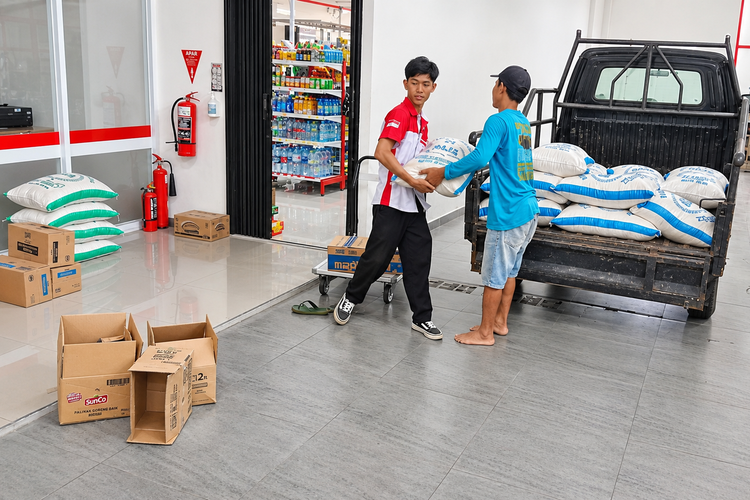 KDMP Metuk also plans to strengthen its food supply chain by building its own rice mill.
This plan arises from the current procurement framework for local rice, which still relies on two partner rice mills. With its own facility, the cooperative hopes to purchase paddy directly from farmers, then process and package it into rice with its own brand.
"We want to establish our own rice mill. Later we will buy paddy directly from farmers, mill it, and pack it ourselves," Gunawan said.
In addition to shortening distribution routes, the mill is expected to provide the cooperative with greater flexibility in managing processing costs and setting selling prices for rice to remain affordable for the public.
Aside from the rice mill plan, KDMP Metuk is also awaiting the completion of licenses to operate three additional services: an agricultural store, a pharmacy, and a clinic.
The agricultural store is intended to meet farmers' needs, particularly for subsidized fertilizers and various plant care products. The presence of this store is expected to facilitate farmers in obtaining necessary agricultural supplies around the village.
Meanwhile, the pharmacy and clinic are planned to enhance public access to medications and health services.
According to Gunawan, several residents have previously approached the cooperative seeking medicines. However, this need could not be fully met as the pharmacy's operational permit has not yet been issued.
For now, KDMP Metuk only provides common medications typically sold at shops or minimarkets.
The ongoing permit process also affects the clinic's service preparations. Gunawan hopes that all licensing can be completed soon to expand services for the community.
Through these various development plans, KDMP Metuk aims to strengthen its role in fulfilling the needs of the village community. From providing food at affordable prices to partnering with farmers and UMKM actors, as well as plans to add agricultural and health services, the cooperative is expected to be increasingly aligned with the economic activities and daily needs of the residents.