

KPK Temporarily Suspends Detention of Fahd Arafiq to RS Polri Due to Illness
-
News
-
1 minute ago
This article was translated by AI. Read the original article on Kompas.com. See Original
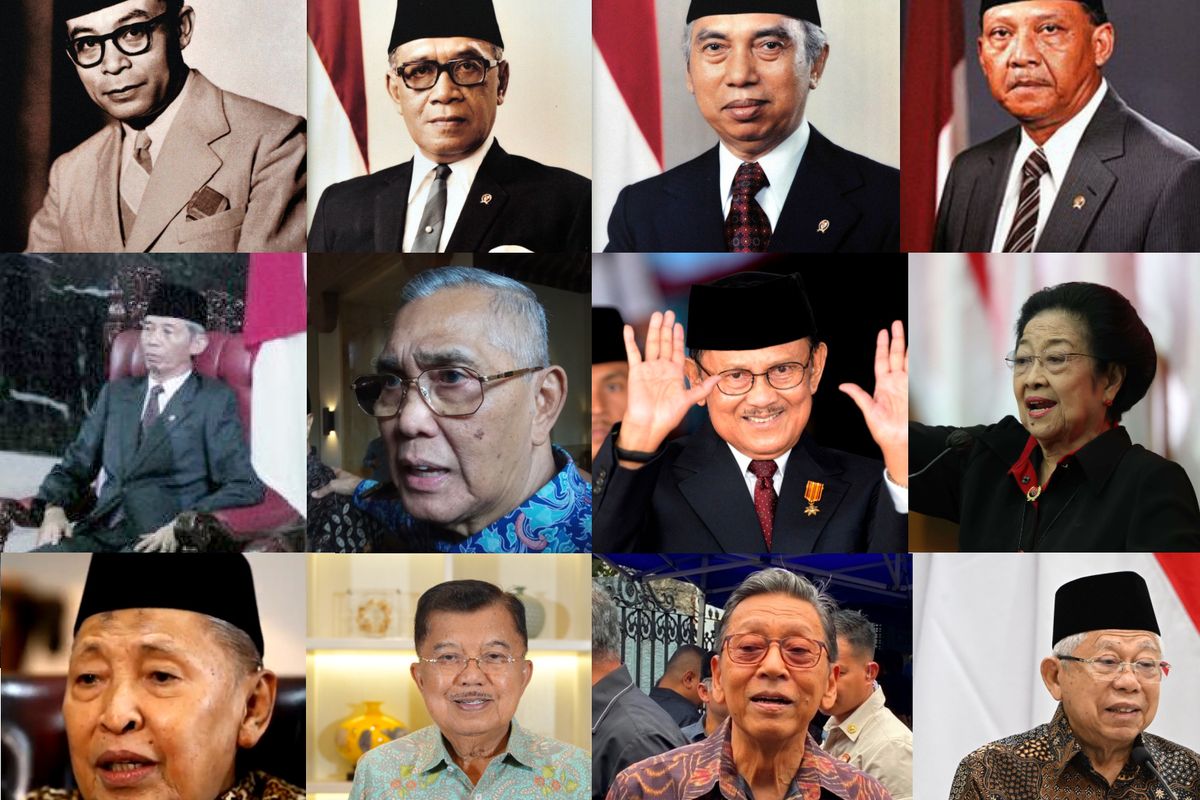
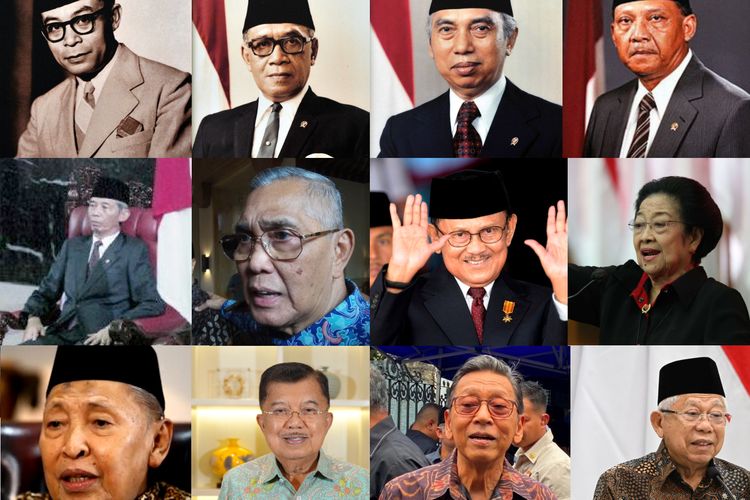
JAKARTA, KOMPAS.com - The proposal to increase the number of vice presidents (Wapres) to three to accommodate Indonesia's vast territory and strengthen regional representation is considered insufficiently justified for amending the 1945 Constitution.
The idea to add vice presidents requires an amendment as the current constitution only stipulates one vice president to assist the president in fulfilling their duties.
However, several constitutional law experts argue that the vastness of Indonesia is not a strong reason to expand the number of vice presidents to three, as suggested by the Chairman of the Regional Representative Council (DPD), Sultan Bachtiar Najamudin.
"The size of the territory does not automatically provide a constitutional reason for adding more vice presidents," said constitutional law expert Fahri Bachmid from Universitas Muslim Indonesia to Kompas.com on Monday (23/11/2026).
Fahri acknowledges that discussing the idea of adding vice president positions is valid for future considerations.
However, he warns that any examination of this issue must be comprehensive.
"It shouldn't solely rely on geographic reasons," emphasized Fahri.
According to him, the study should encompass considerations of authority distribution, working relationships with the president, coordination mechanisms, accountability mechanisms, as well as the budgetary implications raised.
He does not want the idea of adding more positions to lead to overlapping authorities and complicate the governmental structure.
"What should be measured is whether such institutional design truly makes governance more effective, enhances public service, and maintains the principles of checks and balances within our constitutional system," stated Fahri.
Constitutional law expert from Universitas Andalas, Feri Amsari, adds that without careful consideration, the suggestion to add vice president roles will only lead to conflicts and political disputes.
One potential conflict may arise when the president is unable to lead due to various circumstances, such as overseas visits or other situations.
Conflicts may surface when the government determines who will replace the president.
"If the president is permanently incapacitated, who takes over as the next president? This will lead to prolonged conflicts and political disputes," remarked Feri.
He evaluates that the suggestion is merely part of a high-stakes political bargaining, as the Constitution mandates that the president is only assisted by one vice president.
"Politicians are narrating things they do not understand and attempting to engage in high-level political bargaining that essentially has little impact on society," Feri noted.
Adding vice president positions is also viewed as not a viable solution to enhance regional roles and representation in the national government.
Executive Director of Asah Kebijakan Indonesia, Nicholas Martua Siagian, states that the Constitution already establishes the Regional Representative Council (DPD) to bring regional interests into the constitutional process, specifically through legislative, advisory, and supervisory functions relating to regional matters.
The Constitution also provides a constitutional framework for regional governance, the relationships between central and local governments, regional autonomy, and acknowledgment of the uniqueness and diversity of regions.
"If oversight of the regions is not functioning optimally, what needs to be evaluated is the effectiveness of oversight functions, inter-agency coordination, and existing policy instruments, not just creating new positions," Nicholas wrote in a Kompas.com column.
According to him, equitable territorial justice should be strengthened through decentralization, fiscal equity, empowering local government capacity, and fair distribution of development.
The issue of disparities between regions will not be resolved merely by placing high-ranking officials in various areas.
"What is needed is the capacity of local governments to plan, budget, implement, and evaluate development effectively," said Nicholas.
In agreement, researcher from the Forum for Concerned Citizens on the Indonesian Parliament (Formappi) Lucius Karus stated that strengthening regional autonomy could be a viable option, as Indonesia's current constitutional system adheres to regional autonomy.
Regional autonomy ensures that regional governance is led by local leaders as the "extension" of the central government, led by the president and vice president.
"What needs to be done now is to strengthen regional autonomy and ensure that the president does not become a centralist figure so that the diversity of regional progress can be promptly visible. The role of governors as the central government's extension must also be reinforced so that the central presence remains close to the regions," explained Lucius.
Lucius continued, noting that the president's presence in the regions has already been represented by governors.
Functionally, governors embody the presence of the central government in their regions while coordinating governance.
Additionally, at the central government level, Indonesia already has coordinating ministries and technical ministries that can assist the president through its bureaucracy to ensure equitable policies nationwide.
"Thus, hierarchically, the necessity for more than one vice president is irrelevant," he stated.
The notion to increase vice presidents to three was introduced by DPD Chairman Sultan Bachtiar Najamudin amid the vacancy left by Gibran Rakabuming's resignation from office.
He proposed that each vice president should office in three different regions, namely Eastern, Western, and Central Indonesia. Sultan stated that this idea aims for national leadership to reach all corners of Indonesia.
According to him, each region has its own characteristics, needs, and challenges.
"This is an idea we've had for a long time, but I think it's still relevant to discuss now, especially as the nation seeks a new vice president. Moving forward, we want these vice presidents to be able to office in Papua, Kalimantan, and Sumatra," Sultan said in a statement on Saturday (21/11/2026).
He also noted that the responsibilities and agendas of the President of Indonesia are increasing, thus necessitating more than one vice president to assist with governance.
Sultan hopes that each vice president can oversee government programs while understanding the needs of the community in their respective regions.
After the discourse escalated, Sultan clarified that this proposal is not intended to be implemented soon, as the Constitution already stipulates one vice president.
However, he encourages the public to view this idea more holistically as part of a thoughtful consideration of the future of the national leadership system.
Sultan referred to Indonesia's unique character as a country, which includes its vast territory with a large population and diverse ethnicities, cultures, traditions, and issues across the various regions.
Therefore, he proposed a national leadership system that could better reach all regions of Indonesia, strengthening the relationship between the center and the regions while providing greater space for regional aspirations.
"If there ever comes a time to reconsider this, it must be through serious studies, constitutional processes, and broad national agreements," he stated.