

KPK Temporarily Suspends Detention of Fahd Arafiq to RS Polri Due to Illness
-
News
-
Just now
This article was translated by AI. Read the original article on Kompas.com. See Original
JAKARTA, KOMPAS.com - Amidst the fervor over candidates for the vice presidency to replace Gibran Rakabuming Raka, there has been a proposal to increase the number of vice presidents in Indonesia to three. Is this proposal relevant?
The idea of adding more vice presidents was put forward by the Chair of the Regional Representative Council (DPD) of Indonesia, Sultan Bachtiar Najamudin.
Sultan cited Indonesia's vast geographic conditions as the basis for his argument. He also stated that this notion is not new and does not originate solely from him.
The three vice presidents could operate from three different regions in Indonesia: the west, central, and east.
Lucius Karus, a researcher from the Forum for Concerned Citizens of the Indonesian Parliament (Formappi), views the proposal as irrelevant for Indonesia.
This is due to Indonesia's governance system, which upholds regional autonomy.
Regional autonomy ensures that regional management is led by local leaders, whether they be regents or mayors.
These local leaders act as the "extension" of the central government, headed by the president and the vice president.
"In our governance system in Indonesia, which adheres to regional autonomy, the need for more than one vice president seems irrelevant," Lucius told Kompas.com on Monday (23/11/2026).
He acknowledged that the practice of regional autonomy may be increasingly eroded due to changes in laws that gradually centralize power back into the hands of the president.
However, appointing three vice presidents is not the solution.
Lucius emphasized that the representation of the Head of State in the regions has thus far been fulfilled by local leaders, including governors, who functionally embody the presence of the central government. They are also the coordinators for district and city governance.
If the rationale is for equitable representation, Indonesia has numerous ministries and agencies at the central government level that can monitor various activities in the regions as needed by the president.
"So, hierarchically, the need for multiple vice presidents is irrelevant. Moreover, considering the centralistic nature of the central government and the limited authority of the vice presidency compared to the presidency means adding more positions would be wasteful," said Lucius.
 Researcher from the Forum for Concerned Citizens of the Indonesian Parliament (Formappi), Lucius Karus, revealed that at least 79 selected legislative candidates for the 2024-2029 Indonesian Parliament have familial and political dynastic ties.
Meanwhile, constitutional law expert Feri Amsari believes that the proposal would only lead to conflicts and political disagreements if it were realized.
One possible scenario that could spark conflict is when the president is unable to lead the country for a period, whether due to foreign trips or other situations.
In this case, the government would struggle to determine who would replace the president.
"If the president is incapacitated, who will become the next president? That would lead to conflicts and prolonged political disagreements," Feri told Kompas.com on Monday.
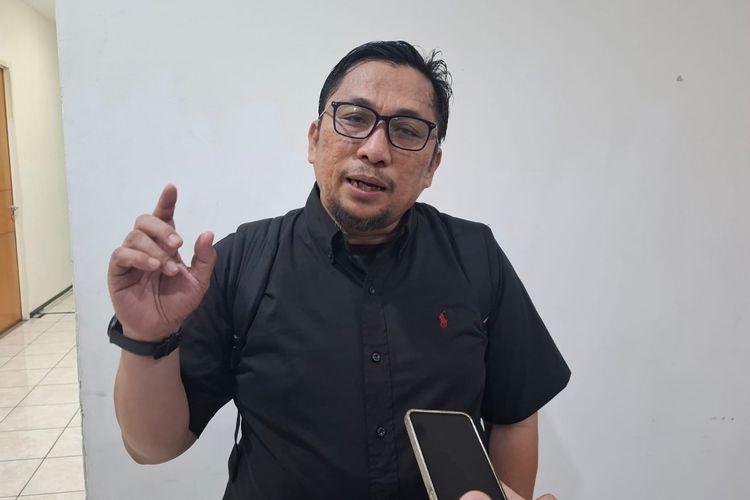 Constitutional law expert Feri Amsari encountered in Jakarta, Wednesday (28/10/2026).
He further assessed that this proposal is merely a part of high-level political bargaining.
Moreover, the 1945 Constitution mandates that the president is only assisted by one vice president.
"Politicians are narrating things they do not understand, and they are merely seeking to engage in high-level political bargaining that fundamentally does not impact the public," asserted Feri.
In agreement, Philosophy of Law expert from Gadjah Mada University and Director of Collective Academia, Agam Ibnu Asa, opined that dividing the vice presidency could create gray areas in authority.
This policy, Agam explained, would complicate the enforcement of accountability, especially when it comes to abuse of power or constitutional violations that could lead to impeachment mechanisms as per Article 7A of the 1945 Constitution.
"Dividing the vice presidency into three entities with the task of overseeing hundreds of governors and regents would actually create gray areas in authority that complicate accountability enforcement," he elaborated in a column for Kompas.com.
He explained that splitting the vice presidency into three supervisory regions also raises serious issues regarding the doctrine of accountability for public officials.
In the discourse surrounding constitutional theory and modern state philosophy, Austrian constitutional scholar Georg Jellinek, in his Allgemeine Staatslehre (1900), argued that state organs operate within the limits of competence defined by constitutional law to ensure organized power that does not overlap.
French political and constitutional theorist Benjamin Constant, in his classic treatise Principes de Politique (1815), reminded that the division or restriction of power must be designed to prevent arbitrariness and ensure that each authority holder remains accountable to the legal order and the citizens.
"In Indonesia's pure presidential system, the unity of executive command is designed so that both political and legal accountability lines remain centered around one axis: the president and one vice president," he clarified.
The irony becomes more pronounced as this proposal emerges amidst challenges to the State Ministry Law.
It is known that these challenges arise from public concern over the bloated cabinet, which could burden the state budget and lead to slow cross-ministerial coordination.
In line with that issue, increasing the number of vice presidents would add to the complexity of institutional arrangements and create new budgetary expenditures.
"The proposal to increase the number of vice president positions at the executive pinnacle risks opening new state spending posts, prolonging coordination chains, and exacerbating institutional complexity," he stressed.
Furthermore, Agam argued that the proposal appears to overlook the root of the problem.
According to him, increasing the number of high-ranking officials at the executive level as a shortcut represents a form of "over-institutionalization."
In fact, the main issue causing developmental disparities across various regions arises from not having optimal functional oversight instruments and enforcement of integrity-driven laws.
Therefore, he emphasized the need to strengthen oversight functions instead of adding more vice presidents.
"Strengthening the oversight functions of the Ministry of Home Affairs, government internal oversight apparatus, and the regional representative chambers (DPD) themselves," he stated.
Similarly, Lucius believes that the government should strengthen regional autonomy. He believes this reinforcement should occur now, ensuring that the president is not a centralistic figure.
Thus, progress in the regions will soon become evident.
"The role of governors as the extension of the central government must also be further strengthened to keep the central authority close to the regions," Lucius said.
However, should the desire to add the number of vice presidents be accepted, the government would inevitably need to amend the constitution. That too is likely to face public resistance.
"If the push for amendments is merely due to the DPD's desires, then almost certainly the public will resist," Lucius pointed out.
Deputy Chairman of the MPR RI, Bambang Wuryanto, also known as Bambang Pacul, affirmed that the addition of vice presidents must be done through constitutional amendments. Alongside Feri, he noted that the 1945 Constitution only provides for one vice president.
However, as of now, there is no urgency to increase the number of vice presidents to three.
"Leaders should suggest valid proposals, not these kinds of ideas," he quipped at the Parliament Complex on Monday.
DPD Chairman Sultan Bachtiar Najamudin explained that the proposal he presented is not meant to be established immediately.
He asked the public to consider this idea more comprehensively as part of thinking about the future of the national leadership system that needs consideration.
He explained that Indonesia is a unique country. Geographically, it is vast with a large population.
With thousands of islands, ethnicities, cultures, customs, and diverse issues in each region, its territory is extensive and its population sizable.
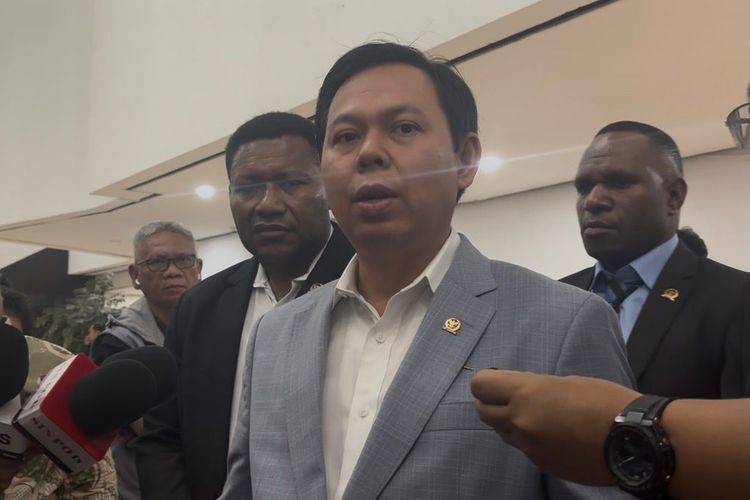 Chairman of the DPD RI Sultan Najamudin at the Parliament Complex, Jakarta, Wednesday (10/12/2025).
He further reminded that Indonesia emerged from the spirit of unity among various regions, kingdoms, sultanates, and all elements of the nation, sharing a common aspiration to build a free Indonesia.
Thus, he considers how to construct a national leadership system capable of reaching all areas of Indonesia, strengthening the relationship between the center and the regions, while providing greater space for regional aspirations.
"If at some point there is a thought to change this, it must undergo very serious studies, constitutional processes, and broad national agreements," Sultan clarified.
He also acknowledged that this proposal is not necessarily the right one. Therefore, it needs to be discussed, examined, and critiqued further.
That is why Sultan wants this idea to be openly discussed, examined, critiqued, and even debated by constitutional experts, academicians, politicians, and the public.
"Who knows, from those discussions, better ideas may emerge," he asserted.