

Today, Polri Holds Ethics Hearing for Brigadier General Tedjo Kusumo in Treason Case
-
News
-
Just now
This article was translated by AI. Read the original article on Kompas.com. See Original

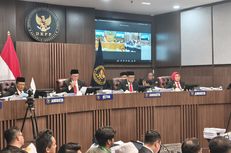
JAKARTA, KOMPAS.com - The government has begun discussing the Draft Law (RUU) on Procedures for Imposing the Death Penalty with Commission III of the Indonesian House of Representatives (DPR RI) during a meeting held at the parliamentary complex in Senayan on Tuesday (24/11/2026).
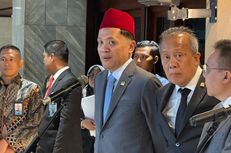
Deputy Minister of Law Edward Omar Sharif Hiariej explained several provisions to be regulated in the draft law, including the rights of death penalty convicts, waiting periods, and execution stages.
"The implementation of the death penalty must be conducted while upholding the protection of human rights and ensuring respect for the dignity and worth of humanity, including for death penalty convicts," said Edward while reading the President's explanation during the meeting with Commission III of the DPR on Tuesday.
Edward elaborated that the draft law stipulates several rights for death penalty convicts, including residing in decent accommodations, communicating with family, and obtaining legal assistance.
Death penalty convicts also have the right to propose the location of their execution.
“Regulations regarding the rights of death penalty convicts include decent accommodation, communication with family, legal assistance, and requests for the execution location,” Edward stated.
In addition to rights, Edward continued, the draft law outlines the obligations of death penalty convicts, which will be adapted in accordance with legal regulations concerning corrections.
The government has also included provisions regarding the waiting period, clemency, and the health conditions of death penalty convicts.
“Provisions for waiting periods, clemency, and health conditions,” Edward revealed.
The Draft Law on Procedures for Imposing the Death Penalty also sets forth requirements and documentation completeness before the death penalty decision is enforced by the Attorney General.
After the Attorney General determines the execution of the death penalty, it must be carried out within 30 days.
The government has also established the obligation to notify the execution of the death penalty to the convict, legal counsel, family, and relevant institutions.
Additionally, the Prosecutor's Office will publish the implementation of the death penalty decision on the Attorney General's website.
The draft law also regulates the stages of execution, from preparation to conclusion.
“The handling of the remains will be conducted based on the request of the death penalty convict or their family,” Edward stated.