
The Mechanism for Electing the Vice President Begins, How to Ensure Transparency?
-
News
-
16 minutes ago
This article was translated by AI. Read the original article on Kompas.com. See Original
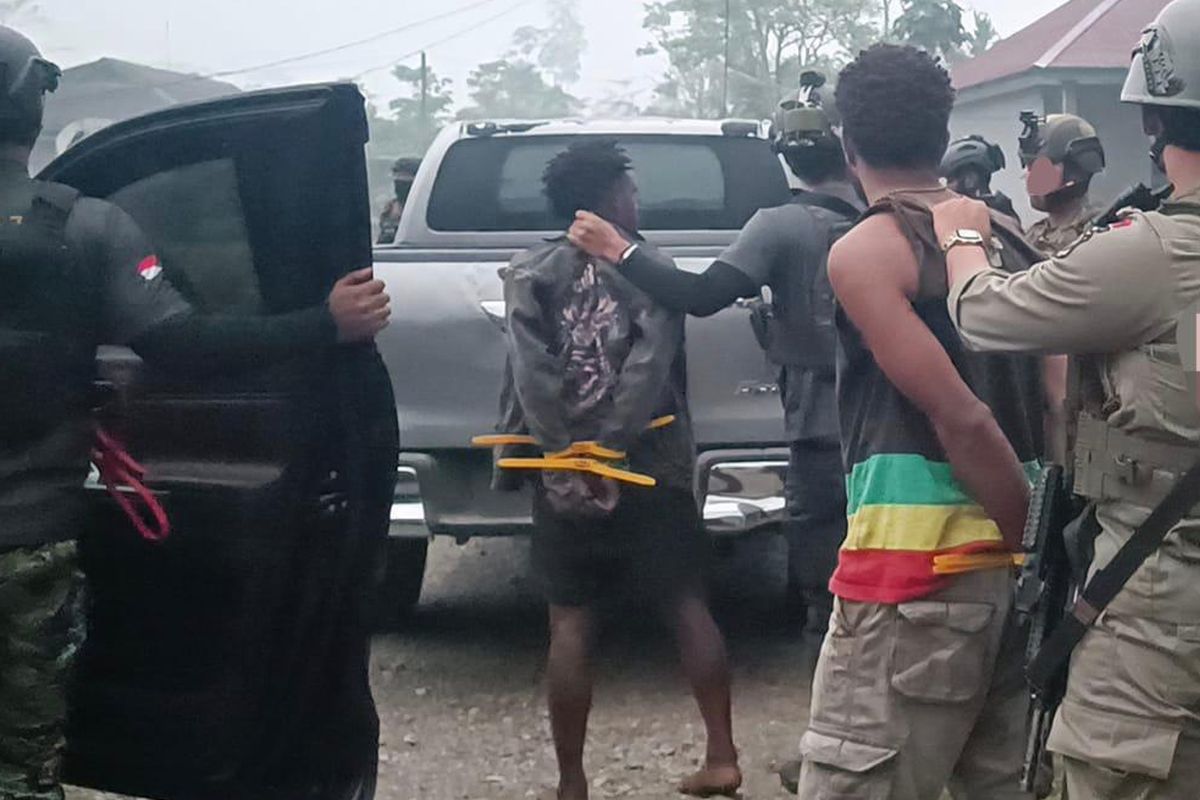
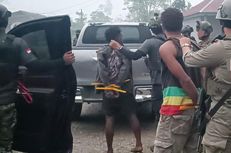
JAKARTA, KOMPAS.com - The designation for armed groups in Papua has changed once again.
Recently, the Indonesian National Armed Forces (TNI) has reclassified the groups as Armed Extremist Groups (KEB), shifting from the previous term Organization of Free Papua (OPM) based on the Secret Telegram (STR) of TNI Commander Number STR/107/2026 dated November 18, 2026.
This change in nomenclature adds to the long history of terminology used by the government to refer to armed groups in Papua.
So, what terms have been previously used in Indonesia for these extremist groups?
The term Organization of Free Papua (OPM) began to be used around 1965.
In its early phases, the term OPM referred to a Papua independence movement.
Its mission was to end the governance of the provinces of Papua and West Papua, formerly known as Irian Jaya.
One of the notable armed insurrections associated with the initial movement occurred on July 26, 1965, in Kebar, Manokwari, West Papua.
As cited by Kompas.com, this group intended to separate from Indonesia.
OPM often advocated for a referendum in order to achieve independence from the Unitary State of the Republic of Indonesia (NKRI).
In pursuing its ambitions, the group has at times engaged in criminal acts that resulted in fatalities.
Consequently, the government initiated a Special Autonomy for Papua, backed by a substantial budget.
However, this funding primarily benefitted an elite minority rather than reaching the broader society.
This deviation then triggered massive resistance movements from OPM, which carried out various criminal actions.
One of the criminal actions conducted by OPM occurred in 1996 when they took several Europeans and Indonesians hostage, comprising researchers and forest activists.
Two hostages from the research group were killed, while the others were released.
For a considerable time, both TNI and the police used this term interchangeably.
Due to its actions, OPM was labeled a criminal organization.
Eventually, the term OPM was replaced by Armed Criminal Groups (KKB) in the early 2000s, a designation frequently employed by the police.
In contrast, the TNI referred to them as Armed Separatist Criminal Groups (KKSB) and Armed Separatist Groups (KSB).
The term KKSB was widely adopted by the TNI around 2017-2018, particularly following the shooting and massacre of dozens of workers involved in the Trans-Papua road project (PT Istaka Karya) in Nduga in December 2018.
Subsequently, in 2021, TNI adopted the term Separatist and Terrorist Groups (KST) after the government officially designated the group as a terrorist organization.
Meanwhile, the police continued to use KKB.
This terrorist categorization was implemented following a series of clashes with security forces, including one that resulted in the death of the Chief of Regional Intelligence Agency (Kabinda) Papua, Brigadier General I Gusti Putu Danny Karya Nugraha.
"The government considers that organizations and individuals in Papua engaging in massive violence are classified as terrorists," stated Coordinating Minister for Political, Legal, and Security Affairs Mahfud MD at that time.
This designation as a terrorist organization aligns with Law Number 5 of 2018 regarding changes to Law Number 15 of 2003 concerning the enactment of Government Regulation in lieu of Law Number 1 of 2002 on the Eradication of Terrorism.
Mahfud explained that anyone who plans, incites, or organizes acts of terrorism is deemed a terrorist.
Terrorism is defined as any act employing violence or threats that induces a climate of terror or widespread fear.
"This can lead to mass casualties or cause damage or destruction to vital strategic objects affecting the environment, public facilities, or international facilities for ideological, political, and security motives," Mahfud remarked.
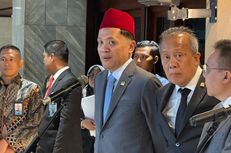
Then, in 2024, TNI Commander Agus Subiyanto reverted the terminology from KST back to OPM through Telegram No. STR/41/2024.
Meanwhile, the police have continued to use the term KKB in all operations conducted by the Peace Operation Task Force (ODC) to this day.
Agus explained that this term is utilized because the group calls itself the West Papua National Liberation Army (TPNPB).
Thus, the designation OPM is considered more aligned with the identity that the group uses.
"Since they refer to themselves as TPNPB (West Papua National Liberation Army), it is the same as OPM," Agus elaborated in Menteng, Central Jakarta, on Wednesday (April 10, 2024).
Nonetheless, the TNI continues to utilize a territorial operational approach, which involves inviting all parties to contribute to the development and welfare of the Papuan people.
Agus stated that the operational patterns in Papua employ both soft power and hard power. Territorial operations are a part of soft power.
“Soft power through territorial operations helps accelerate development and improve welfare. (Hard power operations confront armed groups with weapons,” Agus detailed.
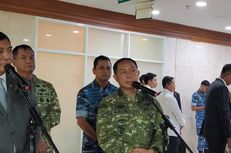
Most recently, in 2026, TNI changed the designation again to Armed Extremist Groups (KEB) in accordance with the Secret Telegram (STR) of TNI Commander Number STR/107/2026 dated November 18, 2026.
This change also resulted from a coordination meeting and brainstorming session held by TNI's Self-Sufficient Task Force Habema on November 10, 2026, regarding the reclassification of OPM to KEB.
TNI Habema Commander Brigadier General TNI Riyanto stated that the change was necessary to avoid generalizing the Papuan populace through the term "Papua" in OPM.
This is crucial because not all Papuans belong to the extremist group.
Agus added that the aim was to prevent the conflict surrounding OPM from being politically polarized or leveraged for certain political interests.
"Thus it can lead to foreign interference and foster separatism in the region," Agus stated on Monday.
In the future, the term KEB will be included by President Prabowo Subianto in a presidential regulation (perpres). This is because each agency has had differing terminologies for KKB.
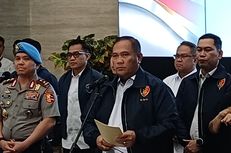
"Indeed, various agencies have used different terms—from the police, BIN, and TNI. Soon, a presidential regulation from the President will clarify that we agree on the designation Armed Extremist Groups," Agus commented.
Political and intelligence analyst Selamat Ginting stated that the change in nomenclature is based on several considerations, from policy aspects to efforts to avoid generalization.
He explained that the use of the term violence-based extremism aligns with the government's policy framework in the National Action Plan for Preventing and Tackling Violence-Based Extremism Leading to Terrorism (RAN PE).
According to him, the term extremism emphasizes behavior, attitudes, and actions that lead to violence, rather than merely identifying groups based on their political goals.
"The use of extremism is directed more towards behaviors, attitudes, and violent actions. The term separatism can easily be appropriated for internationalizing their objectives," Selamat stated to Kompas.com on Monday (November 23, 2026).
He agrees that omitting the term Papua from the designation can help prevent generalization against the Papuan community.
This is due to the fact that the group engaging in extreme and violent actions is a minority and should not be synonymous with the entire Papuan populace.
The nomenclature of extremism is also recognized within an international framework, including the Preventing Violent Extremism (PVE) approach developed in the context of combating violence-based extremism.
"KEB is used by the TNI as a form of identification because the actions of KEB have escalated to acts of terror against civilians as a strategy to pressure and use them as shields," he emphasized.