
Schedule for Verification Stages of Andi Amran Sulaiman and Sugiono as Prabowo's Vice-Presidential Candidates
-
News
-
1 minute ago
This article was translated by AI. Read the original article on Kompas.com. See Original
JAKARTA, KOMPAS.com - The Indonesian National Armed Forces (TNI) has once again changed the designation for armed groups in Papua.
The group is now referred to as the Armed Extremist Group (KEB), replacing the term Papua Independence Organization (OPM).
Several reasons underpin this change.
TNI's Military Commander Habema Brigadier General TNI Riyanto stated that one reason is to avoid generalizing the Papuan people through the term "Papua" in OPM.
Not all Papuans belong to the extremist group.
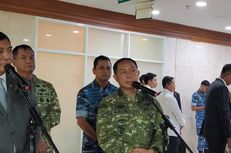
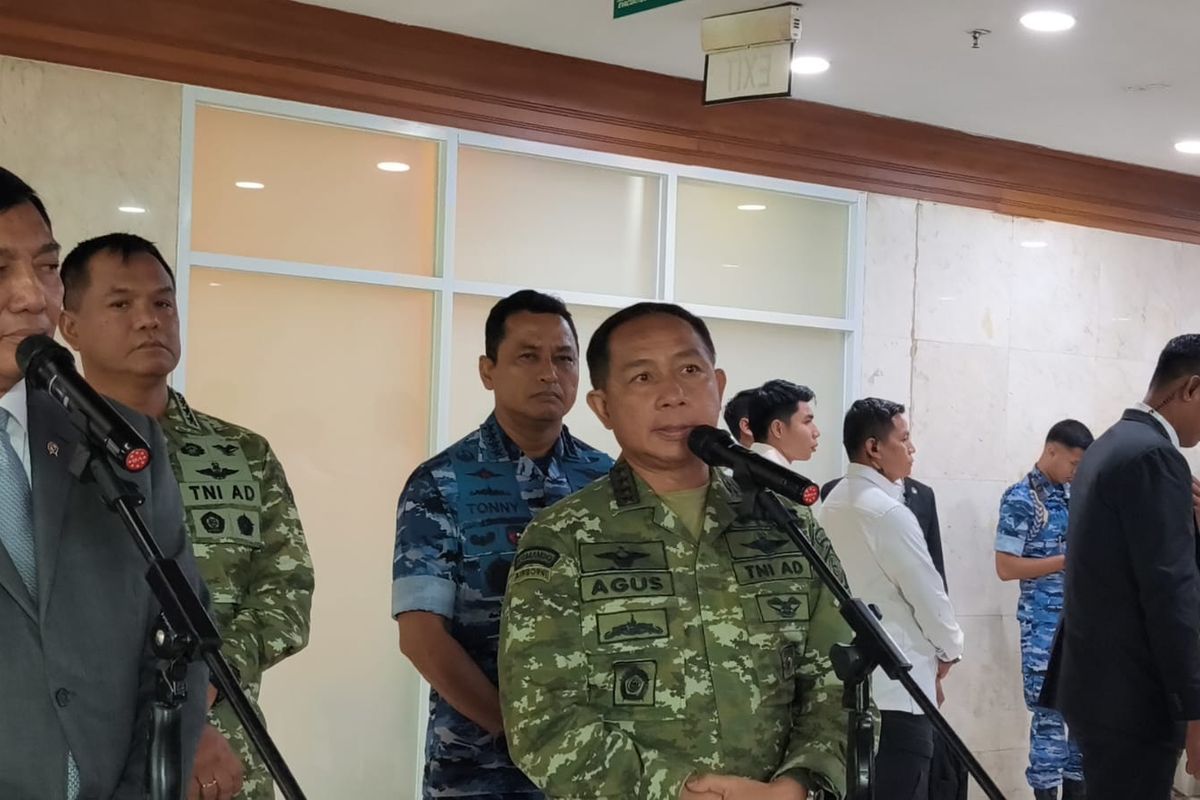
Meanwhile, TNI Commander General Agus Subiyanto expressed that this change aims to prevent the political polarization of the OPM-related conflict to serve certain political interests.
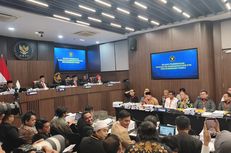
"This way, the issue can be manipulated internationally, leading to potential separatism in the region," Agus remarked at the Parliament Complex in Central Jakarta on Monday (23/11/2026).
However, how will this change in nomenclature affect the state's approach?
Political and intelligence observer Selamat Ginting noted that the change in nomenclature involves several considerations, ranging from policy aspects to efforts to avoid generalization.
He explained that the use of violent extremism aligns with the government's policy framework outlined in the National Action Plan for the Prevention and Countering of Violent Extremism Leading to Terrorism (RAN PE).
According to him, the term extremism emphasizes behaviors, attitudes, and actions that lead to violence and does not merely identify groups based on their political goals.
"The use of extremism focuses more on behaviors, attitudes, and actions that involve violence. The term separatism can easily be used to internationalize their objectives," Selamat told Kompas.com on Monday (23/11/2026).
He agreed that omitting the word Papua in the designation of the group could prevent generalization about the Papuan community.
Groups committing extremist and violent actions are a minority, thus should not be equated with the entire Papuan population.
The nomenclature of extremism is also recognized internationally, including in the Preventing Violent Extremism (PVE) framework developed to prevent violent extremism.
"The KEB designation is used by the TNI as a form of identification because the actions of KEB have led to terrorist acts against civilians as a strategy to intimidate and use them as shields," he elaborated.
However, senior researcher at Imparsial and Chairperson of the Centra Initiative Board Al Araf believes that the name change from OPM to KEB does not actually address the root issues related to the conflict in Papua.
He sees this name change as reflecting the state’s perspective, viewing groups with differing views from the government as threats to national security.
This perspective, he says, risks placing the handling of Papua's issues within a security approach that prioritizes military instruments over political solutions and dialogue.
"Both OPM and KEB are essentially labels that allow for military involvement in security operations in Papua. This opens the door to securitization, where all of Papua’s problems are addressed through excessive security approaches involving the military," Al Araf explained.
In reality, he argues, the conflict in Papua requires dialogue involving various groups and stakeholders to create opportunities for negotiation and peaceful conflict resolution.
He stated that the government should not continuously pursue a security approach in responding to dynamics in Papua.
Instead, a dialogic approach should be strengthened so that the government can hear diverse perspectives, build trust, and seek solutions to ongoing conflicts.
"Thus, whether OPM or KEB, neither addresses the root causes of the Papua conflict, and rather adds new problems," he noted.
To anticipate this, Al Araf suggests that the government create a peace roadmap for developing Papua through dialogue.
So far, the central government has not established a comprehensive roadmap for peacefully resolving the Papua conflict.
This roadmap would allow for a more dignified and civilized resolution of the Papua conflict.
"It is high time to abandon the excessively militaristic approaches that have persisted over the years," he emphasized.
He stressed that the government needs to forge a new, more humane, and dialogic path in resolving the Papua conflict.
Furthermore, he indicated that the designation of KEB does not align with a more humane and dialogic resolution agenda.
"If there are legal violations in Papua, then the approach should focus on law enforcement through legal operations involving law enforcement agencies. There is no need for excessive military operations, especially sending in military forces from outside Papua, as has happened in the past," Al Araf asserted.
TNI Commander Agus Subianto stated that the Papua conflict is prone to polarization.
Thus far, the designation of OPM has varied across different state agencies.
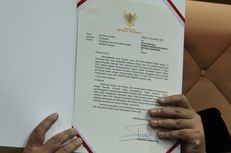
This change is based on the TNI Commander’s Secret Telegram Letter (STR) No. STR/107/2026 dated 18 November 2026.
The change was also the result of a coordination meeting and brainstorming session of the TNI Habema Operations Task Force held on 10 November 2026 regarding the change in reference from the Papua Independence Organization (OPM) to the Armed Extremist Group (KEB).
In the future, Agus indicated, the designation of KEB will also be included in presidential regulations (perpres).
"Thus, indeed each agency has its own designation. From the police, the BIN, and then the TNI. Soon there will be a perpres from the President stating that we agree on the term armed extremist group," he stated.
It is worth noting that there have been several changes in terminology over time.
Initially, the term OPM was used by the TNI and the Police around 1963. However, in 2021, the terminology changed based on a coordination meeting in the Coordinating Ministry for Political, Legal, and Security Affairs.
The TNI adopted the term Terrorist Separatist Group (KST), while the Police used the term Armed Criminal Group (KKB).
Subsequently, in 2024, the TNI reverted to the term OPM.
Meanwhile, the Police continue to use the term KKB in all operations conducted by the Cartenz Peace Operation Task Force (ODC) to this day.