

The MK Claims that the Discussion of the Police Law in the DPR Does Not Comply with the Stages of Law Formation
-
News
-
2 minutes ago
This article was translated by AI. Read the original article on Kompas.com. See Original
THE PEOPLE elect the president and vice president as a package. However, when the vice presidency becomes vacant during a government term, the public is no longer called to the polls. The replacement is chosen by the People's Consultative Assembly (MPR).
This is one of the unique aspects of the Indonesian constitution. The position, originally obtained through direct election, can be filled through a decision by a representative body. No elections, no campaigns, and no ballots for the public to cast.
This scenario has now become a political reality after Gibran Rakabuming Raka left his post as Vice President.
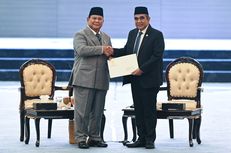
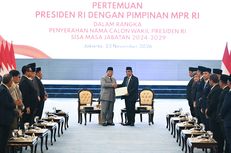
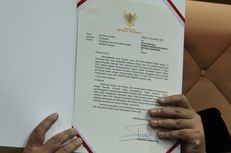
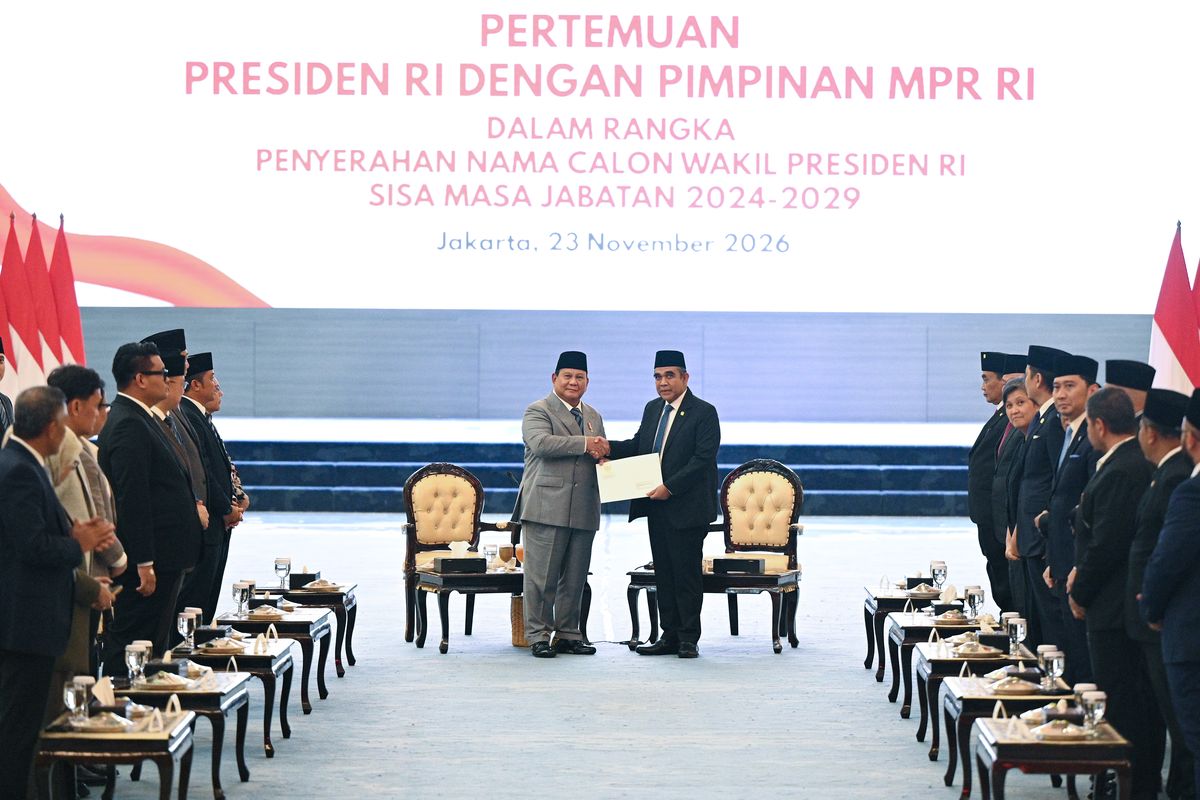
President Prabowo Subianto, on November 23, 2026, proposed two names to the MPR: Andi Amran Sulaiman and Sugiono. The MPR is scheduled to select a replacement on December 11, 2026.
This situation raises fundamental questions. Does a vice president not elected directly by the people have the same democratic legitimacy? To what extent can the president determine the candidates?
And does the MPR genuinely choose, or merely endorse the president's political will?
The answer cannot be found purely in party support calculations. We must return to the constitution, where power obtains its foundation and limits.
Article 6A, paragraph (1) of the 1945 Constitution asserts that the President and Vice President are elected directly by the people as a pair. This provision marks a significant achievement of constitutional reform.
The public no longer entrusts the presidential election to the MPR as was the case prior to the amendment of the 1945 Constitution.
However, the constitution does not assume that governance will always proceed without interruption. Vacancies can occur for various reasons. The state requires a replacement mechanism to ensure governmental continuity.
Article 8, paragraph (2) of the 1945 Constitution provides the answer. If a vice presidency becomes vacant, the MPR must hold a session within a maximum of sixty days to elect a vice president from two candidates proposed by the president.
These two provisions do not conflict. Article 6A regulates the formation of government through elections, while Article 8, paragraph (2) governs filling a vacancy in special circumstances.
Thus, the selection of a vice president by the MPR is not a deviation from the constitution. In fact, it is the constitution that mandates it.
The issue arises when procedural legality is deemed to have resolved all democratic questions. However, something legally valid must also be accountable in terms of the exercise of power.
A vice president elected by the MPR does not hold a constitutionally lower position than one resulting from an election. Both hold the same office with the same powers and responsibilities.
The difference lies in the method of obtaining the position. This distinction requires a political accountability that cannot be ignored.
In a presidential election, the public votes for a pair, not two separate officials. That choice embodies hopes regarding leadership, the continuity of governance, and the direction of state policy.
Therefore, the termination of a vice presidency is not a mere administrative event. There is an electoral mandate component of the pair that changes before the term ends.
Nonetheless, such changes do not automatically end the president's mandate. The 1945 Constitution distinguishes the mechanisms for termination and replacement of each position.
The president continues to exercise governmental authority, while the vice presidency vacancy is resolved through constitutional mechanisms.
This is where it is essential to distinguish between direct electoral legitimacy and constitutional legitimacy through representative bodies.
The replacement vice president indeed does not receive direct votes from the people. However, they are elected by the MPR, whose members come from the House of Representatives (DPR) and the Regional Representative Council (DPD), two bodies founded on democratic representation.
This representation relationship provides a basis for indirect legitimacy, even though it does not equate to the mandate obtained by the president and vice president pair in an election.
Hanna Fenichel Pitkin in The Concept of Representation (1967) reminds us that representation does not end with someone's formal position as a representative. Representation also involves actions that consider the interests of the represented parties.
This thinking is relevant for understanding the responsibilities of the MPR. Its members cannot rely solely on the fact that they once obtained a mandate through elections.
They must demonstrate that the decision to select a vice president considers public interests.
Although the public is not present directly in the MPR vote, their physical absence does not mean their interests can be set aside.
Representative democracy loses meaning when the people's mandate is only remembered during elections, then forgotten when power is being distributed.
Article 8, paragraph (2) grants the president the authority to propose two vice presidential candidates. The formulation is clear: the president proposes, the MPR chooses.
This division of powers is not coincidental. The president needs a vice president who can collaborate in governance.
Thus, the constitution provides room for the president to determine two individuals deemed capable of accompanying him.
However, the vice president is not merely the president's personal assistant. They are a state official who derives their position directly from the constitution.
Article 4, paragraph (2) of the 1945 Constitution states that the president is assisted by one vice president. Meanwhile, Article 8, paragraph (1) positions the vice president as the replacement for the president in case of death, resignation, dismissal, or inability to perform duties during their term.
The implications are not trivial. The person selected as vice president must be considered not only based on their ability to work with the president but also on their readiness to assume the presidency if constitutional circumstances necessitate it.
Political loyalty may become a consideration in governance relationships. However, such loyalty cannot replace integrity, fulfillment of legal requirements, and state responsibility.
The president indeed has political freedom to propose candidates. However, that freedom is not without limits.
The constitution does not recognize the vice presidency as a reward for political allies or compensation for someone's contributions in the power struggle.
The two names proposed must meet legal requirements. The president's choices should also be justifiable to the public based on governmental needs and national interests.
Constitutional authority does not always require the president to explain every political consideration. However, transparency regarding the reasons for the proposal will strengthen trust in the replacement process.
After the amendment of the 1945 Constitution, the MPR is no longer the highest state institution. The sovereignty of the people is exercised according to the Constitution, not centralized in one institution.
However, this change in position does not eliminate the MPR's authority to elect a vice president in the event of a vacancy. In fact, it is in such situations that the quality of the MPR's institution is tested.
The constitution uses the word choose, not merely approve. This distinction is important because choosing implies a process of determining between two proposed alternatives.
The president cannot unilaterally appoint a replacement vice president. Conversely, the MPR also does not have the authority to nominate a third person outside the two names proposed by the president through the mechanism of Article 8, paragraph (2).
Both are bound by the division of powers determined by the constitution.
In political practice, it is certainly possible for inter-faction agreements to occur before the session is held. Such agreements do not inherently contradict the law.
However, political agreements should not dilute the meaning of the selection, negate the examination of qualifications, or disregard decision-making procedures.
If the entire process merely becomes a formality to announce a predetermined decision, the MPR's authority risks losing its democratic substance.
Another important point to remember is the composition of the MPR. This body consists of members from the DPR and DPD. Both bring different dimensions of representation.
The DPR reflects political representation, while the DPD carries the dimension of regional representation.
Therefore, the selection of a vice president should not be viewed merely as a political party affair. Regional interests and national needs must also find a place in the considerations.
The dignity of the MPR does not lie in its ability to complete the election as quickly as possible, but rather in its seriousness in exercising authority in accordance with the constitution.
Orderly sessions do not necessarily reflect a substantive process. In contrast, openly expressed differences of opinion should not be seen as disruptions to political stability.
Democracy requires decisions. However, good decisions require a accountable process.
One important issue in filling the vice president position is the examination of the candidates' qualifications.
Statecraft experience shows that issues surrounding candidacy documents can develop into legal disputes and prolonged political debates.
Hence, the candidate examination must not only ensure that all documents have been submitted. There is a fundamental difference between document completeness, formal validity, and material truth.
Complete documents do not necessarily prove that all qualifications have been met. Conversely, certain administrative deficiencies do not always mean someone substantively fails to meet the qualifications.
The examination must be conducted based on legal provisions, valid evidence, and fair procedures.
In administrative law, there is a principle of accuracy. Officials or bodies making decisions must base their actions on sufficient facts and information.
This principle teaches essential lessons for the exercise of public authority, including when the MPR examines vice presidential candidates' qualifications.
Of course, the MPR's decision in exercising its constitutional authority cannot simply be equated with administrative decisions that are typically subjects of disputes in administrative courts.
The character of its authority is different. So too are the mechanisms of accountability and the possibility of legal scrutiny.
However, the specificity of the MPR's authority is not a reason to neglect thoroughness. Qualification examinations should be conducted before the election, not raised as issues post-inauguration.
The same applies to deadlines. Article 8, paragraph (2) sets a maximum of sixty days to hold a selection session from the occurrence of a vacancy.
This constitutional provision must be distinguished from technical regulations regarding candidate nominations and stages of the session in legislation.
Implementation rules must not alter or override the limits set by the 1945 Constitution.
In a rule of law, procedural accuracy is not a trivial matter. Procedures are one way to prevent power from being exercised according to momentary whims.
The election of the Vice President outside of elections ultimately serves as a test of Indonesian democracy's maturity.
The constitution has provided a solution to ensure that vacancies do not disrupt governmental continuity. However, the availability of the mechanism does not automatically guarantee the quality of its implementation.
The president has the authority to propose. The MPR has the authority to choose. Both perform distinct functions that complement and simultaneously limit each other.
Neither of them should consider their authority as solely belonging to them or their political group.
The most crucial issue is not merely whether Amran Sulaiman or Sugiono is ultimately selected. Both must be evaluated according to the same legal requirements and constitutional responsibilities.
More fundamentally, the question is whether the selection process can demonstrate that power is still exercised based on rules, not merely as a result of political negotiations.
The constitution does not always require the public to return to the polls every time a vacancy occurs. However, the constitution has never given reasons for state organizers to forget their source of power.
The election of a vice president by the MPR is legitimate as it is mandated by the 1945 Constitution. Its democratic legitimacy will be stronger if the process is open, qualifications are examined carefully, and decisions can be justified to the public.
Ultimately, the vice president's seat is not a political gift, nor is it the property of the president or the supporting party. It is a constitutional mandate that must be executed for the state's interests.
The people may not be present at the polls when the replacement vice president is chosen. However, their sovereignty must not be absent from the MPR chamber.