

Cipete Command Post and a State Within a State
-
News
-
2 minutes ago
This article was translated by AI. Read the original article on Kompas.com. See Original
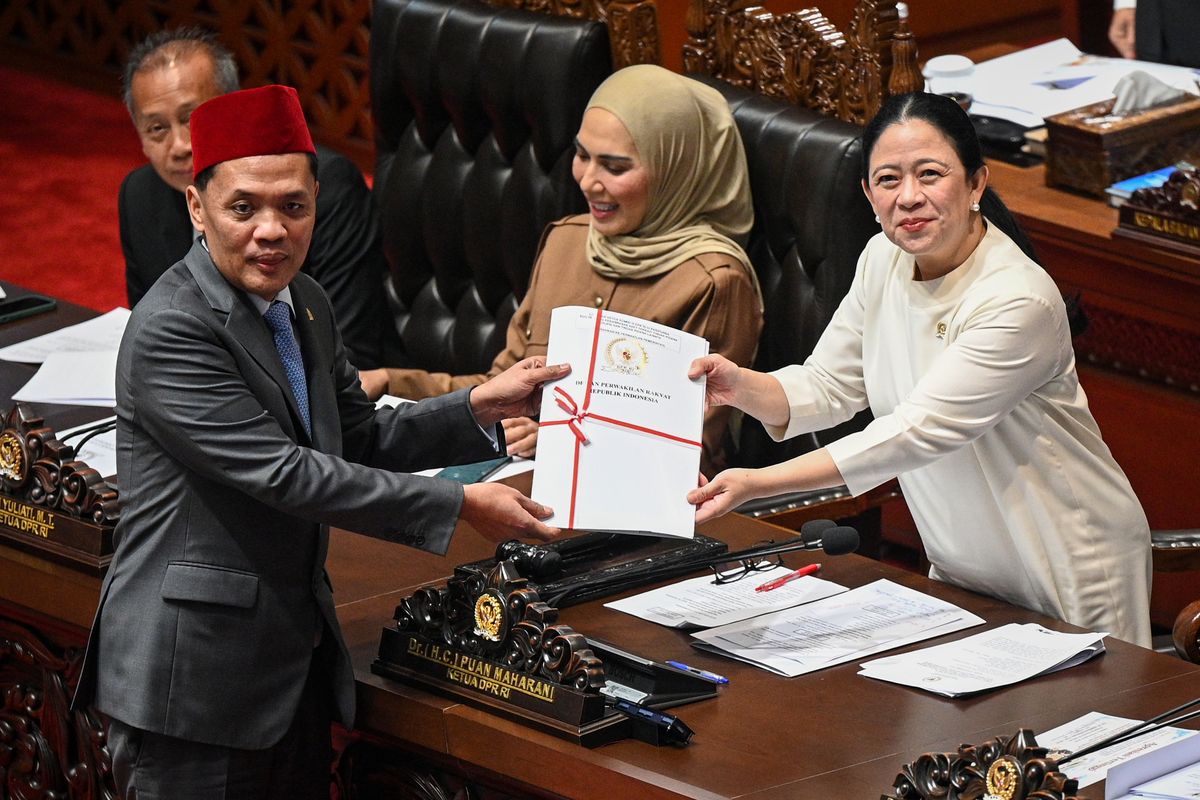
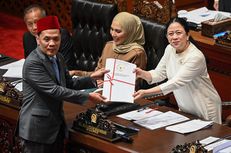
JAKARTA, KOMPAS.com - The Indonesian House of Representatives has officially passed the Bill on Asset Forfeiture Related to Corruption and Other Offenses into law.
However, various parties believe that the law still has significant shortcomings.
Indonesia Corruption Watch (ICW) argues that the law does not address the issue of illicit enrichment.
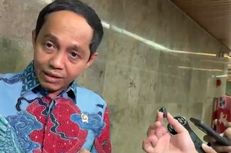
"What should actually be included in the drafting of the asset forfeiture law is related to illicit enrichment, which refers to the unjust increase of wealth, currently a significant issue concerning our economic inequality," said Ibrahim, Head of the Law and Investigation Division at ICW, during a visit to the Senayan Parliamentary Complex in Jakarta on Thursday (19/11/2026).
He stated that under the current provisions, corrupt individuals whose wealth continues to grow may not necessarily be prosecuted under this law.
He added that the House ignored the Corruption Eradication Commission's (KPK) request to establish illicit enrichment norms as part of this law.
ICW also pointed out that the House of Representatives did not include this provision, citing conflicts with Human Rights (HAM).
According to him, this cannot be used as a valid reason.
ICW suspects that many House members cannot account for their wealth in the LHKPN (State Officials Wealth Report).
"And that is not a violation of human rights. Why doesn't the House dare to regulate illicit enrichment? Because many members of the House and the government have seen their wealth rise unjustly, and they cannot account for it. Their LHKPN reports are inaccurate, and they own companies not listed in the LHKPN," emphasized Azhim, a staff member of ICW's Law and Investigation Division.
In addition to illicit enrichment, the second point ICW highlighted is the potential inability to recover state losses stemming from corruption cases that occurred before the law took effect.
He noted that past corruption cases, already published and with documented financial losses to the state, will not be addressed by this law.
Moreover, a crucial issue raised by ICW involves the asset management agency whose regulations have been shifted to the Presidential Regulation level and will be directly under presidential control.
Ibrahim stressed that these three issues should have been discussed openly with the public before regulations were passed.
Based on these three observations, ICW believes that the substance of the rules currently enacted differs significantly from the original spirit behind the asset forfeiture drafting.
"Therefore, we assert that the asset forfeiture law today is a counterfeit of what was initially discussed as the draft in 2023," Ibrahim stated emphatically.
ICW has officially reported House Speaker Puan Maharani and the Chairman of Commission III, Habiburokhman, to the Council of Ethics (MKD) of the House.
"Today, we, representing the coalition, are filing a complaint with the Council of Ethics regarding alleged ethical violations committed by the House Speaker and the Chairman of Commission III concerning the undisclosed draft of the Asset Forfeiture Bill," Ibrahim stated.
According to Ibrahim, the parliament did not apply the principle of meaningful participation during the drafting process of the Asset Forfeiture Bill.
Public access to the draft legislation was closed even until the approval process was completed.
"As of today, when the law was passed, we still have not received access to the document on the House's websites," he said.
On the other hand, ICW dismissed claims from the leadership of the House and Commission III, who asserted that the regulatory discussion was conducted transparently.
Ibrahim stated that civil society organizations like ICW were not involved at all in the discussions regarding the formulation of the regulations.
"To this moment, with our complaint filed to the MKD, ICW has never been invited to participate in the formulation of this law," he asserted.
Ibrahim confirmed that the report's documents from ICW have been officially received by the MKD secretariat.
This ethical reporting step follows a prior warning letter sent on November 16.
"We hope that the asset forfeiture advocacy coalition wishes for the MKD to follow up on our report and impose sanctions regarding the alleged lack of disclosure of the asset forfeiture bill's drafting," he expressed.
House Speaker Puan Maharani assured that the decision to pass the Asset Forfeiture Bill related to corruption and other offenses was not pressured by any party.
"Today we are passing this law not due to pressure or coercion, but because it has been done as thoroughly as possible," Puan stated during the 13th Plenary Meeting of the 2026-2027 Session on Thursday (19/11/2026).
Puan stated that the parliament prioritized the principle of meaningful participation during the drafting of this regulation.
Throughout the process, the House has recorded holding a total of 87 public hearings (RDP) and General Public Hearings (RDPU).
"It has also been explained that meaningful participation was prioritized, with 87 RDP and RDPU activities, along with 15 working visits to 15 provinces to obtain inputs from all community elements," she explained.
Additionally, members of parliament also directly visited 46 electoral districts to gather grassroots feedback regarding this asset forfeiture policy.
In-depth studies were also conducted to ensure the substance of this Bill aligns without conflicting with existing laws, such as the Criminal Procedure Code and the Criminal Code.
"So, hopefully, this law will be beneficial and useful for our nation and state, particularly serving its initial objective of eliminating any connections or ulterior motives from what we all or society desires," she concluded.
The House of Representatives explained the reasoning behind the decision not to include provisions regarding illicit enrichment in the Asset Forfeiture Law.
The Chairman of Commission III of the House, Habiburokhman, stated that this step was taken after the parliament considered various inputs from academics and the broader public, as well as reviewing perspectives on human rights.
"First, regarding illicit enrichment, we have absorbed various aspirations from the community. Some support it, but many also oppose it. The experts feel the same way," Habiburokhman commented at the House building on Thursday (19/11/2026).
According to Habiburokhman, the parliament also conducted comparative studies on similar regulations in other countries.
He cited examples of countries like the United States and the United Kingdom, which opted not to implement the concept of illicit enrichment as it conflicts with human rights principles.
Furthermore, Habiburokhman pointed out a case in Germany, where the regulation was reportedly annulled by the country's Constitutional Court.
"Thus, we presented at least 15 elements that express that illicit enrichment contradicts human rights," he detailed.
Aside from human rights factors, Habiburokhman explained that the absence of this provision is due to the nature of the Asset Forfeiture Law as formal law, focusing on procedures or legal processes.
Therefore, he emphasized, this legislation is not substantive law that governs criminal provisions or punishment norms.
"So, indeed, based on these two reasons, we cannot incorporate it into this asset forfeiture law," he concluded.