
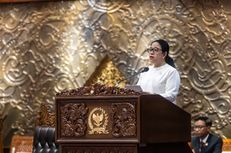
Puan: Asset Forfeiture Law Passed Not Due to Pressure or Coercion
-
News
-
4 minutes ago
This article was translated by AI. Read the original article on Kompas.com. See Original
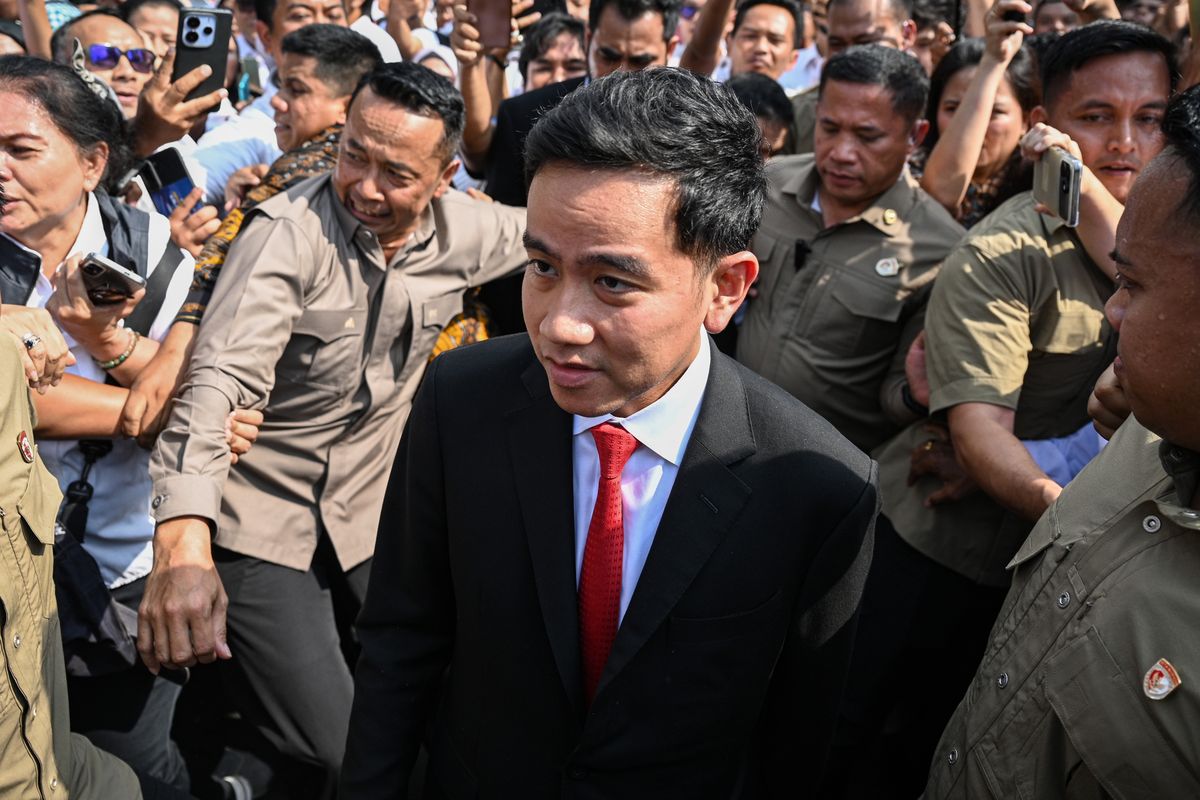
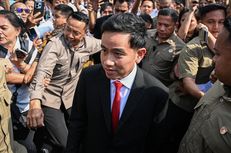
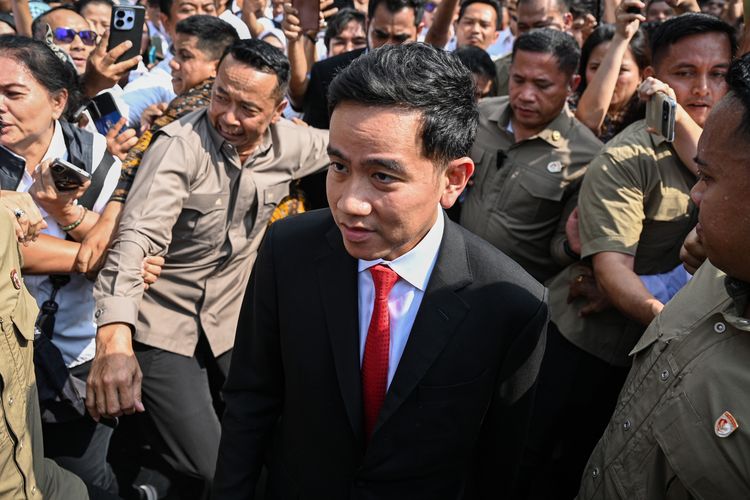
THERE is one aspect worthy of reflection regarding Gibran Rakabuming Raka's resignation from the vice presidency. This incident allows us to gauge the level of political maturity and behavior within our society.
It can be said that this nation has a commendable level of political maturity.
If the public were politically immature, the resignation of a vice president could open the door to civil unrest.
The polarization of supporters and opponents has the potential to evolve into identity conflicts, political loyalties, or even social enmity.
Supporters of Gibran may feel they have lost political representation, while his critics could see this event as a political victory.
In an immature society, such differing perspectives can easily become triggers for grassroots conflict.
The history of several countries shows that changes in top leadership are often a source of instability.
However, the situation is different in Indonesia. As far as the observed dynamics indicate, the resignation of the vice president has not manifested into widespread social division.
Of course, there are supporters, defenders, critics, and individuals with their own political interests.
Nevertheless, the public seems capable of separating the issue of an individual from the continuity of the state.
There appears to be a collective awareness among the public that positions are not permanent identities, and power is not personal property.
The public understands that someone who once held the highest office in government does not need to continually be the focal point of the nation's political life.
This raises the question: does the calm of society in facing Gibran's resignation reflect a success of politicians in managing public political attitudes, or does it indicate that the political consciousness of the Indonesian people has indeed developed toward maturity?
It could be that both factors are at play simultaneously. Political elites play a crucial role in managing communication, avoiding provocation, and ensuring that power dynamics do not turn into horizontal conflict.
At the same time, we can also observe that the public's ability to develop political rationality independently is starting to take shape.
The public does not always follow the emotions of the elite. They possess historical experience, pragmatic considerations, and the ability to evaluate that national life far exceeds the political fate of any individual.
This may be one of the interesting developments in our democracy.
The public is beginning to understand that power has a time limit, while the state and social life must continue.
When an individual enters public office, they receive a mandate to carry out constitutional functions.
When that mandate ends, or changes occur in accordance with constitutional mechanisms, the life of the nation should not come to a halt.
The public should not become hostages to individual interests, no matter how strong that individual's political influence may have been.
It is clear that mature democracy is not one without fanatical supporters, criticism, or conflicting views.
Democracy actually always provides space for different interests and opinions.
The measure of democratic maturity lies in the ability to manage these differences without destroying national unity.
People may feel disappointed, may support, may reject, and even may criticize fiercely.
However, all of this must occur within the bounds of respect for the law, the constitution, and the preservation of the state.
A critical lesson from Gibran's resignation is not to overly glorify an individual to the detriment of institutional development.
Democracy that relies on individual charisma will always be vulnerable to upheaval when that figure loses power.
Conversely, democracy that rests on institutions will continue to function even amidst transitions of president, vice president, ministers, party leaders, or political organization heads.
This is the difference between a society that only sees politics as a contest for figures and one that understands politics as the management of public mandates.
If, in the future, the Indonesian society can respond calmly to the resignation of the Vice President, without losing its rationality and without getting caught in intergroup hostility, we will indeed have gained a very valuable social capital.
This capital must not be wasted. It should be developed into the political capacity of the nation.
This social capital represents our ability to accept change, respect constitutional procedures, control collective emotions, and prioritize national interests over group interests.
Nevertheless, we must not become complacent too quickly. The evident calm does not necessarily reflect complete maturity.
It is possible that portions of society may respond with apathy, indifference, or view the issue as irrelevant to their daily lives.
This poses a challenge for us to differentiate political maturity from political indifference.
A mature nation is not one that does not react, but one that reacts rationally, critically, and responsibly.
Apart from concerns about political indifference among the public, Gibran's resignation must nonetheless lead to a principle that what can end is a position, what can change is the configuration of power, but what must not collapse is the unity of the nation.
If Indonesia can navigate such political dynamics without becoming a fractured nation, we should be grateful. Not because there are no conflicting interests, but because those conflicts did not overwhelm the common sense of the public.
This is a sign that our democracy is learning to mature. We are a great nation. Indonesia must be greater than whoever is in power.