
Contents of the New Perpol Issued Before the Ethics Trial for General Listyo Sigit
-
News
-
5 minutes ago
This article was translated by AI. Read the original article on Kompas.com. See Original
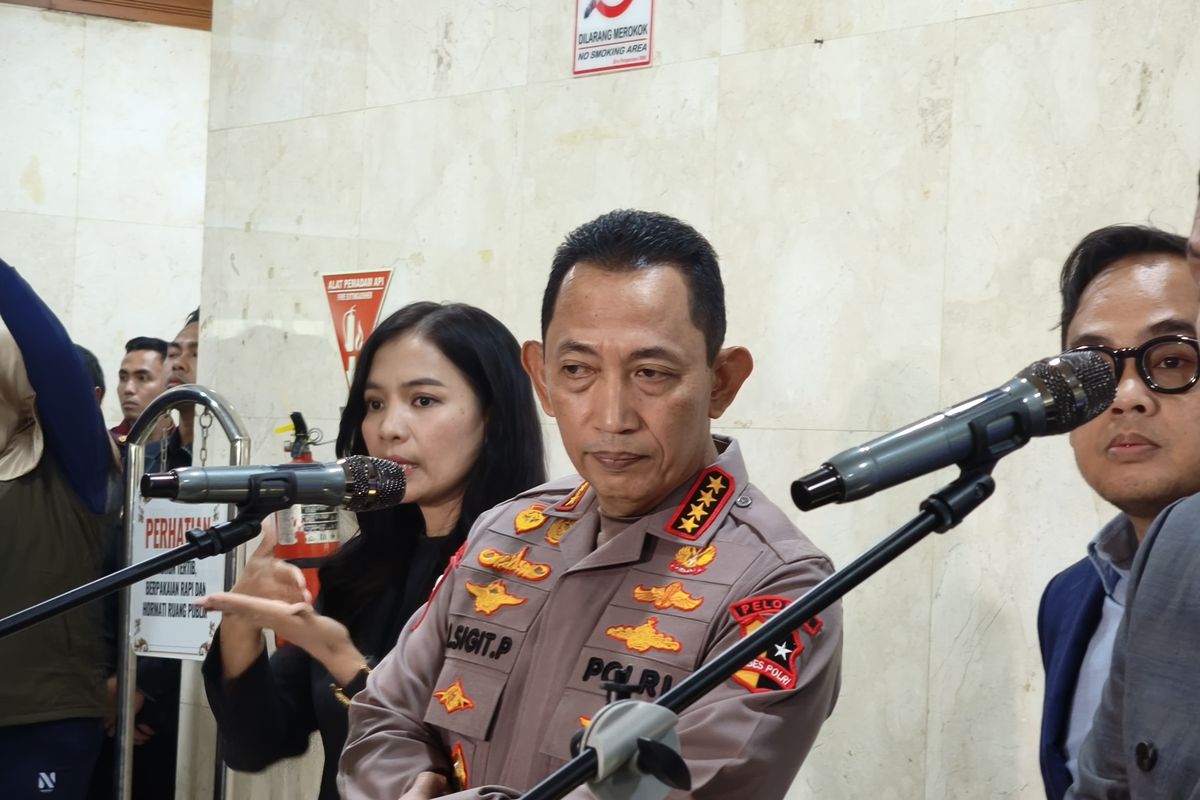
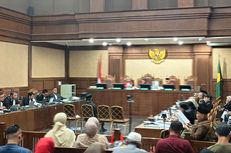
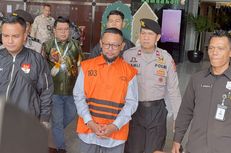
JAKARTA, KOMPAS.com - Former National Police Chief General Listyo Sigit Prabowo will undergo an ethics trial following his status as a suspect in the illegal surveillance of President Prabowo Subianto. However, regulations must be prepared to facilitate the trial against General Sigit.
Police Chief General Suyudi Ario Seto has issued Police Regulation (Perpol) No. 4 of 2026 amending the rules of the Code of Ethics and the Ethics Commission of the Indonesian National Police.
This new regulation modifies Police Regulation No. 7 of 2022 concerning the Police Code of Ethics and Ethics Commission.
“Yes, that's correct,” said Police Public Relations Division Chief Irjen Pol Johnny Eddizon Isir when confirmed by Kompas.com on Wednesday (18/11/2026).
The regulation was promulgated in Jakarta on November 16, 2026, and signed by the Director General of Legislation at the Ministry of Law, Dhahana Putra.
Meanwhile, Suyudi established the regulation on the same day.
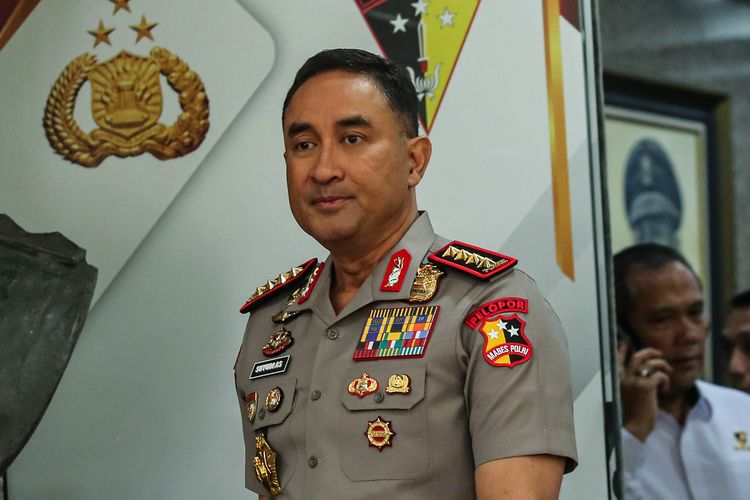 Police Chief General Pol Suyudi Ario Seto (left) with Head of the Food and Drug Supervisory Agency (BPOM) Taruna Ikrar (right) walking out of a meeting after an audience at National Police Headquarters in Jakarta, Monday (2/11/2026). The BPOM held an audience with the Police Chief to strengthen cooperation in monitoring certain medications, food, and the potential misuse of kratom, as well as monitoring priority government programs such as MBG and Merah Putih Village/Neighborhood Cooperatives. ANTARA FOTO/Asprilla Dwi Adha/nym.
Isir acknowledged that one of the main considerations for amending the regulation was to facilitate the ethics trial of General Sigit, the former head of the police.
“Yes, that is one of the main considerations,” said Irjen Johnny Eddizon Isir.
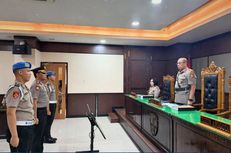
Several aspects have been regulated, including the rank of judges in the Police Ethics Commission (KKEP).
According to the latest regulation, KKEP members do not need to hold equal or higher ranks than the police officer being tried.
What does Perpol No. 4 of 2026 contain?
The first change is in Article 1 point 6, which regulates the definition of an appeal.
Under the previous rules, those eligible to file an appeal included the violator, their spouse, children, and parents.
“After the amendment, only the violator can file the appeal,” Isir stated.
Second, the new Perpol added item (4a) to Article 15.
This provision stipulates that the results of an investigative audit must be followed up with a case presentation.
The case presentation involves the oversight function, human resources, legal aspects, as well as professions and security.
Third, changes were made to Article 19 paragraph (5) concerning the timeframe for delivering summons and requests for willingness to attend an examination.
Previously, summons had to be delivered at least three working days before the examination.
In the new regulation, the time limit is adjusted to three calendar days.
“The change states that working days are now considered calendar days, meaning Saturdays and Sundays are included,” he explained.
Fourth, Article 42 paragraph (3) regulates the rank requirements for members of the Police Code of Ethics Commission (KKEP).
Previously, KKEP members had to hold ranks equal to or higher than that of the alleged violator.
After the amendment, KKEP members can be of the same rank, one rank higher, or up to two ranks lower than the alleged violator.
“This means that those who are one or two ranks lower can still be KKEP members,” Isir stated.
Fifth, Article 59 paragraph (2) previously mandated that alleged violators attend KKEP trials.
Under the new rules, alleged violators can attend the trial in person or through electronic media with the approval of the KKEP chairman.
“This means there are two options: the violator can appear in person or, if they cannot attend physically, they can use electronic media like Zoom, provided they have the KKEP chair's approval,” he noted.
Sixth, similar changes apply to the membership structure of the KKEP Appeals as outlined in Article 74 paragraph (3).
Previously, KKEP Appeals members had to hold ranks equal to or higher than the violator's.
The new regulation allows appeals members to have ranks one rank higher, equal, or up to two ranks lower than the violator.
Seventh, Article 98 paragraph (4) regulates the time limit for placing police members in special locations.
Previously, placement in special sites could last up to 30 working days.
The new rules shorten this limit to a maximum of 20 calendar days from the time the member is placed in a special location. This change aligns with provisions in the Indonesian Criminal Procedure Code (KUHAP).
Eighth, a similar change is found in Article 109 letter d.
Previous regulations set the limit for placement in special areas at a maximum of 30 working days.
The new provisions reduce this limit to 20 calendar days.
Ninth and finally, the last amendment is in Article 111 paragraph (2) letter c, which stipulates one of the conditions for imposing an honorary dismissal sanction (PTDH).
The previous rules stated that police members should not commit any criminal offenses punishable by five years in prison.
The new amendment clarifies this to mean not committing any criminal offenses punishable by five years or more imprisonment.
With this added phrase "or more," offenses carrying a penalty exceeding five years are also covered under this regulation.
Chairman of Indonesia Police Watch (IPW), Sugeng Teguh Santoso, believes that Police Chief General Pol Suyudi Ario Seto's issuance of the new Police Regulation (Perpol) was an urgent necessity.
This regulatory change is vital for the police to conduct the KKEP trial against Listyo regarding the alleged illegal surveillance of Prabowo's mobile phone.
“This arises from the need to adjudicate an alleged violator who holds the rank of general. It's due to the necessity of the situation. So in my opinion, it’s something reasonable, as stated in Article 42 of the regulation. Given the urgent needs, it was a necessary step,” Sugeng explained when contacted by journalists on Wednesday (18/11/2026).
Sugeng elaborated that Perpol No. 4 of 2026 modifies the provisions regarding the composition of the Police Ethics Committee (KKEP), specifically Article 42 of Perpol No. 7 of 2022.
Under previous rules, members who adjudicated an alleged violator had to hold a rank equal to or one rank above that of the alleged violator.
However, with the latest Perpol, committee members can also come from personnel whose ranks are up to two levels below that of the violator.
He argues that regulatory changes are reasonable to adjust to organizational needs and address new situations.
Sugeng asserts that without these amendments, the police would struggle to comply with regulations regarding the examination of high-ranking officers, including four-star generals.
“Otherwise, they would be unable to fulfill the regulatory requirements to examine an alleged violator of four-star rank,” he emphasized.
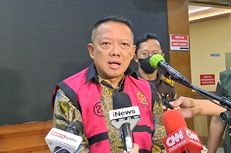
 IPW Coordinator, Sugeng Teguh Santoso at the Merah Putih Building, Jakarta, Tuesday (6/5/2025).
Meanwhile, National Police Commission (Kompolnas) Commissioner Mohammad Choirul Anam views the issuance of the new Perpol as a solution to the issues surrounding rank requirements in the formation of the ethics trial panel.
“Given the facts regarding rank and so forth, the publication of this new Perpol is a solution,” said Anam to Kompas.com on Wednesday (18/11/2026).
According to Anam, ethics trials must have a valid legal basis.
Thus, regulatory adjustments are necessary so that the police have the foundation to conduct such trials.
“I believe this step is to fill a gap that was previously nonexistent. This is a legally sound step, as there needs to be a legal basis for this,” he concluded.
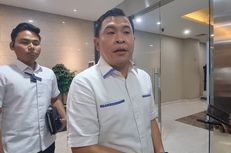
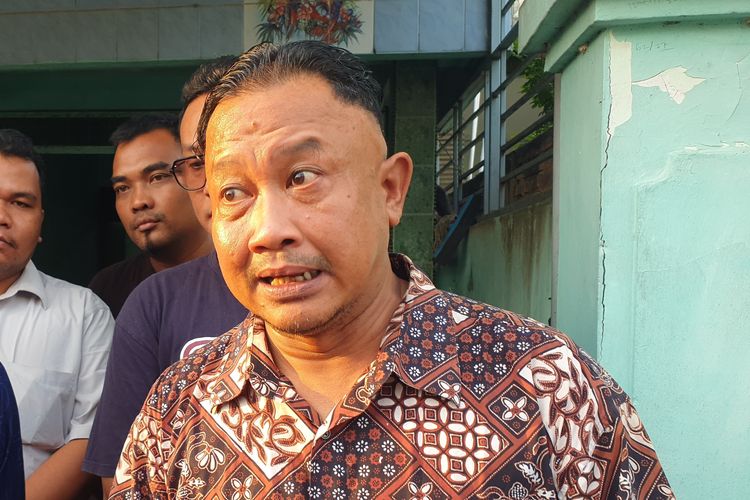 Kompolnas Commissioner Choirul Anam believes Police Chief General Pol Suyudi Ario Seto wants to ensure discipline down to the police station level after extensive rotations.