

Natalius Pigai Orders NTT Regional Office to Monitor Case of Female Student Victim of Kupang Regent's Rape
-
News
-
7 minutes ago
This article was translated by AI. Read the original article on Kompas.com. See Original
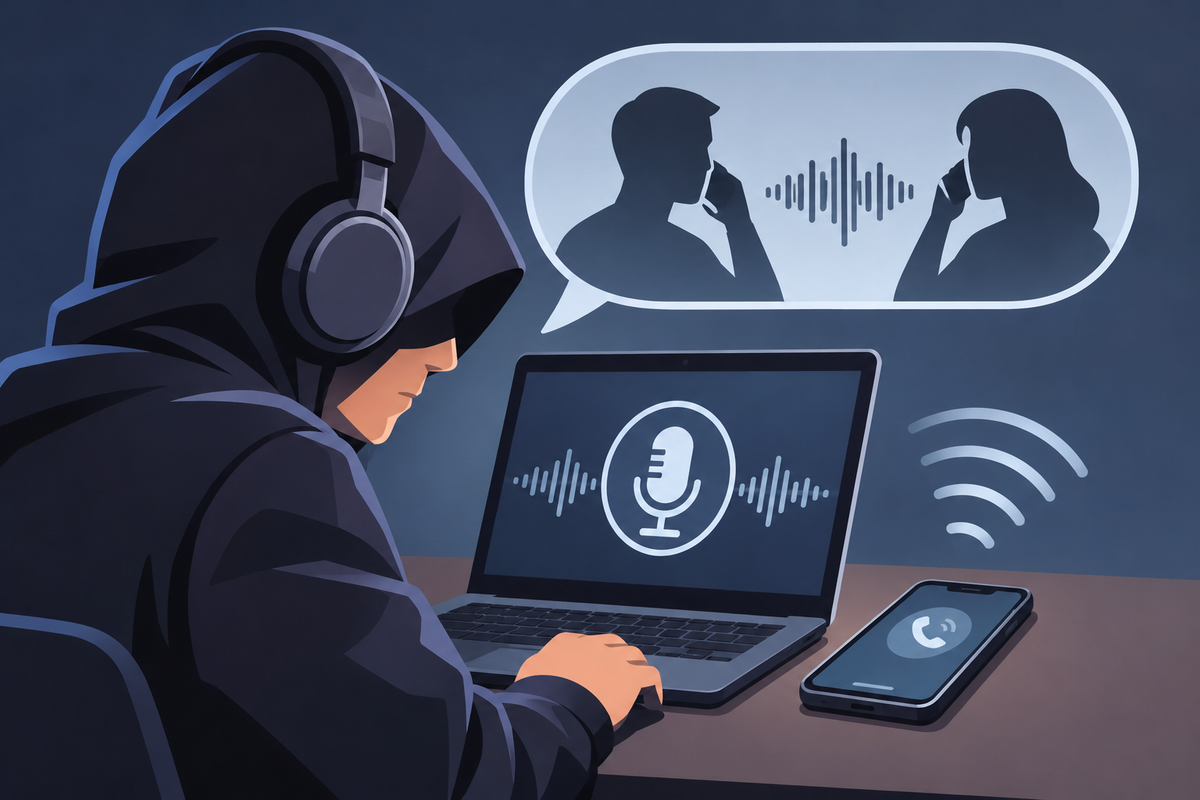
JAKARTA, KOMPAS.com - Eavesdropping can be an important tool for uncovering crime. However, the authority to access an individual's private communication can also become a threat when used without legal grounds and strict oversight.
Allegations of illegal eavesdropping against several state officials, journalists, and civil society members by police generals have once again raised questions regarding the oversight of such authority.
Moreover, eavesdropping is not carried out by a single institution.
Multiple government agencies, including the police, prosecutors, the KPK, and intelligence bodies, also possess eavesdropping powers or facilities.
So, how can we ensure that the authority to eavesdrop is not abused and that its oversight is effective?
Criminal law expert from Trisakti University, Abdul Fickar Hadjar, argues that eavesdropping should be conducted in the interest of law enforcement and must not be done carelessly.
Thus, every eavesdropping action must be based on a legal case and obtain court permission.
He stated that eavesdropping is part of the coercive measures in law enforcement.
Therefore, institutions intending to conduct eavesdropping must first file a request with the court.
"Even though this authority is part of law enforcement actions, it must still be authorized by the judiciary, meaning there must be a legal case. Eavesdropping without a law enforcement reason should be rejected as it is illegal," said Fickar to Kompas.com on Tuesday (17/11/2026).
He believes that the court is the most appropriate entity to grant eavesdropping permissions as it can ensure that the action has legal grounds.
"The court, there is no alternative to that," he said.
Fickar also mentioned that oversight of eavesdropping can be conducted through legal mechanisms, including pretrial proceedings.
Individuals who feel aggrieved may also lodge objections with the president or the courts.
Meanwhile, if eavesdropping is carried out without permission or in violation of procedures, perpetrators may face criminal accountability as stipulated in Article 258 of the Criminal Code.
Regarding the proposal to establish an independent oversight body for eavesdropping, Fickar is of the opinion that it is unnecessary.
He argued that Indonesia already has several oversight bodies that can perform supervisory roles over government institutions.
"It is not needed, there are already many commissions such as Kompolnas, Komjak, KPK’s Supervisory Board, and the Ombudsman that oversee all executive activities, including eavesdropping authority," he said.
Researcher from Indonesia Corruption Watch (ICW) Seira Tamara notes that the allegations of illegal eavesdropping by high-ranking police officials highlight serious issues in the governance and oversight of eavesdropping powers.
According to Seira, this case cannot be viewed merely as an individual violation.
This issue also indicates a weakened mechanism of checks and balances in the use of eavesdropping powers.
"Thus far, oversight of eavesdropping authority by the police still relies on internal mechanisms. National security, state interests, or operational confidentiality defenses are often used to limit external oversight of the institution," Seira told Kompas.com on Tuesday (17/11/2026).
As a result, there is insufficient independent control to ensure that every eavesdropping action has a legal basis and can be accounted for.
Seira emphasized that oversight should also cover the use of eavesdropping technology and the management of the information obtained.
Because the issue doesn't end with who is targeted by eavesdropping, but also how that data is accessed, stored, used, and disseminated.
Information obtained through eavesdropping is sensitive data that must not be exploited for personal or political gain or shared with unauthorized parties.
ICW believes that oversight through the courts can serve as a mechanism to ensure eavesdropping is not solely controlled by the institution conducting it.
"Oversight can come through court permission, thus not requiring a new institution," they said.
In addition to court permissions, ICW advocates for the Eavesdropping Bill to mandate every agency to submit periodic accountability reports.
"Transparency of eavesdropping accountability reports must become a legal obligation, not dependent on the institution's goodwill," said Seira.
He believes that to date, the public, the Parliament, and even the courts do not have adequate access to information regarding the number of individuals eavesdropped on, the legal basis for eavesdropping, and the duration of the actions.
For this reason, ICW proposes that each court granting permissions and eavesdropping agencies submit separate reports to the Supreme Court (MA).
"Moreover, specifically regarding the eavesdropping bill, it needs to adopt accountability mechanisms that have been in place since 1968 in the United States," he elaborated.
Subsequently, the MA could issue annual public reports that Parliament can monitor without having to disclose the identities of those targeted by eavesdropping.
ICW also suggests that individuals targeted by eavesdropping should be notified no later than 90 days after the eavesdropping has ended.
Notification may be delayed if there is a court ruling.
In particular for intelligence-related eavesdropping, ICW encourages regular reviews of what information can be made public, including important legal interpretations and aggregate statistics.
According to Seira, report transparency is necessary so that the use of eavesdropping authority is not completely closed off from public and state agency oversight.
Seira warns that if the Eavesdropping Bill solely relies on the internal standard operating procedures (SOP) of each institution, there is no guarantee that all institutions will apply the same standards of human rights protection.
This condition poses the risk of each institution executing eavesdropping mechanisms based on its own internal regulations without adequate external oversight.
"The risk is that each institution will operate under its own SOP and there is no guarantee that such implementation addresses human rights protections. It will be a mechanism free from oversight," said Seira.
ICW also emphasizes that accountability for eavesdropping must cover the actions of personnel as well as the use of eavesdropping results.
Thus, allegations of abuse cannot be addressed solely through internal examinations, but need to be ensured through mechanisms that can test the legality of the actions.