

Indonesia to Receive Airbus A340-500 from Turkiye
-
News
-
Just now
This article was translated by AI. Read the original article on Kompas.com. See Original
NOT YET built, the People's School near the University of Indonesia (UI) has already sparked debate. It is not opposition to education for poor families that is at issue, but rather the inconsistent explanations regarding the construction location.
A program intended to bring hope is instead initiated amidst conflicting information between institutions.
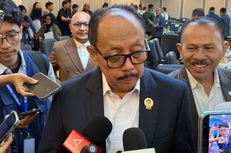
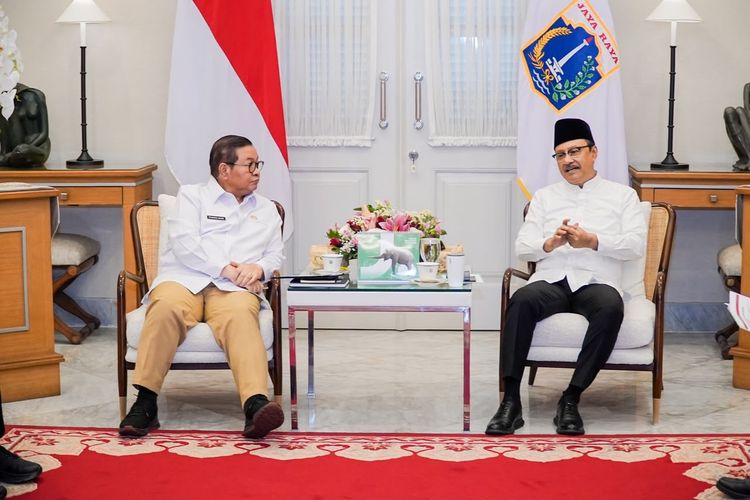
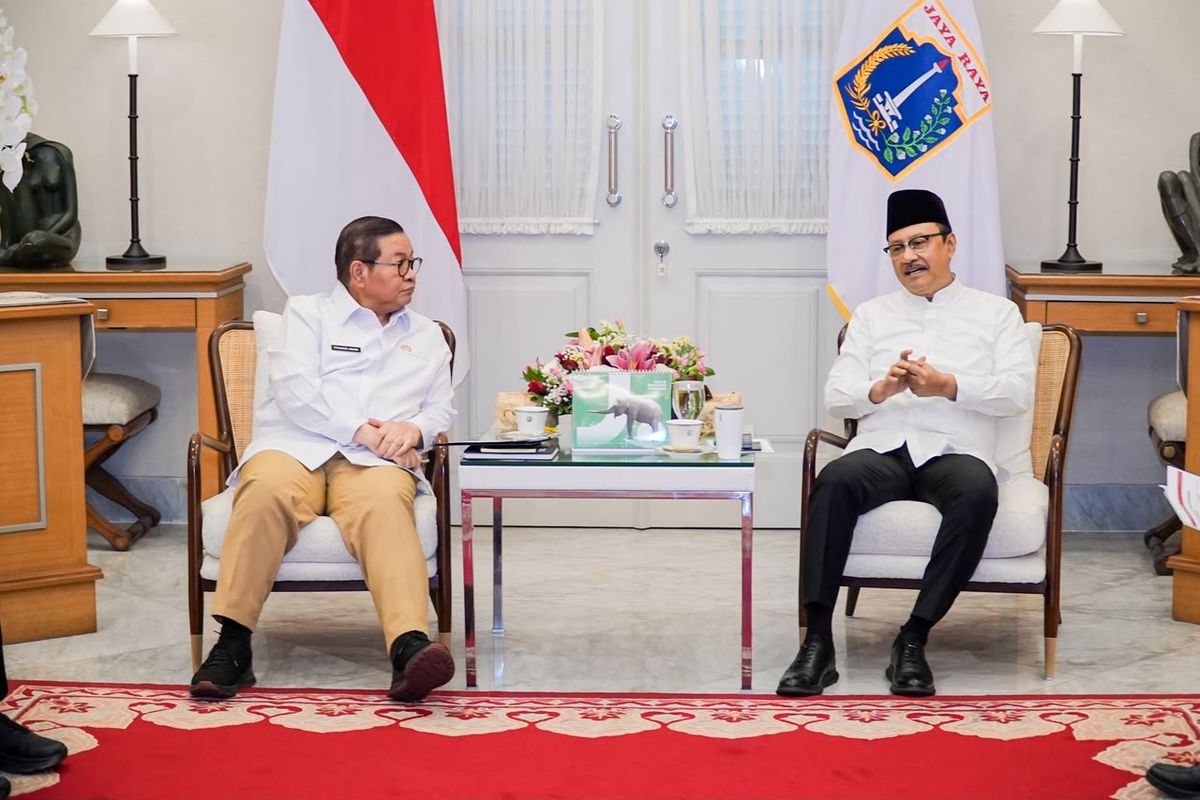
Minister of Social Affairs Saifullah Yusuf initially mentioned approximately eight hectares of land designated as part of UI's City Forest.
The university later clarified that the land is located in Jakarta, near the city forest, but not within it.
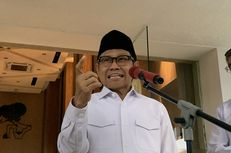
Jakarta Governor Pramono Anung raised objections to any potential conversion of the forest area.
The Minister of Social Affairs later clarified that the school’s location is adjacent to the city forest, not encroaching upon it.
The public is understandably questioning: where will the school actually be built? Why haven’t the explanations regarding the location been aligned when the plans have already been made public?
Such uproar can easily be misconstrued as a mere public relations issue. In reality, the differing explanations relate to the stages of policy: who proposed the location, who verifies asset status, who assesses environmental impact, and when the decision is finalized.
When these stages are not clearly understood, even accurate clarifications can come too late.
This question transcends land issues; it concerns how power communicates policies, manages differences, and nurtures public trust.
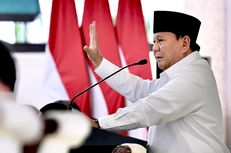
The People's School is part of the poverty alleviation agenda of President Prabowo Subianto's administration.
Presidential Regulation Number 120 of 2025 serves as the foundation for implementing basic and secondary formal education based on dormitories funded by the government. The aim is to expand educational opportunities for children from less privileged families.
This idea is rooted in a strong social justice foundation. Education opens social mobility and helps break the cycle of intergenerational poverty.
However, good intentions do not automatically justify every choice in implementation. The legitimacy of the goal must be distinguished from the legitimacy of the process.
Building a school near the university could foster academic collaboration, student mentoring, and access to knowledge.
However, the choice of location requires certainty regarding land status, spatial planning compliance, and ecological considerations.
A campus is not merely a collection of buildings. It is also a knowledge space and environment whose benefits extend beyond the current generation.
Schools need certainty so that construction is not delayed. Conversely, limited green spaces require protection to ensure their benefits are not lost due to short-term decisions.
Both interests relate to public welfare, although the measurements of success differ. This is where policymaking requires more detailed explanations than slogans about favoritism.
Therefore, the debate should not be simplified into a choice between a school and the forest. The question is whether alternative locations have been openly assessed and whether decisions can be held accountable.
The name People's School carries its own political appeal. The word "people" connects education with hopes for justice, welfare, and state favoritism.
Ernesto Laclau in On Populist Reason (2005) explains how the collective identity of the "people" is formed when various social demands are articulated into a political unity.
Through the concept of empty signifier, a term that is open to various meanings can gather aspirations that were previously fragmented.
The name People's School can be interpreted through this perspective, without concluding that its naming is automatically a populist strategy. It carries a promise of favoritism.
However, the moral promise of the program should not lead to critiques of its implementation being seen as a rejection of the people's interests.
Amidst the debate, Pramono's response reveals the possibility of managing differences constructively.
He expressed objections to the potential conversion of the city forest but reiterated DKI Province's support for the People's School as an educational affirmation program.
This objection was accompanied by concrete offers. The DKI Province prepared alternative lands in Cakung, East Jakarta, and Pegadungan, West Jakarta.
Pramono also expressed readiness to manage UI's City Forest if the management handover plan materializes, potentially developing it into an integrated botanical garden.
Statements regarding the botanical garden remain conditional plans, not evidence that the management transfer has occurred.
Likewise, offers of alternative locations do not mean all technical requirements have been met. Clarity about the status of each proposal will help the public assess policy developments without fostering false hopes.
A critical response that also offers solutions shows that supporting government programs need not mean agreeing with every choice of location.
The courage to express objections becomes more meaningful when accompanied by alternatives that can be discussed together. Of course, the feasibility of each alternative still requires study and official decisions.
This controversy is intriguing when viewed through the social system theory of Niklas Luhmann. In Social Systems, communication is not merely about sending messages, but rather a unit of information selection, conveyance, and understanding.
What officials say is not automatically understood by the public as intended by the sender.
In modern society, politics, law, education, and science perform distinct functions.
Political decisions do not in themselves resolve legal issues, while administrative considerations don’t necessarily address ecological consequences. Therefore, differences of opinion between institutions should not be something to eliminate.
Problems arise when the public struggles to differentiate between ideas, studies, plans, objections, and final decisions.
The minister explains the development, the university clarifies the land, while the governor raises objections and alternatives. All this communication takes place in the public domain, but does not necessarily form a shared understanding.
Hermin Indah Wahyuni in her study of media politics during the transition to democracy (2007) shows that the state is not the sole actor in shaping policy and media discourse.
Civil society, academics, and various groups outside the government also influence the debate.
Although the context of her study is media regulation, this concept reminds us that public interpretation of policy is not entirely within government control.
Therefore, the Ministry of Social Affairs, as the program's steward, must lead clarifications regarding the basis for location selection, approval status, and available alternatives.
UI explains the status of its land; the DKI Province explains spatial and environmental considerations.
Coordination does not require all institutions to speak identically, but mandates a clear explanation of differing information.
Additionally, follow-up communication does not need to end with complete consensus. The university may uphold its academic considerations while the local government advocates for green spaces, and the ministry pursues educational needs.
What matters is whether each rationale is documented, testable, and used to improve future decisions.
This lesson is equally relevant for the Free Nutritious Meals program and the Red and White Village Cooperative. Questions about financing, governance, and oversight should be addressed from the planning stage, not only when controversies escalate.
In Trust and Power, Luhmann explains trust as a means to reduce complexity.
Society cannot possibly inspect every decision-making process of the state on its own. They need reliable information and procedures to manage uncertainties.
Trust, however, is not an obligation for citizens to accept all government statements.
It develops when the reasons for decisions can be scrutinized, mistakes corrected, and objections addressed.
Government communication, therefore, is not merely a matter of packaging messages or soothing criticism, but is part of policy implementation.
Public criticism need not be treated as an annoyance to be quickly quelled with new statements.
Critiques may reveal unavailable information or interests that have not been accounted for.
Conversely, the public is also entitled to an explanation when objections cannot be met, complete with underlying reasons and decision bases.
The People's School promises a better future for children from poor families. The city forest safeguards the quality of life for current and future generations. Both need not exclude one another.
The debate about the location can actually serve as an opportunity to demonstrate how decisions can be refined through information, criticism, and alternatives.
The government holds the authority to decide what will be built. However, that authority does not automatically lead to understanding, let alone trust.
Power may designate a school location, but it cannot command the public to believe.