
Indonesia to Receive Airbus A340-500 from Turkiye
-
News
-
7 minutes ago
This article was translated by AI. Read the original article on Kompas.com. See Original
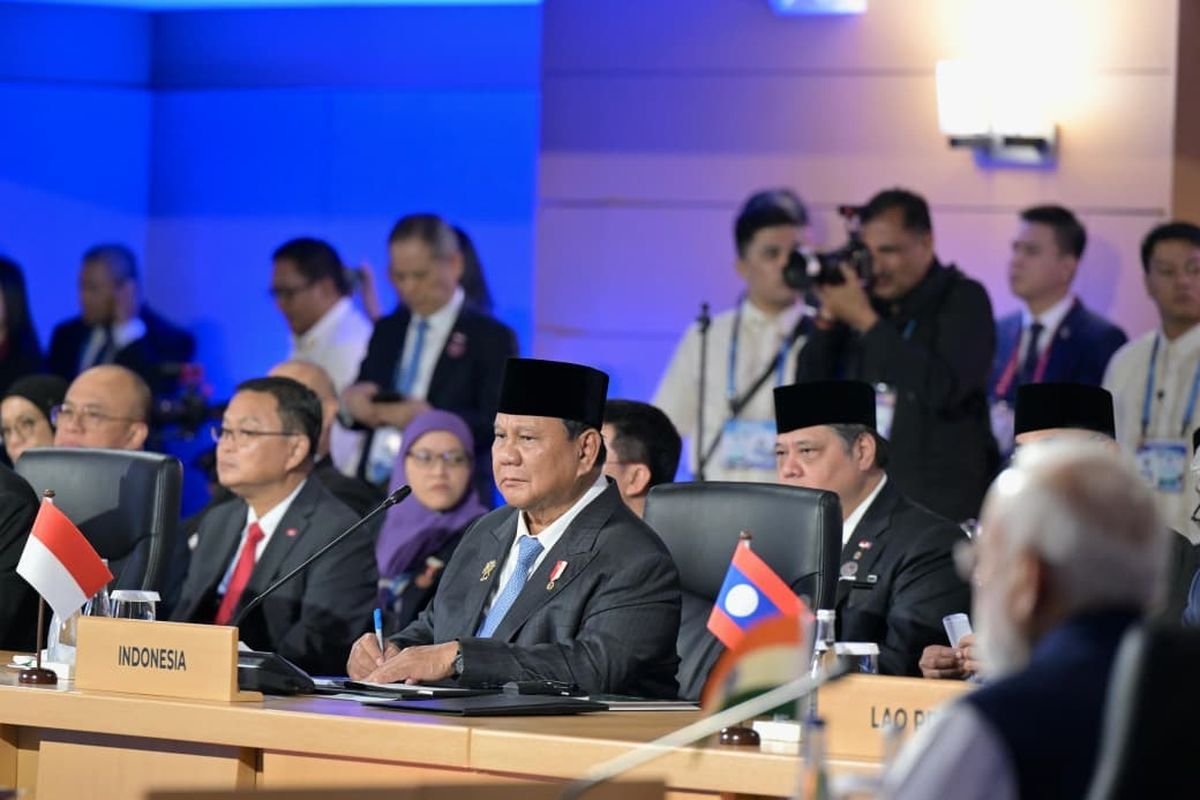
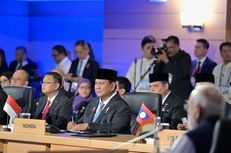
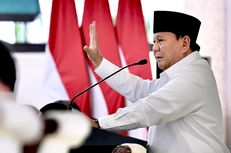
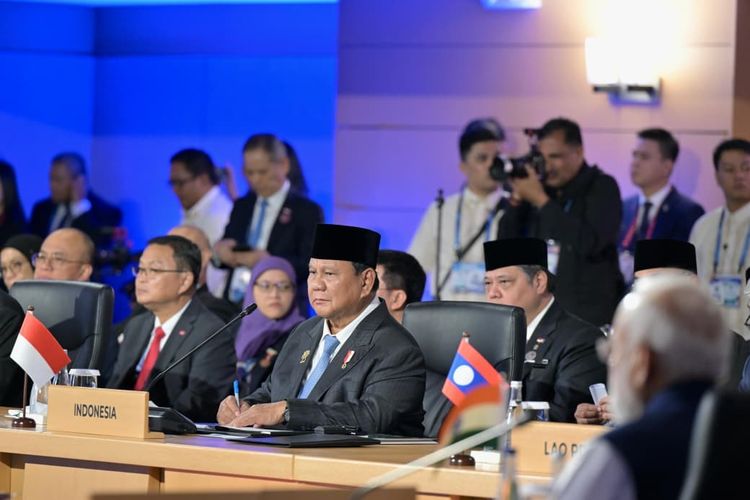
PRESIDENT Prabowo Subianto's apology to Singapore and Malaysia during the ASEAN Summit on November 15, 2026, in Manila, for the forest and land fire (Karhutla) incidents in Indonesia should be appreciated as a sign of statesmanship.
Not many leaders openly acknowledge the cross-border impacts caused by their domestic issues.
However, a more pressing question is: how long must Indonesia continue to apologize for the same problem?
Karhutla is not a new tragedy. It is a recurring crisis, almost becoming an annual ritual that emerges during extreme dry seasons.
Each time fires consume millions of hectares of land, each time the sky turns gray and air quality deteriorates, Indonesia once again finds itself under the global spotlight.
In truth, it's not just the forests that are burning; it's also the credibility of Indonesia's environmental governance.
President Prabowo's statement before ASEAN leaders carries great symbolic significance.
When Indonesia apologizes for the haze affecting Singapore and Malaysia, what’s truly at stake is not only diplomatic relations but also Indonesia's reputation as home to one of the largest tropical forest areas in the world.
For years, Karhutla has often been viewed merely as a natural disaster. However, in reality, most fires have strong economic and political dimensions.
Land clearing by burning remains the cheapest method compared to more expensive mechanical options.
In several regions, this practice intersects with the interests of plantations, forestry, land speculation, and the weakness of local government oversight.
The issue becomes even more complex when fires occur on peatland. Peat stores immense amounts of carbon for thousands of years. When ignited, the fire does not just burn on the surface but can spread deep underground, making it difficult to extinguish for months.
This explains why fires often continue despite rainfall or large-scale extinguishing efforts.
The success of handling Karhutla cannot be measured by the number of personnel deployed or helicopters dispatched. The true measure of success is the government’s ability to prevent fires from igniting in the first place.
President Prabowo’s declaration that the government aims to shift from firefighting to prevention is indeed a step in the right policy direction.
Historically, Indonesia has often expended energy and budgets to combat blazes once they have escalated.
Prevention, however, requires a different kind of investment: peat restoration, watershed management, early detection systems, community empowerment, and reforming the governance of permits.
Prevention also demands substantially greater political courage. The state must be bold in taking action against major companies that neglect or deliberately allow burning within their concession areas.
In this context, the government's move to revoke concessions and investigate hundreds of companies sends a positive signal. However, the public will ultimately judge based on the outcomes, not just on the number of cases announced.
People still remember that in many past cases of Karhutla, the legal processes often ended halfway.
Companies suspected of involvement frequently manage to evade severe penalties through lengthy and convoluted legal processes.
As a result, the deterrent effect never truly materializes. As long as the costs of breaking the rules are lower than complying with them, the fires will keep recurring.
From ASEAN’s perspective, Karhutla has evolved into a regional security issue. Haze knows no national borders. It crosses seas, entering the airspace of neighboring countries, disrupting the economic activities, flights, education, and health of millions.
Therefore, when Singapore and Malaysia express concern over cross-border haze, this issue should not be interpreted as interference in Indonesia's domestic affairs, but rather as a logical consequence of the regional impacts caused.
This is where Indonesia's diplomatic challenge arises. As the largest country in ASEAN, Indonesia often leads various regional issues.
However, regional leadership is not determined solely by economic size and population, but also by the ability to resolve issues that affect other countries.
It is difficult to speak of environmental leadership if the problem of cross-border haze continues to recur year after year.
Moreover, Karhutla cannot be separated from the issue of global climate change. The world is currently facing rising average temperatures, increasingly extreme weather, and prolonged droughts in many regions.
Under such conditions, forest fires will become more frequent and harder to control. This means that Indonesia is facing threats far greater than mere annual fire cycles.
Karhutla also reflects a paradox of national development. On one hand, Indonesia needs investment, agricultural expansion, and economic growth.
On the other hand, environmental degradation resulting from unregulated development practices incurs far greater social and economic costs.
Health costs, productivity losses, transportation disruptions, ecosystem destruction, and biodiversity loss often far exceed the short-term gains from cheap land clearing.
Thus, President Prabowo's apology at the ASEAN Summit should be seen as a point of national reflection. An apology is important in international relations as it shows accountability and empathy.
However, the most effective diplomacy is not the kind that excels in apologies but that which ensures the reasons for needing to apologize do not recur in the future.
If the Prabowo administration can indeed shift the paradigm from firefighting to prevention, from reaction to anticipation, and from impunity to accountability, then the apology in Manila could be remembered as the beginning of significant change in Indonesia's environmental governance.
However, if fires and the resulting haze recur in the coming years, history will record that only the rhetoric changed while the issues remained the same.
President Prabowo's statement should not merely serve as a diplomatic moment. It must become a political turning point.
The government must prove that no company, interest group, or economic actor is stronger than the public interest.
Prevention must become a top priority, not a sidelined agenda forgotten when the rains come.
Therefore, President Prabowo's apology in Manila must become the last apology. For this to happen, three old habits must be changed.
First, burn the concession maps, not the forests. A permanent moratorium on palm oil and industrial plantation concessions on peatlands over 3 meters deep should become law, not just a presidential instruction that can be revoked.
Publish the names of 104 companies involved. Blacklist them from accessing credit from state-owned banks and the Singapore-Malaysia stock exchanges. Revoke not only their permits but also prosecute their directors.
Second, enforce binding ratifications. Do not fear ratifying the ASEAN Coordinating Center on Transboundary Haze Pollution Control under the guise of sovereignty.
Our sovereignty has long been vaporized along with the peat. With a coordinating center, we can force supply chain transparency: companies in Malaysia and Singapore that buy palm oil from burned land must be fined in their countries.
Third, return the forests to their guardians. The firefighting budget of IDR 1.2 trillion each year would be more effective if 50% were diverted to community-based Peat Restoration initiatives.
Provide tenure security to the Dayak, Malay, and Papuan communities to manage the peatlands. They have managed these forests for hundreds of years without a single helicopter conducting water bombing operations.
At the end of the session in Manila, the President conveyed the sad news that Karhutla has claimed the lives of 16 firefighters, with more injured and wounded.
This is not just a statistic. It represents the “lives” of children, family fighters, and the duty-bound firefighters who fell victim to the smoke and flames they never ignited.
It is hoped that the President's apology is heartfelt, accompanied by the nation’s hard work to ensure there are no more casualties in the coming years.
The hope is that the President will not need to apologize again at future summits. One apology should be enough, provided we have the courage to dismantle the economic and political issues that fuel the fires themselves.
Smoke knows no borders. It is essential for the courage to uphold justice and the rights of all citizens within the ASEAN regional environment to also know no bounds.