
Indonesia to Receive Airbus A340-500 from Turkiye
-
News
-
8 minutes ago
This article was translated by AI. Read the original article on Kompas.com. See Original
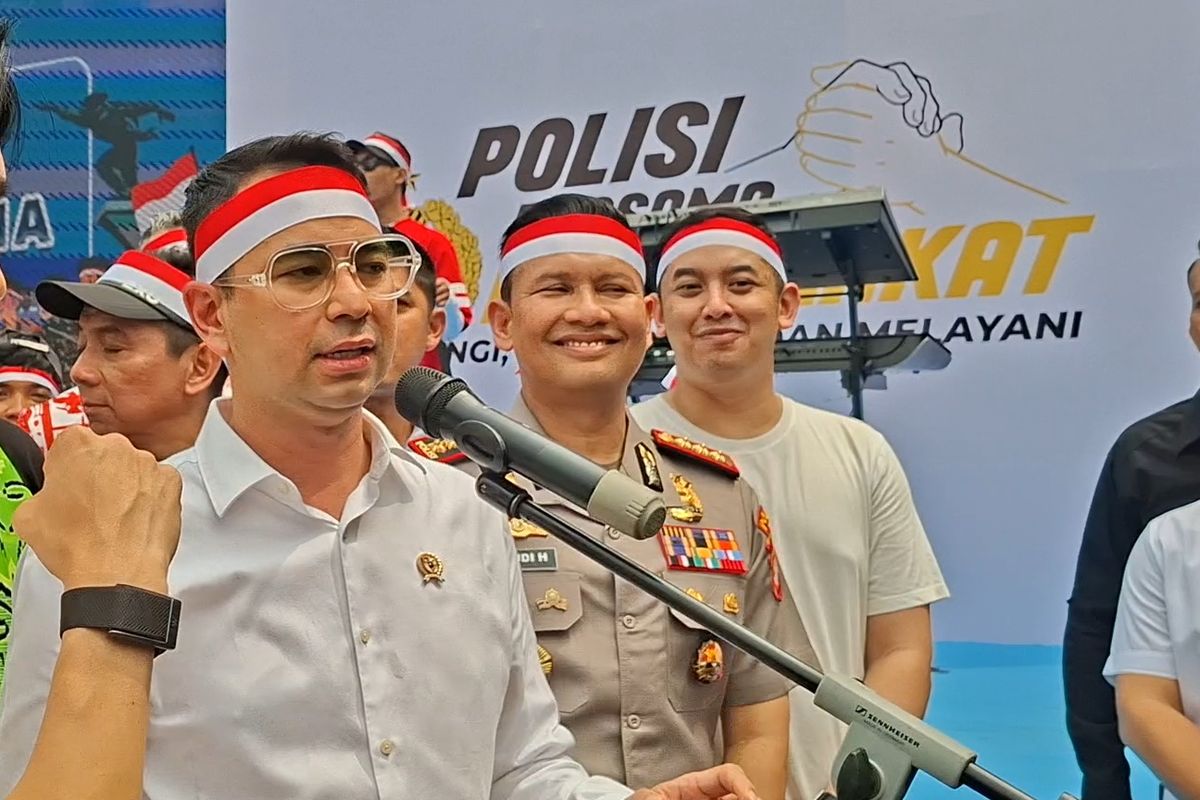
APOLOGY from Raffi Ahmad regarding a 14.7 billion IDR influencer service contract with two ministries is commendable.
He stated his readiness to be investigated by the Inspectorate, BPKP, or BPK, and admitted that his business decisions should consider ethics, propriety, and public trust (Kompas.com, 16/11/2026).
However, the apology merely closes one personal chapter. What remains is a larger public question: what is the actual price of endorsement when the buyer is the state and the seller is a public official?
Findings from Indonesia Corruption Watch (ICW) reveal that eight packages for influencer services from 2024 to 2026 flowed to PT Rans Animasi Indonesia, a company linked to Raffi (Kompas.com, 10/11/2026).
Three packages from the Ministry of Marine Affairs and Fisheries, each worth around 3.6 billion IDR, were secured while Raffi was serving as the Special Presidential Envoy for Youth and Arts.
One Instagram Story package valued at 575.7 million IDR is more than the remaining village fund for two villages this year, according to ICW's calculations.
RANS stated that all processes followed electronic catalog procedures, with rates consistent for other clients.
That’s exactly where the problem lies. While everything seems procedurally valid, it feels erroneous in the public eye; the issue is not just the individual involved but the institutional design that allows public office and private business to coexist at the same table.
This case did not materialize overnight. For nearly a decade, Raffi has been moving closer to the centers of power without ever leaving the entertainment stage.
In early 2021, he was among the first recipients of the Covid-19 vaccine alongside President Joko Widodo.
By late 2022, he claimed to be organizing a volunteer event for Jokowi at Gelora Bung Karno. Leading up to the 2024 Election, he became known for his close ties with the Prabowo-Gibran pair and was appointed as a special envoy in October 2024.
Throughout this journey, his entertainment business continued to grow and eventually went public.
However, such closeness also attracted backlash. Prior to the elections, NGOs accused Raffi of being involved in money laundering.
Raffi strongly denied this and believed the accusations arose from his proximity to one of the presidential candidates.
RANS refuted similar issues again in mid-2026. As far as public records show, those allegations have never been tested in court, making it fair to classify them as claims that have been contested rather than facts.
His name was also mentioned in court proceedings regarding import cases in the Customs sector, which he also denied being involved in.
This pattern keeps repeating. Each time Raffi's closeness to power increases, public suspicions grow, while the available responses are merely personal clarifications rather than a convincing institutional mechanism.
Lawrence Lessig refers to this phenomenon as institutional corruption. In Republic, Lost (2011), he demonstrates that the greatest harm to democracy often occurs not through illegal bribery, but through legal dependencies that erode trust.
Institutions may operate within the rules, but the public no longer believes in whom those institutions serve.
This gap has been visible since the beginning. In 2024, the KPK stated there are no hard prohibitions for officials like Raffi to receive endorsements, and the issue pertains more to ethics (Kompas.com, 13/11/2024).
Ethics, left entirely to the individual, without regulatory barriers, ultimately rests on each official’s sensitivity.
Defenders of this contract have arguments that aren’t entirely incorrect. Ministries indeed need to reach young citizens who rarely read press releases, and popular figures offer an unmatched outreach.
RANS claims this collaboration produced over 150 pieces of content with tens of millions of views.
However, outreach is not the only metric. A more fundamental question remains: should that outreach be purchased from a company owned by state officials, without competitors, at uniform prices that are difficult to explain?
The biggest loss from this practice is not always recorded as state loss. First, there is the opportunity cost. 14.7 billion IDR is approximately equivalent to the annual wages for 360 workers, with an average salary of 3.39 million IDR per month (BPS, 2026).
Such funds are spent at a time when other ministries are asked to cut budgets and village funds are dwindling.
This does not even account for training for vocational school graduates or support for small creative economy players that have never seen communication budgets.
Second, there’s the job opportunity issue. BPS records show 7.38 million unemployed as of August 2026, while the share of informal workers has risen to 57.93 percent (BPS, 2026).
Among them are thousands of young creators, small production houses, and regional artists living project to project.
When procurement specifications mention specific channels and accounts, they don’t even get a chance to compete.
Ironically, they are the ones who officially fall under the scope of the special envoy's duties. They do not seek compassion from the state; what they need is an open and fair procurement door.
Third is trust. Jürgen Habermas warns against the dangers of the refeudalization of the public space, where the space for citizens to deliberate ideas transforms into a stage for representation and promotion.
A state that pays popular figures to convey its programs is shifting public communication from argumentation to popularity. Citizens are no longer convinced, but rather enticed.
At that point, every post by an official who is also a celebrity becomes blurred, whether it is public information, personal expression, or a paid advertisement.
In a democracy, trust is built through testable explanations, not through familiar faces on screens.
The uproar surrounding the declaration of the Youth Pledge at Bundaran HI, some participants of which were actually not students, illustrates a similar symptom.
The youth stage transformed into a spectacle, and the Metro Jaya Police as organizers eventually apologized. Popularity borrowed from power can quickly become a burden for both.
Raffi's apology should mark a beginning, not an end. What is needed is a stringent rule that prohibits companies owned by presidential appointees from receiving government contracts during their term, as ICW proposed, accompanied by an open audit of the fairness of the price for each package.
Without it, similar cases will recur with different names and faces. The question now turns to the President and the DPR. How much longer will public trust be allowed to be sold at endorsement rates?