
Indonesia to Receive Airbus A340-500 from Turkiye
-
News
-
8 minutes ago
This article was translated by AI. Read the original article on Kompas.com. See Original
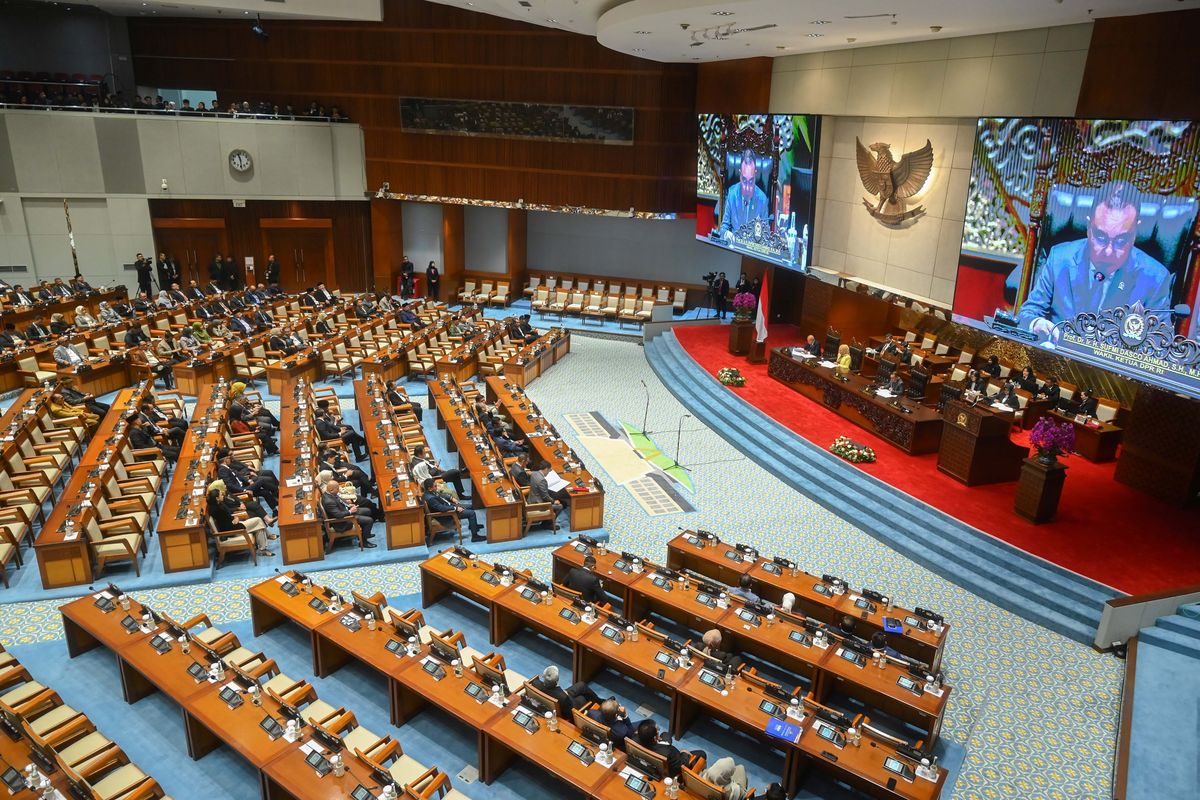
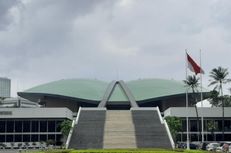
THURSDAY morning, November 12, 2026, marked a decisive moment at the parliament complex in Senayan, Jakarta.
Precisely two hours before the Plenary Meeting of the House of Representatives (DPR RI) read the proposal for the Right to Express Opinion (HMP) signed by 120 members across eight factions, Gibran Rakabuming Raka visited the leadership of the People’s Consultative Assembly (MPR RI) to submit his resignation as vice president.
This decision, previously reported to President Prabowo Subianto, was made to avoid open impeachment while leaving plans for an administrative lawsuit at the State Administrative Court (PTUN).
Gibran's resignation dismantled the political myth that government officials are immune to legal issues after the election stage concludes.
However, a new chapter has just begun: the contentious issue of diploma validity is now directly at the doorsteps of the offices of 580 members of the DPR RI.
The vice-presidential seat began to waver after being shaken by two rulings from the highest courts throughout October 2026.
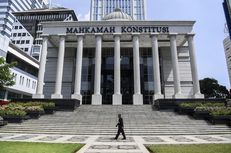
On October 6, 2026, the Constitutional Court (MK) through Decision Number 01/PHPU.PRES-XXIV/2026 stated that the applicant's request was inadmissible due to lack of legal standing, but the judges noted a crucial fact.
The absence of convincing evidence in the form of a diploma, certificate, or foreign degree equivalent to a high school diploma.
The climax occurred on October 30, 2026, when the Supreme Court (MA) through Cassation Decision Number 742 K/TUN/2026 revoked Certificate of Equivalence Number 9149/D/D1/KS/2019 dated August 6, 2019, issued by the Ministry of Education and Culture. The document that enabled Gibran to run in the 2024 presidential election was declared null and void due to the law.
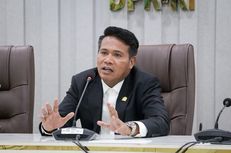
In Senayan, politicians swiftly took the stage. DPR RI Commission III member Sarifuddin Sudding referred to Gibran's resignation as a more elegant step than being dismissed dishonorably while reminding of the criminal threats related to document forgery and regulatory manipulation if the HMP process continues.
This combative stance from parliament comes rather late. The House leadership only acted after being sued by civilians through a citizen lawsuit (CLS) in the Central Jakarta District Court for failing to respond to three summons related to a complaint concerning the educational qualifications of the vice president.
Now the public has the right to demand similar assertiveness from the occupants of the Nusantara Building. Law Number 7 of 2017 on Elections sets the same minimum educational requirements—graduation from high school or equivalent—for both presidential and vice-presidential candidates (Article 169 letter r) as well as for DPR and DPRD candidates (Article 240 paragraph (1) letter e).
The educational qualification provisions for candidates, which were tested for material legitimacy by the public at the MK in August 2026, place the executive and legislative branches on an equal legal footing.
The issue is that the DPR enjoys demanding transparency externally while locking up its own data.
The report “Political Statistics 2024” released by the Central Statistics Agency (BPS), based on data from the General Election Commission (KPU), exposes the secrecy in Senayan.
Out of 580 members of the DPR RI for the 2024–2029 term, the largest group consists of 211 legislators (36.38 percent) who keep their educational backgrounds concealed.
The number of representatives hiding in this information black hole surpasses that of 155 bachelor’s degree graduates (26.72 percent), 119 master’s degree holders (20.52 percent), 63 high school graduates (10.85 percent), 29 doctoral degree holders (5.00 percent), and 3 diploma holders (0.52 percent).
It is indeed odd to hear DPR RI Commission X loudly urging the government to eradicate recruitment fraud and fake academic degrees while more than a third of their colleagues in parliament refuse to disclose their educational origins.
The public's suspicion regarding the educational documents of politicians is well-founded. In November 2025, five members of the DPR RI from the 2019–2024 term were reported to the Honorary Council of the House (MKD) for allegedly holding false diplomas, following a controversy over the foreign doctoral title of Constitutional Court judge and former DPR member Arsul Sani from Collegium Humanum Warsaw Management University in Poland.
At the local level, this unscrupulous practice has even led to imprisonment. On February 5, 2026, the South Lampung District Attorney executed local DPRD member Supriati, sending her to prison based on Supreme Court Cassation Decision Number 1159 K/Pid.Sus/2025.
Supriati was proven to have used a fake Package C diploma with someone else's identification number in the 2024 election and was charged under Article 69 paragraph (2) of the National Education System Law.
The blacklist continues to grow. On February 27, 2026, the Pelalawan Resort Police arrested a DPRD member from Pelalawan district identified as S alias SU on charges of using a false diploma under Article 263 paragraph (2) of the old Penal Code or Article 391 paragraph (2) of Law Number 1 of 2023.
In North Kalimantan, a DPRD member from Bulungan district identified as LL faced trial at the Tanjung Selor District Court throughout September to October 2026 due to a similar case.
Another mode emerged in the controversy over the bachelor’s degree of a Semarang City DPRD member in October 2026. When the oddity of that degree was sniffed out by the public, the local KPU claimed that the legislator registered using a high school diploma, thus keeping his seat safe.
This excuse disregards the crime of voter deception. Even if a high school diploma suffices for candidacy, displaying inflated titles such as bachelor’s, master’s, doctoral, and even fake professor titles on ballots and campaign materials constitutes a theft of the people's votes through false intellectual claims.
The criminal instruments to sweep away such fraudulent practices are actually quite complete.
Document forgery as a candidacy requirement is punishable by up to 6 years in prison and a fine of 72 million rupiah under Article 520 of the Election Law.
Moreover, the use of academic titles without rights on business cards or official profiles is punishable by 10 years in prison and a fine of 1 billion rupiah under Article 93 of Law Number 12 of 2012 on Higher Education, as well as a 6-year prison sentence or a 500 million rupiah fine under Article 272 of Law Number 1 of 2023 on the Criminal Code.
Unlike the impeachment of the vice president, which requires a two-thirds quorum of the DPR members, a 90-day trial at the MK, and a Plenary Session of the MPR, removing a member of the council with a fake diploma is much more straightforward.
Article 426 of the Election Law and the MD3 Law allows political parties and the DPR leadership to directly process the Replacement of Members.
The prevalence of problematic diplomas in parliament stems from the weak filtering system at KPU. In a trial at the Tanjung Selor District Court in October 2026, a former KPU chair acknowledged that the candidacy verification only checked for name consistency, date of birth, and legalization stamps without conducting field checks.
This gap was further protected after the issuance of KPU Decision Number 731 of 2025 on August 21, 2025, which sealed 16 candidacy requirement documents, including diplomas, from public access for five years.
This regulation, which was challenged by DPR Commission II, created a glaring injustice: millions of civil servant applicants, state-owned enterprises, and private employees are subjected to stringent checks through the Higher Education Data Base (PDDikti), while lawmakers are shielded by confidentiality.
In order for Gibran's resignation not to be merely a power drama, three cleansing steps must be immediately implemented.
First, the DPR RI MKD, along with the Ministry of Education and Culture and the Ministry of Research and Technology, must conduct a factual verification audit of the high school diplomas and all academic degrees of 580 DPR members, including tracing student identification numbers, PDDikti data, and verifying the validity of foreign diploma equivalency.
Second, the KPU and DPR leadership must annul KPU Decision Number 731 of 2025 and eliminate the option of concealing the educational history of 211 members of the council on the official parliament website.
Third, the revision of the Election Law must integrate the KPU's Candidate Information System (SILON) automatically with the Dapodik and PDDikti databases from the registration stage.
Without the courage to audit their own educational documents, the DPR's maneuvers to shake the executive seat will only be recorded in history as a lopsided political farce.
With Gibran gone, it's now time for all DPR members to reveal their diplomas under public scrutiny.