
Silmy Karim Trial Reveals Click Money Collection for Residence Permits Reached IDR 7.7 Billion
-
News
-
20 minutes ago
This article was translated by AI. Read the original article on Kompas.com. See Original
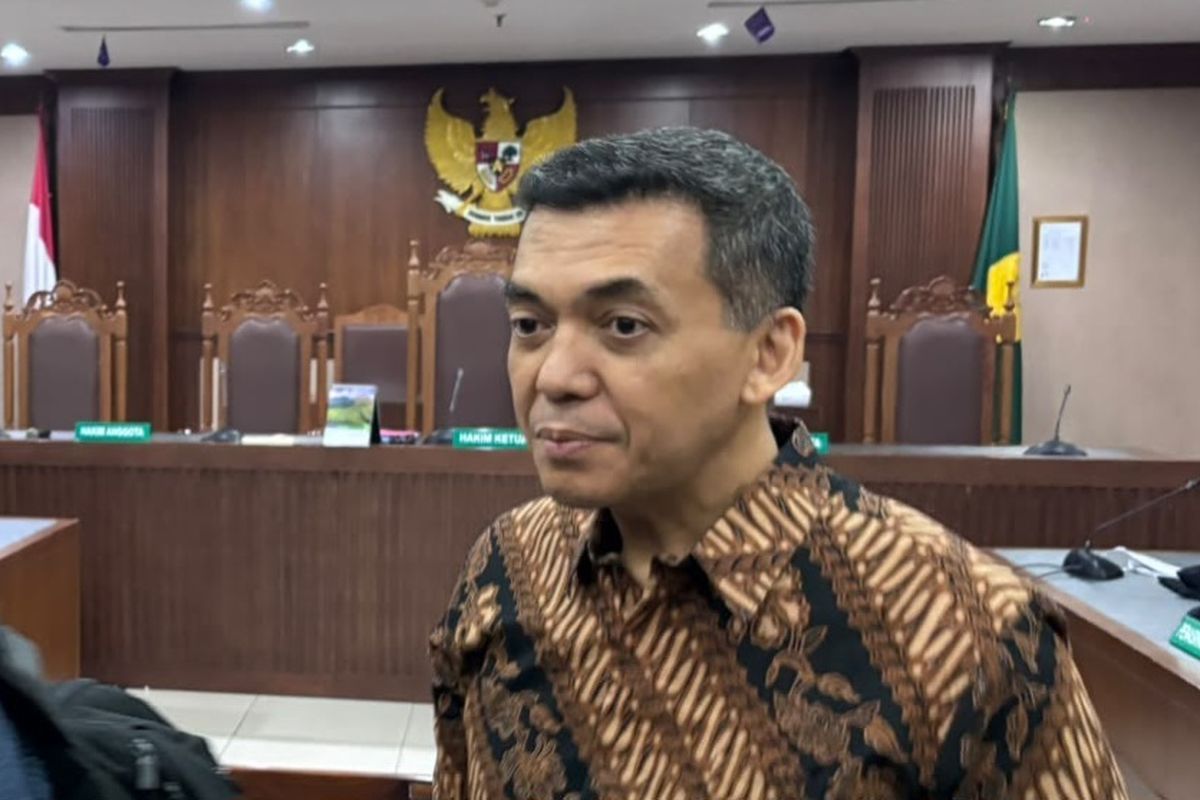
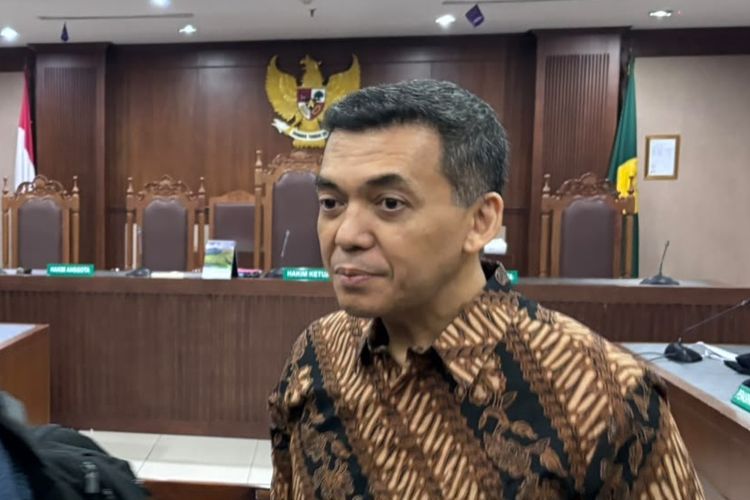
JAKARTA, KOMPAS.com - The illicit money collection practices for foreign nationals' residence permits at the Directorate General of Immigration were revealed during the trial of the alleged extortion case involving former Deputy Minister of Immigration and Corrections Silmy Karim.
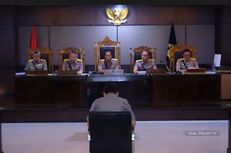
Numerous witnesses presented by prosecutors from the Corruption Eradication Commission (KPK) at the Central Jakarta Corruption Court on Tuesday (17/11/2026) exposed various unofficial charges related to the permit applications.
These included demands for an additional fee of IDR 1 million for each residence permit application, collecting money through intermediary accounts, and using special terms like "click money," "counter money," and "angel."
Witness testimonies also revealed that such practices had allegedly been ongoing for years and involved several employees within the Directorate General of Immigration.
Joko Mulyono, the President Director of PT Artha Jaya Leonindo, stated that he was asked to pay an additional IDR 1 million for each application for foreign labor permits.
The request came from the defendant Tessar Bayu Setyaji, who was then the Head of the Subdirectorate for Residence Permit Status Changes.
Joko mentioned that this demand arose when he inquired about the lengthy process of obtaining his client’s residence permit.
"At that time, I met Mr. Tessar to ask why the process was taking so long. If I remember correctly, Mr. Tessar mentioned there was an additional fee of around IDR 1 million," said Joko.
According to Joko, this money was separate from the official non-tax state revenue (PNBP) fees.
The official fee for changing a residence permit status is IDR 4 million.
Although he did not face direct threats, Joko expressed concerns that his client’s residence permit application would not be approved if he refused to pay the additional fee.
"I worry that if we don’t provide this, our application will not be issued. That’s our concern, Sir," he stated.
Joko was then directed to communicate with the defendant Juniadi Sri Priambudi, the Chairman of the Limited Stay Permit Change Team (ITAS).
In their subsequent meeting, Juniadi reportedly urged Joko to adhere to Tessar's instructions.
Joko revealed that the request for additional funds was not a one-time occurrence but continued for subsequent residence permit applications.
His company charged around IDR 2.5 million for processing documents for each foreign worker, with IDR 1 million set aside to fulfill immigration's requests.
Joko also disclosed that he had delivered payments ranging from IDR 80 million to IDR 130 million approximately every month or two.
These funds were handed over to his former employee, Nur Adib, for delivery to Juniadi.
"As I recall, it was between IDR 80 million and IDR 130 million," Joko noted.
He explained that payments were not made on a monthly basis but depended on Juniadi’s requests and the number of residence permits processed by his company.
Joko admitted he had no specific records regarding the number of permit applications or the total amount of money handed over.
Another employee from the Directorate General of Immigration, Yohanes Sri Windarto, also revealed unofficial collection practices.
Before the judges, Yohanes acknowledged the existence of charges outside of non-tax state revenues known as click money or counter money.
The prosecutor confirmed Yohanes' testimony in the report regarding his role in collecting fees outside PNBP for immigration paperwork, particularly for extending permanent stay permits (ITAP).
"What exactly does the term counter money mean?" asked the prosecutor.
"Actually, I think of it as a reward because it has been processed, already approved," replied Yohanes.
When questioned about whether there were undocumented charges or money received outside the PNBP, Yohanes confirmed this.
"Yes," he said.
Yohanes acknowledged that he began collecting this money in 2018.
However, he mentioned that the practice had been ongoing before he was assigned to the ITAP extension section.
"I was just continuing what was done before me. When I assumed this position, I was tasked with collecting it," he stated.
During questioning, Yohanes also confirmed the report stating the amounts collected, ranging from IDR 1 million to IDR 2 million for each foreign national in a single residency permit application.
Yohanes then detailed the money collection mechanisms.
According to him, agents or document handlers usually contacted him when the residence permit applications reached the directorate level.
They asked for the applications to be processed quickly through the Foreigners' Traffic Module system (MOLINA).
Before the COVID-19 pandemic, money was typically handed over directly when the handlers delivered the paperwork.
However, after the pandemic and with limitations on meetings, payments were made via transfer to accounts not under Yohanes' name.
He admitted to using three intermediary accounts under the names of his wife, his brother-in-law, and a former honorarium staff within the ministry.
According to Yohanes, the use of other people's accounts was directed by his superiors to avoid using personal accounts.
"Mr. Yo, don’t use your own name," Yohanes quoted his supervisor's advice.
The prosecutor later confirmed the total amount of money that flowed into these three accounts between 2018 and 2025.
Yohanes confirmed that the total reached around IDR 7.7 billion.
"Yes, roughly IDR 7.7 billion, reported every week," he stated.
Yohanes explained that the collected money was withdrawn and reported to the section head every Friday.
Withdrawal amounts varied, depending on the number of residence permit applications.
"When it's slow, around IDR 20 million to IDR 25 million. When it's busy, it could reach IDR 40 million," he noted.
After the report, the money was returned in labeled envelopes to be distributed to the staff in the ITAP section.
Yohanes noted that he received a share of about IDR 1.5 million to IDR 2 million each week.
He also mentioned other employees, including his superiors, received a share, although he was unaware of the exact amounts they received.
Yohanes’ testimony revealed the use of specific terms in the money collection practices within the Directorate General of Immigration.
One such term was "angel."
The prosecutor asked whether Yohanes had heard that term during his duties in the ITAP extension section.
"Have you ever heard the term angel?" asked the prosecutor.
"I have heard of it," replied Yohanes.
The prosecutor then inquired about the identity represented by the term and confirmed other terms such as guitar, backing vocal, and vocalist.
Yohanes admitted he did not know the individuals referred to by those terms.
He only confirmed that he had heard the term angel from his superiors.
"I have heard of angels, but the other terms, I haven’t heard during my time there," he remarked.
In his statement, Yohanes also mentioned contributions to the angels.
Amid the revealing testimonies, former Deputy Minister of Immigration and Corrections Silmy Karim denied any involvement in the acceptance of funds outside the PNBP.
Silmy asserted that he had strived to halt the click money or counter money practices that he claimed had been ongoing since before 2018.
"It is not true that I was involved or even ordering it. In fact, I opposed such practices," Silmy stated in court.
He claimed to have evidence of his attempts to cease these practices.
One of the ways was through the implementation of the MOLINA application.
According to Silmy, this application was launched to reduce direct interactions between immigration officers and service applicants.
"It is clear that MOLINA, which I launched, is intended to avoid encounters between officers and applicants," he emphasized.
Moreover, Silmy mentioned that he issued a circular in 2024 as part of efforts to stop the unofficial collections.
However, based on testimonies in court, the acceptance of funds outside the PNBP was reported to have continued until 2025.
In this case, Silmy Karim is charged with receiving IDR 1.2 billion related to allegations of extortion in processing residence permits for foreigners.
Additionally, he is also accused of receiving gratifications totaling IDR 33.8 billion.
In the indictment read by prosecutors on October 29, 2026, the objects of the alleged extortion included the processing of Visit Permits (ITK), Limited Stay Permits (ITAS), Permanent Stay Permits (ITAP), as well as changes in residence permit statuses.
Silmy is on trial alongside six other officials and employees from the Directorate General of Immigration.
They include Saffar Muhammad Godam as the Acting Director General of Immigration, Jaya Saputra as the Director of Residency and Immigration Status, Tessar Bayu Setyaji as the Subdirectorate Head for Residency Permit Status Changes, Bagus Bramantyo as the Subdirectorate Head in the Residency Permit Directorate, Gusti Benardiansyah as Staff of the Residency Permit Subdirectorate, and Juniadi Sri Priambudi as the Chairman of the ITAS Status Change Team.
Silmy and the other defendants are charged under Article 12 letter e juncto Article 18 of the Anti-Corruption Law juncto Article 20 letter c and Article 127 paragraph (1) of the Criminal Code.