
New Developments in the Prabowo Phone Tapping Case: Treason Allegation Escalates to Investigation
-
News
-
5 minutes ago
This article was translated by AI. Read the original article on Kompas.com. See Original
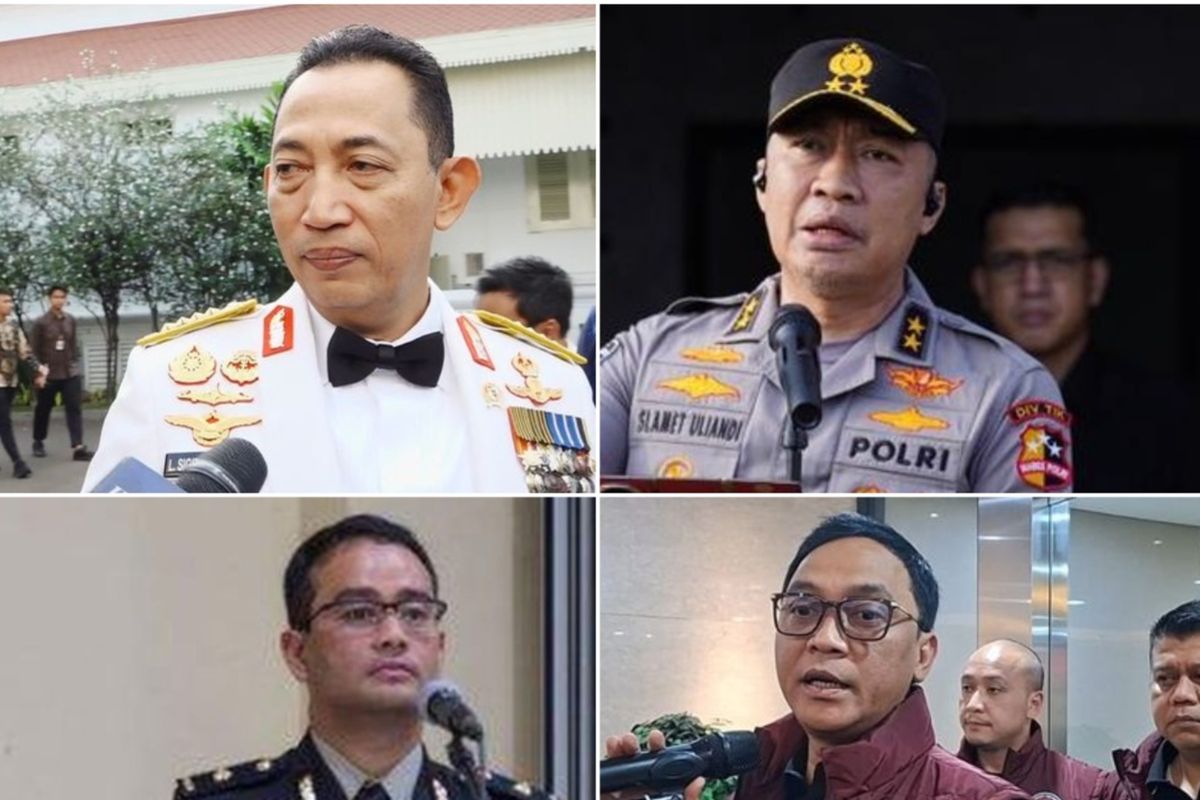
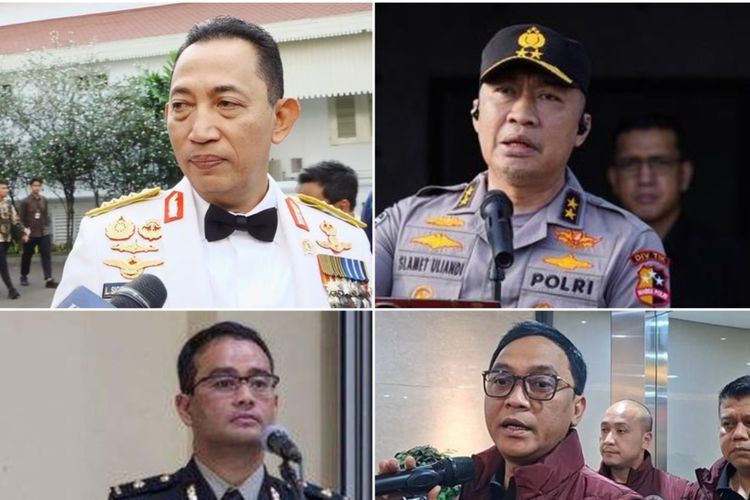
ALLEGATIONS of illegal wiretapping by former National Police Chief General Listyo Sigit Prabowo and high-ranking police officers have dual implications: national security and human rights.
The wiretapping is alleged to have been carried out against state officials, including President Prabowo Subianto and various government officials, as well as civil society figures comprising politicians, activists, journalists, and businesspeople.
The suspects, which include one general and three inspectors general, are alleged to have violated Article 258 and Article 332 of Law Number 1 of 2023 on the Criminal Code, as well as Article 32 paragraph (1) of the Electronic Information and Transactions Law (ITE).
On November 4, 2026, the Coordinating Minister for Political, Legal, and Security Affairs, Prasetyo Hadi, and the Minister of Law and Human Rights, Yusril Ihza Mahendra, supported by statements from the National Police's Criminal Investigation Agency (Bareskrim) on November 12, stated that the wiretapping actions amounted to treason.
Wiretapping state heads and officials poses a serious threat to national security and the safety of governmental officials due to their crucial roles in governance.
Meanwhile, wiretapping civil society members, including politicians, can be classified as a violation of legal norms and human rights, specifically regarding the right to privacy, communication, expression, and personal security.
In a rule of law, wiretapping is an authorized coercive measure for uncovering serious crimes such as terrorism, severe human rights violations, corruption, human trafficking, and organized crime.
Nonetheless, wiretapping powers must not be exercised arbitrarily.
This is because it constitutes a significant intervention that impacts human rights and national security.
Through wiretapping, information about communication, social relationships, political activities, work, and even an individual's family life can be obtained.
This information can be used for law enforcement and national security purposes.
Conversely, it can also be misused to intimidate, surveil, control, or restrict an individual's freedom.
Wiretapping that lacks legal grounding and legitimate law enforcement goals, aside from violating administrative procedures, also violates legal norms and human rights.
Therefore, wiretapping must be accompanied by clear legal grounds, legitimate objectives, genuine necessity, and effective oversight mechanisms.
First, the alleged illegal wiretapping of President Prabowo Subianto and state officials could impact the safety of the head of state and government.
In the Indonesian constitutional system, the President holds the highest governmental power as outlined in Article 4 paragraph (1) of the 1945 Constitution.
The safety of the President and state officials is also connected to the continuation of the constitutional functions of governance.
Additionally, systematic wiretapping of several state officials has the potential to incite distrust or division among government institutions.
The President may doubt the confidentiality of communications with ministers, resulting in ineffective governance.
Second, the wiretapping of civil society and politicians risks violating human rights and the constitutional rights of citizens.
Article 28G paragraph (1) of the 1945 Constitution guarantees every individual's right to personal, family, honor, dignity, and security protections, while Article 28F guarantees the right to communicate and obtain information.
Article 32 of Law Number 39 of 1999 on Human Rights explicitly regulates the freedom and confidentiality of correspondence, including communication through electronic means, which must not be interfered with unless ordered by a judge or other authorized power in accordance with statutory regulations.
Furthermore, Article 17 of the International Covenant on Civil and Political Rights (ICCPR) states that no one shall be subject to arbitrary or unlawful interference with their privacy, family, home, or correspondence, and has the right to legal protection against such interference or attacks.
Therefore, actions involving wiretapping, as a coercive measure in law enforcement, especially when allegedly conducted by high-ranking police officials, must firstly have accessible legal grounds that are clear and predictable in their application (legality).
Secondly, wiretapping must be genuinely necessary to achieve legitimate objectives (necessity). Thirdly, the actions must be proportional to the intended goals and not exceed the requisite needs (proportionality).
The UN Human Rights Committee, via General Comment No. 16 (1988) on Article 17 ICCPR, asserts that legislation must detail the circumstances under which interference with privacy may occur.
The decision to intervene must be made by authorities designated by law and resolved on a case-by-case basis.
Moreover, the report from the UN Special Rapporteur on the right to privacy and communication surveillance, including document A/HRC/27/37, stresses the importance of legal clarity, objective limitations, necessity, proportionality, and independent oversight concerning surveillance practices.
Law Number 20 of 2025 on the Code of Criminal Procedure, effective from January 2, 2026, regulates wiretapping within Article 136 paragraph (1), stating that investigators may conduct wiretapping for investigative purposes, while paragraph (2) emphasizes that provisions regarding wiretapping are further regulated by specific legislation.
This provision signifies a crucial acknowledgment that wiretapping necessitates a special regulatory foundation.
Without comprehensive regulations, wiretapping authority risks being implemented with disparate standards, opening avenues for abuse of power, and violating human rights.
The allegations of illegal wiretapping must be investigated thoroughly, transparently, and accountably, and should prompt the government and the House of Representatives to expedite the drafting of a Wiretapping Law.
Additionally, for those alleged to have been wiretapped, the state must provide and fulfill rights to justice, security, and recovery from alleged human rights violations they have suffered.