
Hearing of Silmy Karim Reveals 'Angel' Code in Immigration Fee Practices
-
News
-
3 minutes ago
This article was translated by AI. Read the original article on Kompas.com. See Original
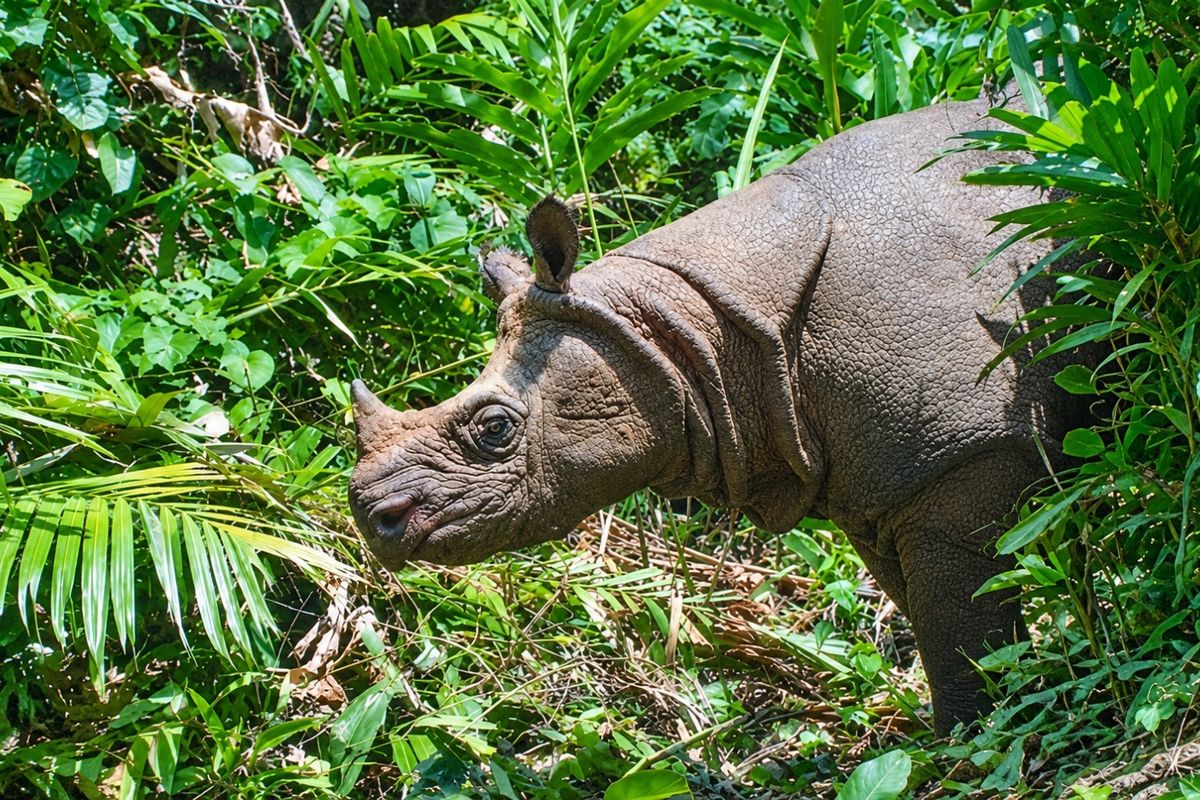
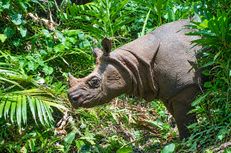
JAKARTA, KOMPAS.com - Concerns over the survival of the Javan rhino have often been linked to threats from natural disasters, such as eruptions from Mount Anak Krakatau and the subsequent tsunamis.
However, the risk of extinction for this endemic species from Indonesia is not solely due to natural factors.
Human activities and other factors also loom large.
So, what are these factors?
Academic and Environmental Law lecturer Yulinda Adharani from Padjadjaran University asserts that the root causes of wildlife extinction primarily stem from human actions.
She notes that nature has its own mechanisms for recovery after disasters.
This recovery does not apply when the issues are caused by humans.
"The pressures created by humans are what prevent the population from recovering," Yulinda stated when contacted by Kompas.com on Tuesday (17/11/2026).
Yulinda elaborated that one of the main human-related causes is illegal poaching and trade.
Specifically regarding the Javan rhino, poaching and trade are not merely theories.
Several cases have already made headlines.
"There have been judicial rulings that proved it: 26 rhinos were killed between 2019 and 2023 by two groups of poachers," Yulinda explained.
From a legal perspective, the instruments for prevention and enforcement are already stronger.
Law Number 32 of 2024 imposes a minimum prison sentence of three years for wildlife trade.
This law also extends to the actors behind these crimes, which may include corporations, instigators, and beneficiaries.
There are also additional penalties involving ecosystem restoration and wildlife rehabilitation.
"In my view, this should be combined with financial trail investigations, as the trade of rhino horns is an organized crime," Yulinda emphasized.
Another human action contributing to this crisis is the process of land conversion, which often occurs in forest areas.
This conversion leads to the loss and fragmentation of wildlife habitats.
Yulinda does not deny that many forests are being cleared for mining, plantations, or infrastructure.
Wildlife bears the brunt of these changes, losing their living space.
She suggests various methods to address this, including strengthening zoning regulations and environmental approvals that encompass Environmental Impact Assessments (AMDAL).
"We need to reinforce strict zoning laws, credible AMDAL processes that are not just formalities, as well as law enforcement within conservation areas," she explained.
The conflict maps between humans and wildlife also frequently appear in several regions.
Conflicts can arise when local communities feel that wildlife are merely a burden.
It is not surprising that communities with such views are unwilling to partner in conservation efforts.
"This necessitates mitigation, compensation, and genuine involvement of surrounding communities, rather than just asking them to safeguard wildlife," Yulinda stated.
On the other hand, the extinction of wildlife is also driven by competition with other animal species.
One species can be pressured by others, particularly invasive species, as well as diseases.
There is also the risk of inbreeding due to dwindling population sizes.
"For populations that are very small, just one outbreak can be fatal. Therefore, rigorous biosecurity and routine health monitoring of wildlife are necessary," Yulinda stated.
M. Ali Imron, Director of the Forests and Wildlife program at the World Wildlife Fund (WWF) Indonesia, remarked that the Javan rhino faces threats from population decline due to several factors.
As a result, the minimum viable population is not met.
Currently, their numbers never exceed 100 to 150 individuals in their conservation area.
"This is the problem. When the population is too small, there arises the possibility of inbreeding, which can lead to inbreeding depression, resulting in deformities and other issues," Ali explained.
Additionally, one of the habitat issues in Ujung Kulon is the dominance of the langkap plant (Arenga obtusifolia), which can inhibit the growth of rhino food vegetation and reduce food availability.
Poaching has also been proven to occur in Ujung Kulon.
According to official information from the Ministry of Forestry's Press Release in June 2026, ten individual Javan rhinos have been confirmed as victims of poaching according to legal facts and judicial rulings.
Thus, conservation efforts cannot solely rely on relocating individuals.
"Strengthening the protection of the existing population in Ujung Kulon must remain a priority, through anti-poaching patrols, monitoring of populations and individual health, habitat management including controlling langkap, and efforts to maintain genetic diversity and sustainability of the population," Ali stated.
Ali elaborated that to tackle these issues, conservation efforts must focus on the root causes of population decline.
This approach not only aims to save threatened individual wildlife.
"This can be achieved by protecting and restoring habitats, strengthening patrols and enforcing laws, maintaining connectivity between habitat areas, and monitoring population health," Ali stated.
In order for all efforts to succeed, he emphasized the need for multi-stakeholder involvement, ranging from the government, private sector, to local communities.
In principle, preventing extinction is not just about protecting the animals; it is also about ensuring that habitats and environmental conditions that support their survival are maintained.
"In this way, the wildlife population (including Javan rhinos) can survive and reproduce naturally for extended periods," Ali asserted.
Furthermore, according to Yulinda, various issues must be addressed through audits and transparency.
She acknowledges that extinction may occur due to poor governance, such as budget limitations, inconsistent population data, and indications of individuals' involvement in poaching cases.
"The solution involves audits, data transparency, and consistent judicial rulings. In the case of horn trade, for instance, an intermediary was acquitted at the first level, and the prosecutor filed for cassation. Inconsistent rulings weaken the deterrent effect," she emphasized.
Next, establishing a second-wild population as part of a long-term conservation strategy should run alongside strengthening the protection of the existing population.
This means creating a new habitat cannot simply be construed as a complete relocation of the existing population.
The approach can be achieved through careful translocation accompanied by comprehensive studies.
"This effort cannot be executed hastily and requires meticulous planning involving stakeholders," she explained.
In the effort to establish a second wild population, the most fundamental consideration is ensuring that the Javan rhino population in their original habitat is safe and protected.
Conditions regarding population size, demographic structure, individual health, habitat quality, and prevailing threats need to be well understood and managed.
Additionally, the translocation of individuals should not increase risks to the sustainability of the remaining population.
The number and individuals forming the second wild population must also be carefully determined to avoid disrupting the remaining population in Ujung Kulon.
Furthermore, the target habitat must meet the ecological needs of Javan rhinos and have adequate protection, including food availability, water sources, wallows, and safety from poaching and human disturbance.
Scientifically based studies must also consider the potential for disease transmission from wildlife or livestock in surrounding areas, as well as possible competition with other wildlife for food and living space.
"Health checks for individuals, readiness of expert teams and veterinarians, safe capture and transport procedures, and intensive post-release monitoring are also critical requirements," Ali emphasized.
Similarly, Wanda Kuswanda, Senior Researcher at the Biota Research Center, National Research and Innovation Agency (BRIN), stated that developing a second habitat for the Javan rhino is important as part of long-term conservation strategies.
However, this urgency does not mean relocation must be rushed.
According to her, a comprehensive suitability assessment for the second potential habitat is necessary, covering bioecological aspects, potential threats, socio-economic factors, and considering the stress and potential mortality during the relocation of the Javan rhinos.
Therefore, comprehensive research is crucial to ensure the second habitat can meet the needs of the Javan rhino.
"For instance, assessing food plant availability and productivity, water sources, wallows, vegetation structure, effective habitat area, range space, minerals, and potential competition with other herbivore species," Wanda explained.
Habitat Suitability Index (HSI) assessments for the second potential habitat can be carried out through spatial modeling based on GIS validated with field research data.
This assessment should also include capacity analyses of the habitat and socio-economic factors.
"Decisions about relocation must be firmly based on scientific evidence to ensure a healthy, sustainable, and reproducing second population without undermining the priority of protecting the current population in Ujung Kulon," she stated.
Furthermore, Yulinda stated that the IUCN has issued guidelines regarding the translocation of rare species, titled "Guidelines for Reintroductions and Other Conservation Translocations."
The basic principle of IUCN emphasizes that species translocation should not be conducted merely to save individual animals but must yield measurable conservation benefits for the persistence of the population or ecosystem in the intended location.
"Translocation carries high risks, such as adaptation failure or death of valuable individuals for rare populations," she remarked.
Consequently, the IUCN has established stringent requirements before approving translocation.
First, there must be strong evidence that the main causes of population decline in the destination location (such as poaching, habitat destruction, or pollution) have been eliminated or effectively managed.
Second, the release location must be within a protected area that can meet all biotic and abiotic species needs throughout the seasons.
"The size of the area must also be sufficient or possess connectivity to support long-term population sustainability," she further explained.
Third, the organisms to be relocated must undergo quarantine and medical checks according to wildlife disease risk assessment standards to prevent introducing pathogens to the native population or humans.
Moreover, the individuals must originate from taxonomically or genetically appropriate groups to prevent hybridization that could compromise local species purity.
Fourth, organizers must demonstrate through scientific study that translocation is the best option compared to conservation actions at the source site (in situ), such as habitat protection or wildlife corridor creation.
Relocation outside the original area comes with much stricter requirements due to the potential creation of new invasive species.
Fifth, the program must involve local communities, stakeholders, and comply with national and international regulations like CITES if it crosses national boundaries.
"There must be a work plan, funding, and a multidisciplinary team in place to monitor the species' adaptation post-release, conduct periodic evaluations, and openly document the results. Several of these points have already been adopted into Ministerial Regulation No. 17 of 2024," Yulinda clarified.
The Ministry of Forestry has stated that the idea of designating Alas Purwo National Park as a secondary habitat for the Javan rhino is still in the discussion stage.
No further details have been established yet.
"As there is no detailed plan yet regarding the number of individuals to be relocated, the composition of males and females, the methods, and stages of translocation, these have not been finalized yet," explained Ristianto Pribadi, Head of the Public Relations and Foreign Cooperation Bureau of the Ministry of Forestry.
Senior Expert of the Government Communication Agency (Bakom RI), Muhamad Hidayat, emphasized that the government will not relocate Javan rhinos until comprehensive scientific studies are completed.
Alas Purwo is currently only considered as a potential area that needs deeper examination.
"The safety of each Javan rhino individual is our priority. There will be no relocation until scientific studies confirm the availability of food, water, wallows, range space, and habitat security. All must be substantiated based on expert recommendations," Hidayat stated in a statement on Tuesday (17/11/2026).
Hidayat noted that the study must confirm the new area as a suitable habitat that has natural food availability year-round, water, wallows, range space, and security guarantees.
The study must also consider the potential for conflicts with nearby communities and competition for resources with other animals, particularly banteng.
While research is ongoing, the government continues to prioritize protection and patrols in Ujung Kulon as the primary habitat for Javan rhinos.
On the other hand, finding a secondary habitat remains essential because the Javan rhino population, currently numbering less than 100, is concentrated in Ujung Kulon.
Javan rhinos are vulnerable to threats from disasters, including tsunamis in the Sunda Strait and eruptions from Mount Anak Krakatau.
Moreover, the risk of low genetic diversity due to inbreeding has been reported at 58.5 percent.
Therefore, efforts to find alternative habitats have been initiated since the 1980s, including assessments of Gunung Honje and Cikepuh.
"Ujung Kulon remains the primary home for Javan rhinos and must be continually protected. Alas Purwo can only be considered as a secondary habitat if all ecological and safety requirements are proven through scientific studies. Without that, no relocation will occur," he asserted.