
Prabowo Invites Japan to Collaborate on Rare Earth Metals and Minerals
-
News
-
Just now
This article was translated by AI. Read the original article on Kompas.com. See Original
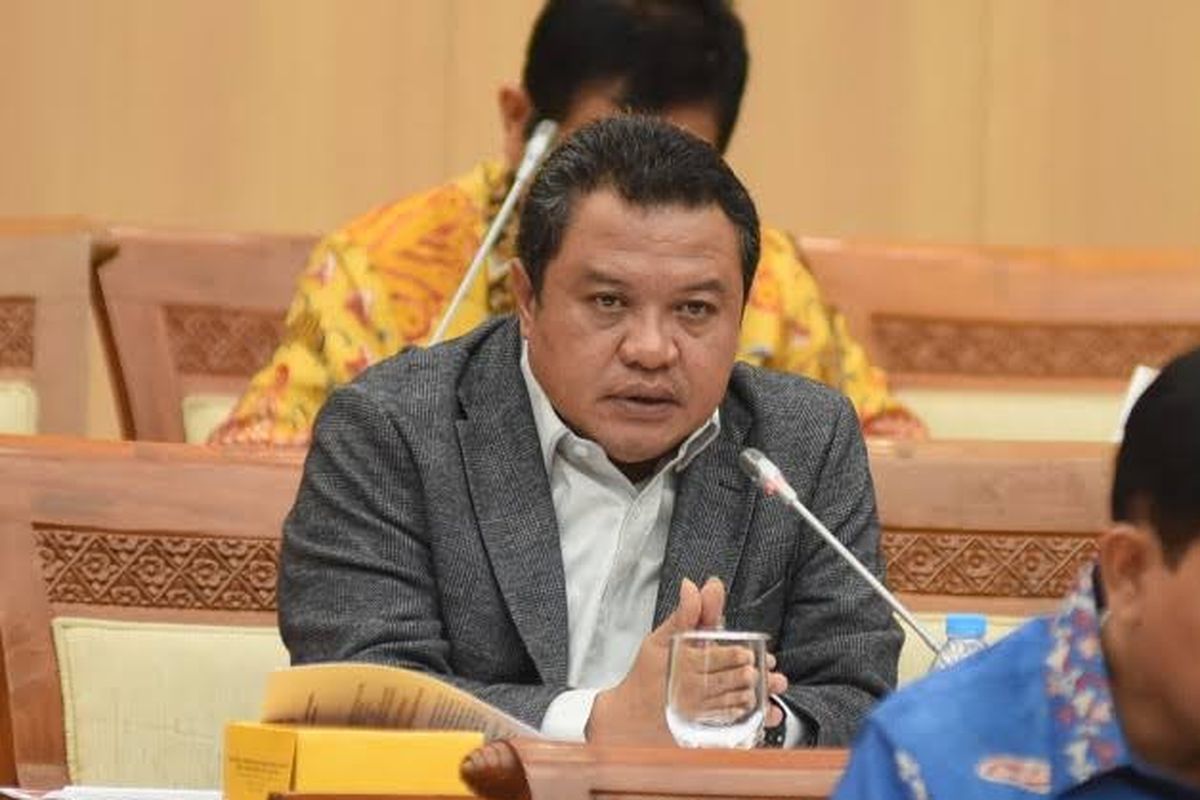
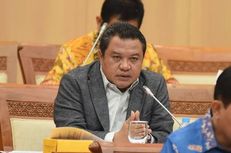
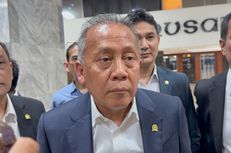
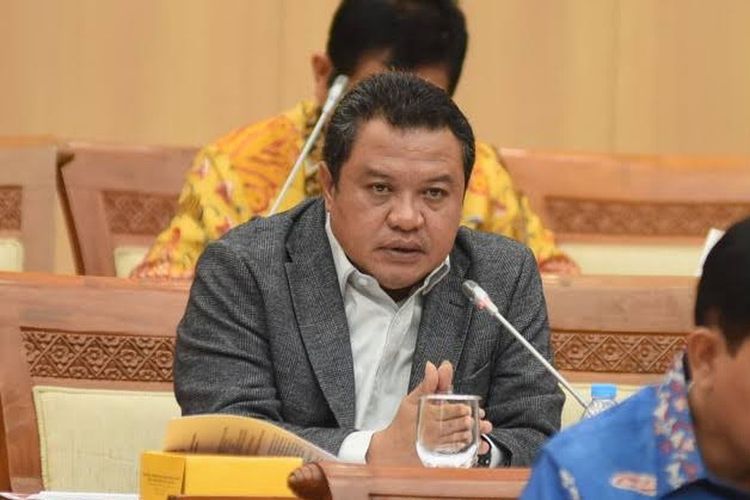
KOMPAS.com - Deputy Chairman of Commission VII of the Indonesian House of Representatives Lamhot Sinaga considers Deputy Speaker Sufmi Dasco Ahmad an ideal figure to accompany Indonesian President Prabowo Subianto as Vice President.
"I see Professor Sufmi Dasco Ahmad as an ideal figure to support President Prabowo," said Lamhot in a written statement received by Kompas.com on Tuesday (17/11/2026).
This assessment is based on four advantages of Dasco, namely his ability to maintain political solidarity, experience in government and parliament, cross-group communication, and broad acceptability across various circles.
According to Lamhot, these four aspects are essential for ensuring political stability while effectively implementing national development agendas.
Lamhot emphasized that the ability to maintain relationships among political forces is a crucial capacity for any Vice President.
A strong government cannot rely solely on the support of a majority of political parties; it also needs a figure who can maintain balance among interests, build trust, and ensure ongoing communication among political powers.
In the context of Prabowo's administration, the existence of a large coalition serves as a political asset. However, the large number of supporting parties also presents challenges in reconciling different interests, aspirations, and expectations.
Lamhot believes that Dasco's position as a significant figure in the Gerindra Party and as Deputy Speaker of the House provides him with experience and direct communication with various political party leaders.
This position gives him insight into political dynamics as well as the need to maintain balanced relationships among political forces.
"The President needs a Vice President who can maintain political balance. We shouldn't allow any party to feel neglected or left behind, or develop jealousy due to unequal roles in government. I see Mr. Dasco as capable of nurturing that unity," explained Lamhot.
He stated that it would be more ideal for the Vice Presidency to be filled by a figure from Gerindra. This consideration is not just about party proximity but also about strengthening coordination between the President and the party that is the main base of the government.
On the other hand, Dasco's ability to build communication could also bridge relationships with parties outside the government.
Lamhot affirmed that non-coalition parties still play a vital role in democracy as political forces that provide critique and oversee government policy.
A healthy relationship between the government and the opposition is essential to ensure public policies operate more openly, accountably, and in favor of public interests.
"In my opinion, Mr. Dasco not only has the ability to maintain communication with coalition parties but also possesses the capacity to establish dialogue with parties outside the government. This is important. We don't want democracy to consist solely of communications among groups with similar interests. The government must also be able to listen to critiques and engage in dialogue with political forces that hold differing views," emphasized Lamhot.
With maintained communication, differing political views can hopefully be managed through dialogue without escalating into conflicts that hinder development agendas.
Lamhot sees Dasco's experience in parliament as a significant asset in assisting the President in overseeing various national strategic programs.
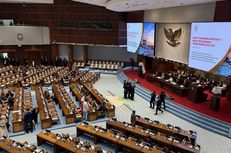
Dasco has been a member of the Indonesian House of Representatives since 2014 and has held the position of Deputy Speaker since 2019. He is set to resume the role of House leader for the 2024-2029 period, focusing on political and security coordination.
Over a decade of experience is viewed as providing him with an understanding of the legislative process, government policy oversight, national budgeting, and the working relationship between the executive and legislative branches.
According to Lamhot, the ability to comprehend institutional dynamics is essential for ensuring the policies established by the government are effectively communicated and implemented.
Moreover, Prabowo's administration has several strategic agendas requiring cross-ministry and agency coordination, ranging from strengthening food and energy security, industrial downstreaming, increasing investment, infrastructure development, to bolstering the people's economy.
"The President needs a partner who can work directly, understand institutional issues, and know how policies can be implemented. Mr. Dasco's experience in the DPR is a valuable asset to assist the President in overseeing national strategic programs," Lamhot stated.
Besides political experience, Lamhot believes that Dasco's communication skills are another crucial advantage needed in a Vice President.
The Vice President must act as a communicator and a bridge for dialogue between the President and various layers of society and stakeholders.
This ability is necessary to build productive relationships with the House of Representatives, political party leaders, community organizations, academics, the business sector, and activist groups.
Lamhot believes that good communication can help the government understand the aspirations and critiques from various groups while seeking common ground when interests diverge.
"A Vice President must not only have administrative abilities. He must be capable of communicating, listening, and building consensus. Some issues cannot be resolved with mere instructions; they require dialogue and an approach. I see Mr. Dasco possesses such capabilities," he said.
Lamhot added that the ability to foster dialogue is also critical in cases of differing views between the government and parliament. This way, various issues can be addressed through democratic mechanisms and institutions.
The presence of a figure skilled in cross-party communication is increasingly deemed vital to ensure effective governance, support cohesion, and maintain harmonious relations with all political forces in parliament.
The final reason why Dasco is considered suitable for the Vice Presidency is his wide acceptability across different groups.
Lamhot believes that the Vice President must have the ability to build trust, not only within political parties but across various institutions and community groups.
The government needs a figure who can be accepted by diverse elements of the nation, each with different backgrounds, interests, and views.
According to Lamhot, Dasco has a broad network of communication and social interactions, ranging from cross-party politicians, government officials, military and police members, businesspeople, academics, to activists and community organizations.
The diversity of these relationships is considered important because effective governance requires support and coordination across sectors. Development programs cannot run optimally without the backing of the business world, security stability, community participation, and inter-agency coordination.
"Mr. Dasco has a sufficiently broad communication base. He can foster relationships with many circles, from politicians, military and police elements, entrepreneurs, academics, to activists. In my view, the ability to be accepted and communicate with various groups is very important for a Vice President," Lamhot remarked.
He added that wide acceptance will assist the government in constructing a more conducive political atmosphere. When various groups feel they have a communication avenue with the government, trust can be built more easily, and potential frictions can be managed better.
For Lamhot, all four advantages are interrelated and complementary. The ability to maintain coalition solidarity must go hand in hand with openness towards non-coalition parties.
Political experience must be backed by effective communication, and all these capabilities should ultimately lead to the creation of governmental stability.
Lamhot stressed that political stability does not mean eliminating disagreements or silencing critiques. On the contrary, stability is achieved when differences can be managed through communication, dialogue, and healthy democratic mechanisms.
"What we need is a strong government that remains open. A government that has political backing but is also able to listen to critique. This is where the role of a Vice President is crucial as a connector who maintains communication with all political powers. I see Mr. Dasco's character and experience fulfilling this need," said Lamhot.
He hopes that the dynamics surrounding the Vice Presidency could serve as a momentum to reinforce government continuity and ensure that all national development agendas continue to proceed.
According to Lamhot, the greatest interest of political stability is the establishment of an effective government so that the benefits of development can be directly felt by the public.
Lamhot also reminds that the process of filling the Vice Presidency must still follow the constitutional mechanisms outlined in Article 8 paragraph (2) of the 1945 Constitution, stating that if a vacancy occurs in the vice president's position, the MPR must conduct a session to elect a vice president from the two candidates proposed by the president within a maximum of 60 days from the vacancy.
"Ultimately, the priority must be the interests of the nation and the people. We need a figure who can strengthen the President, maintain political stability, nurture communication with all political powers, and ensure that the government can operate optimally," explained Lamhot.