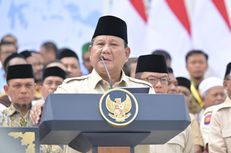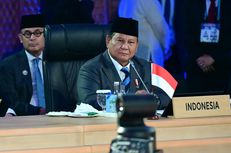

Prabowo Attends 29th ASEAN-China Summit, Wearing a Gray Suit
-
News
-
7 minutes ago
Writer
This article was translated by AI. Read the original article on Kompas.com. See Original
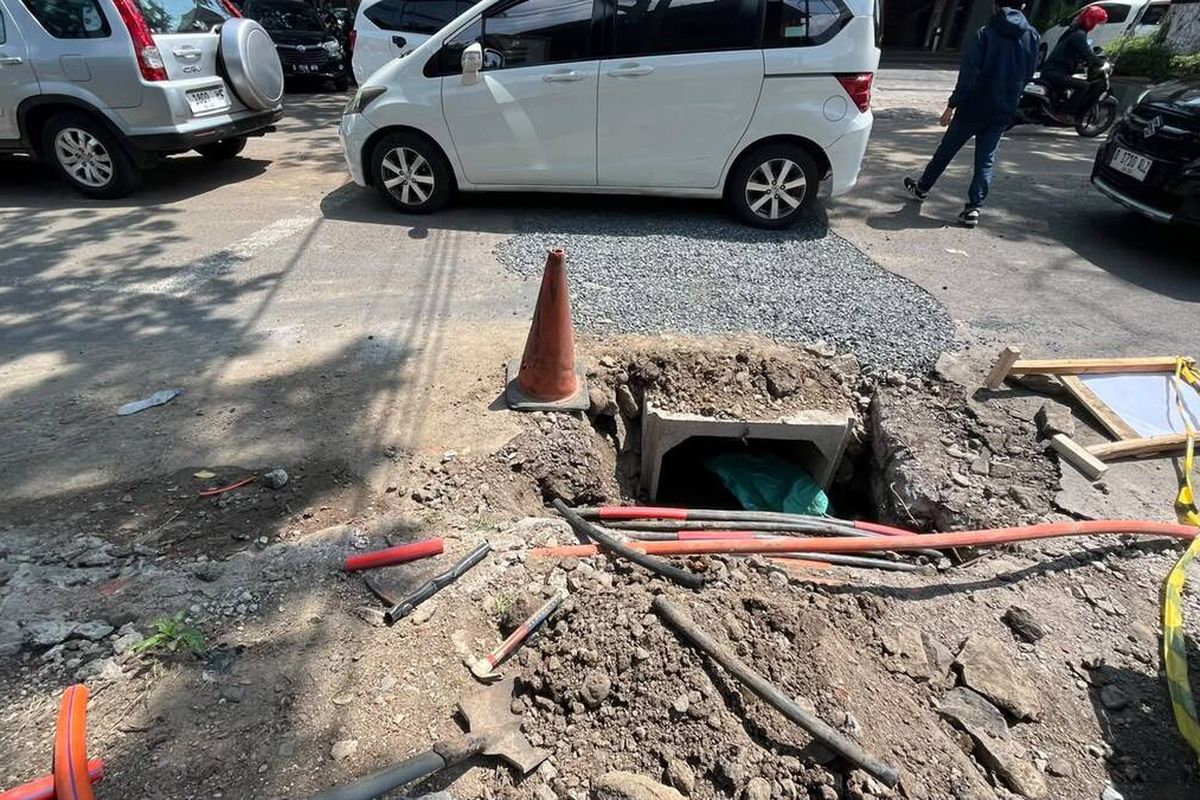
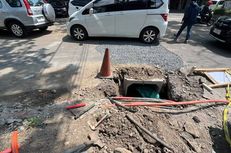
JAKARTA, KOMPAS.com - The use of the word "immediate" in Article 24 paragraph (1) of Law No. 22 of 2009 on Road Traffic and Transportation (UU LLAJ) is being challenged at the Constitutional Court (MK), as it is deemed to create legal uncertainty and allows road authorities to delay road repairs.
The petitioners argue that this wording makes the government's obligation to ensure road user safety unmeasurable, and serves as an excuse for officials to shirk their responsibility for road maintenance.
"The issues raised by the petitioners arise when the obligation to repair could potentially be interpreted solely based on the administrative readiness of the road authorities, without placing the level of danger to road users as the determining measure of urgency," the petitioners stated, as quoted from the MK website on Monday (November 16, 2026).
The petitioners contend that the phrase "immediate" lacks definitive time constraints, urgency metrics, or objective technical parameters.
As a result, the imperative nature of the legal mandate requiring road repairs weakens and cannot be evaluated by the public.
"A legal command may lose part of its usefulness if the subject burdened with the obligation has too broad a margin for interpretation to determine the timing of implementation without verifiable criteria," the application states.
For this reason, the petitioners argue that there is a violation of citizens' constitutional rights due to this article, particularly the rights to fair legal certainty (Article 28D paragraph 1), the right to life (Article 28A), and the right to a healthy and good environment (Article 28H paragraph 1 of the 1945 Constitution of the Republic of Indonesia).
They also emphasize the adage "salus populi suprema lex esto" which posits that the safety of the people is the highest law. They argue that budgetary constraints should not be used as an excuse to allow road damage that threatens the lives of road users.
"The absence or limitation of budget should not be a justifiable excuse to absolve road authorities from their duty to address hazardous road conditions," the petitioners wrote.
This material testing application has been officially registered with the Constitutional Court under Case Number 419/PUU-XXIV/2026 on Wednesday, November 11, 2026. The lawsuit has been submitted by 14 individual citizens of Indonesia, most of whom are students.
In their appeal, the petitioners request that the MK redefine the meaning of the word immediate in Article 24 paragraph (1) of the UU LLAJ to read:
"Without unjustifiable delays from when road damage that may cause traffic accidents is known or should be known, with an obligation for road authorities, within their jurisdiction, to conduct an objective risk assessment that is documented, take necessary safety measures during the period when repairs have yet to be performed, and establish priorities and carry out road repairs within a measurable timeframe based on the level of danger and applicable technical standards, provided that the absence or limitation of budget does not eliminate the obligation of road authorities to address conditions that endanger the safety of road users."