
PKB Does Not Propose Replacement for Gibran: The President Knows Best
-
News
-
3 minutes ago
This article was translated by AI. Read the original article on Kompas.com. See Original
“HOW DARE someone tap our President.”
Perhaps, that is the spontaneous expression that crosses the minds of some people when considering the case of the alleged tapping of President Prabowo Subianto.
Public attention is now focused on this issue, especially since the alleged tapping involves not only the head of state but also several government officials, politicians, journalists, and non-governmental organizations (NGOs).
The Indonesian National Police (Polri) has designated three people as suspects in this case.
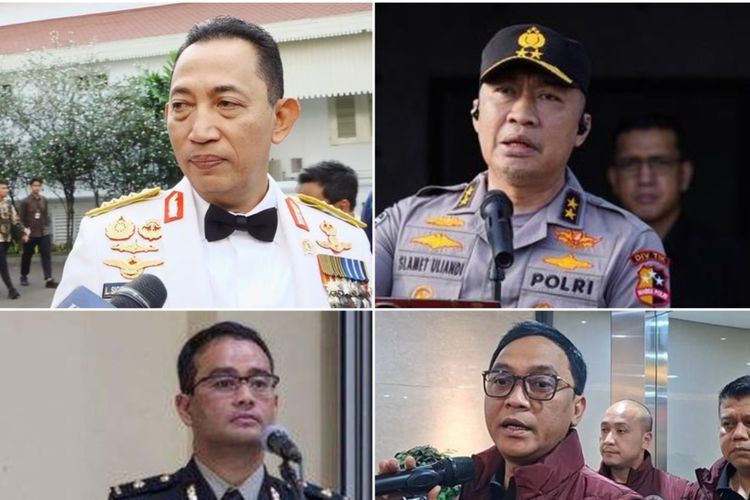
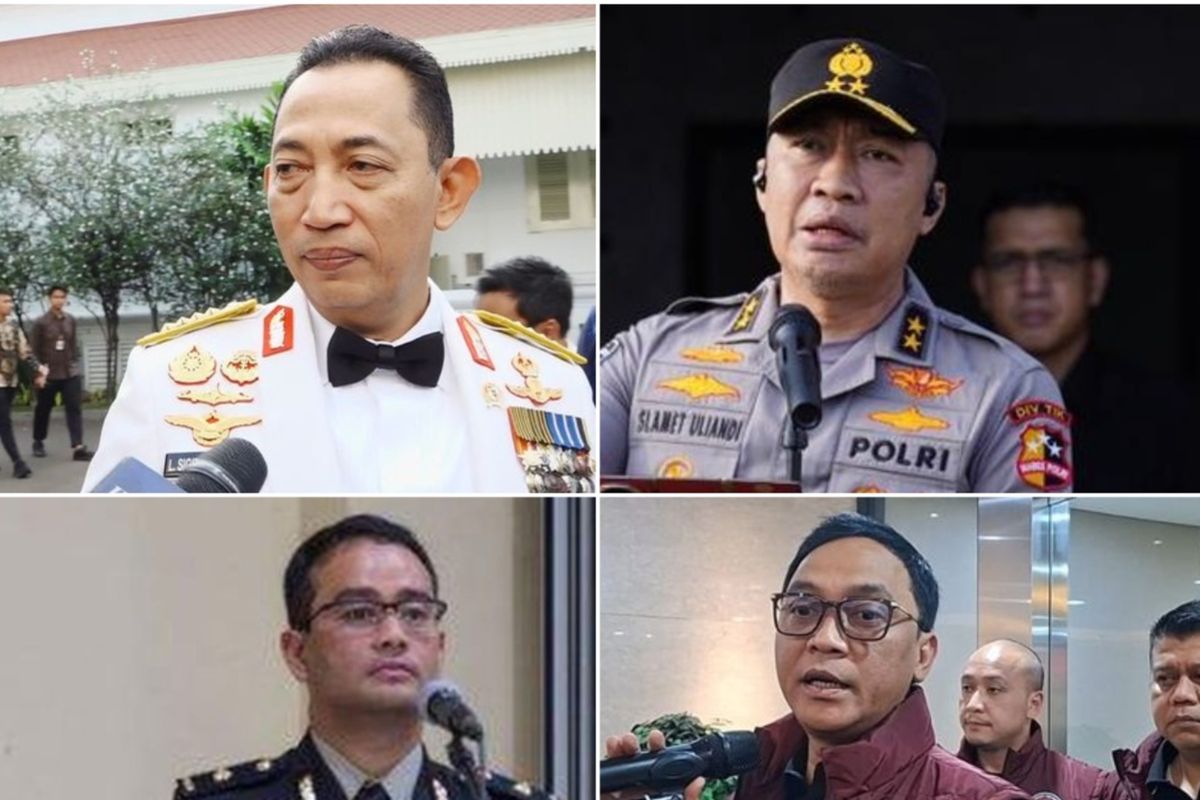
Kabareskrim Polri, Comm. Gen. Asep Safrudin, stated that the three are the Head of the Presidential Staff Office (KSP), Police General Listyo Sigit, his former personal secretary, Police Inspector General Ahrie Sonta, and Inspector General Eko Hadi Santoso, who serves as a Senior Police Instructor at the National Police Education Institute.
Meanwhile, Inspector General Slamet Uliandi, a senior officer in Bareskrim Polri currently assigned outside the structure, remains a witness.
If we follow the developments, the Coordinating Minister for Law, Human Rights, Immigration, and Prisons, Yusril Ihza Mahendra, has indicated the possibility of evidence of treasonous actions.
Certainly, this indication must still be investigated and proven through fair, transparent legal processes, upholding the presumption of innocence.
However, regardless of how the legal process unfolds, the emergence of an issue of this dimension must serve as a serious alarm for national political consolidation.
I must emphasize one point. Imagine if the allegations of tapping against the President are proven true and involve officials who have held significant positions in the police institution, the issue will not stop at the act of tapping itself.
What is far more concerning is the possibility that such actions are carried out by individuals within the corridors of power, who have access to strategic information and should be part of efforts to maintain the security and stability of the government.
We need to understand that tapping the head of state is not merely a matter of privacy violation.
Such actions can touch upon strategic interests: ranging from national security, institutional integrity, to government authority.
Therefore, the investigation must not only uncover who is responsible but must also answer more fundamental questions: what is the purpose of the tapping, who ordered it, for whose benefit was the information collected, and how was the information subsequently used?
It is difficult to imagine an operation involving resources, access, and certain technical capabilities occurring without clear objectives and interests.
Yet, all these allegations must still be tested through accountable legal processes and proven, not built on assumptions or political speculation.
This is precisely where the seriousness of the issue lies.
If there indeed exists an act of defiance emerging from within the circle of power, we are not merely facing an individual problem, but the potential emergence of serious issues in consolidation, loyalty, and integrity.
It becomes even more interesting to remember that the figure mentioned in the alleged tapping case is former Chief of Police Listyo Sigit Prabowo.
During his tenure, he had a record of institutional relations with President Prabowo Subianto and had received various awards from the President.
Certainly, awards and a person’s service record do not immediately lose their meaning due to the emergence of an alleged case.
However, respect for past services must not transform into moral immunity, let alone be used as a reason to disregard serious questions regarding integrity, transparency, and legal accountability.
In a rule of law state, a person’s honor is not determined by the number of awards received, but also by their willingness to be accountable for every action before the law.
The late Prof. Dr. Jacob Elfinus Sahetapy once expressed a relevant reflection: “Even though lies may run like lightning, the truth will eventually overcome them.”
This statement reminds us that crime, however well-hidden and polished by power, will not forever evade the truth.