
Government Called to Issue Guidelines for Appointment of Part-Time PPPK Teachers
-
News
-
2 minutes ago
This article was translated by AI. Read the original article on Kompas.com. See Original
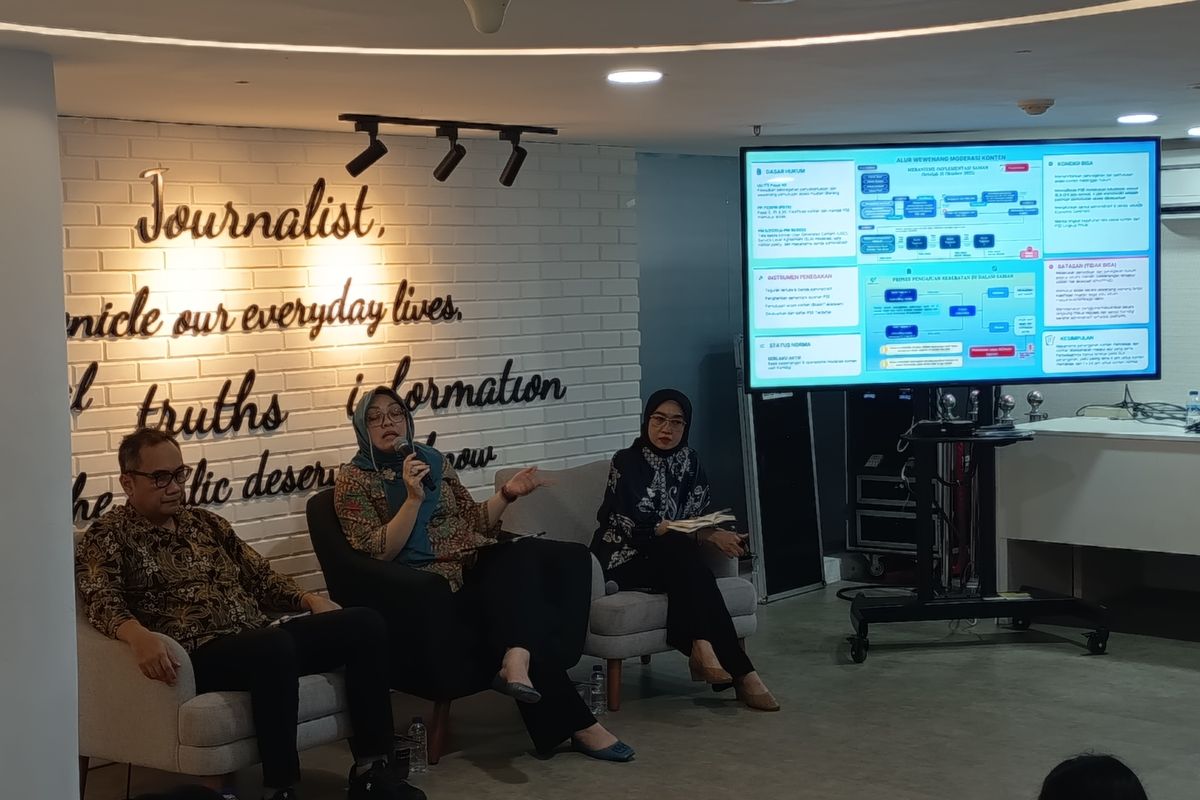
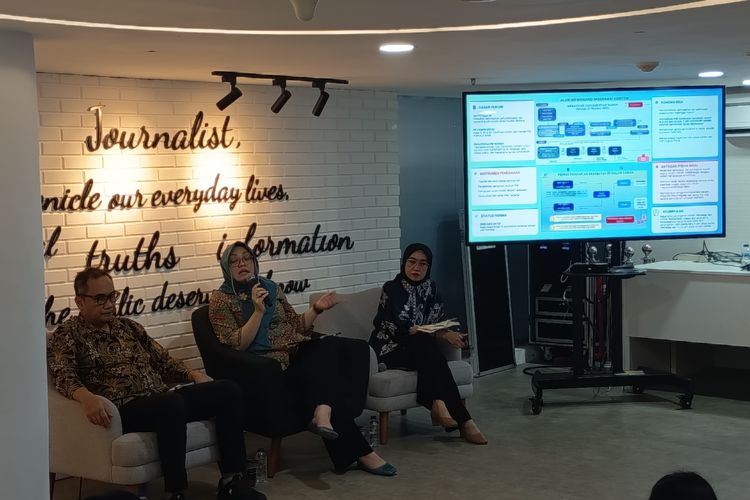
JAKARTA, KOMPAS.com - The Ministry of Communications and Digital (Kemkomdigi) emphasized that the government is not a censor when it comes to monitoring and moderating content in the digital space.
The Secretary of the Directorate General for Digital Space Oversight, Mediodecci Lustarin, stated that access to content on digital platforms must be based on applicable rules and authorities.
The government cannot arbitrarily delete content without following the established procedures.
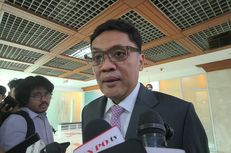
"In exercising its authority, Kemkomdigi is not a censor. Kominfo encourages moderation, and certainly alongside moderation, there is also literacy for users, and this is what we continuously promote through priorities in the Kemkomdigi programs," explained Mediodecci at the Kemkomdigi office on Friday (13/11/2026).
Mediodecci Lustarin elaborated that the government's authority in content moderation focuses more on regulating digital governance rather than directly penalizing users.
"Kemkomdigi cannot arbitrarily cut off access without classification of illegal content or complaints from the public or other official institutions," he said.
He explained that under the Electronic Information and Transactions Law (UU ITE), the government has the authority to instruct electronic system operators (PSE) to terminate access to unlawful content.
However, this authority has limits. Kemkomdigi can only directly cut off access to two types of content: online gambling and pornography.
"Thus, the content that can be directly cut off by Kominfo is only two: online gambling and pornography. Both of these types of content have also been communicated and coordinated with platforms to become a part of their community guidelines and self-moderation processes," he stated.
For other types of content, such as illegal trade and sectoral disinformation, Kemkomdigi must first obtain recommendations or verification from the relevant authorities.
For example, handling illegal trade content must coordinate with the Ministry of Trade or the Ministry of Finance. Meanwhile, content related to unlicensed drugs and food must be verified by the Food and Drug Monitoring Agency (BPOM).
"Kemkomdigi does not conduct investigations and law enforcement independently. Furthermore, it is clear that the limits of Kominfo's authority are defined by the constitution," he explained.
Moreover, he explained that the content removal process is carried out through a coordination mechanism between the government and digital platforms.
Kemkomdigi first receives reports via cyber patrols, public complaints, governmental reports, or from law enforcement officials.
Then, Kemkomdigi verifies the data and supporting evidence before sending notifications to the platform to address alleged content violations.