
Gibran's Admission of Difficulty Disappointing His Former Party, PDI-P Politician: That's an Honest Statement
-
News
-
2 minutes ago
This article was translated by AI. Read the original article on Kompas.com. See Original

JAKARTA, KOMPAS.com - TB Hasanuddin, a member of Commission I of the Indonesian Parliament, emphasized the need for clear regulations regarding tools, procedures, and supervision related to wiretapping.
The proposed Wiretapping Bill has become urgent following the indictment of former National Police Chief General Listyo Sigit Prabowo as a suspect in a case involving illegal wiretapping of President Prabowo Subianto.
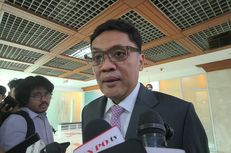
"A specific Wiretapping Law must regulate the authority of institutions, licensing procedures, implementation time limits, supervision mechanisms, management of wiretapped results, and sanctions for parties that abuse their authority," said TB Hasanuddin in a statement on Friday (13/11/2026).
The wiretapping authority held by various state agencies, such as the National Police, the military (TNI), the National Intelligence Agency (BIN), the Corruption Eradication Commission (KPK), the National Counter-Terrorism Agency (BNPT), and the Attorney General's Office, must be complemented by strict supervision and limitation mechanisms.
According to him, every wiretapping action must have a clear legal basis that can be accounted for.
"Every wiretapping operation must have a legal basis and can be justified," TB Hasanuddin stated.
Additionally, he highlighted the increasing accessibility of wiretapping devices to the public and the ease of buying and selling them.
He believes that the possession and use of wiretapping tools should only be permitted for institutions that have the authority and interest in law enforcement.
"There must be clear regulations regarding which institutions are allowed to possess and use wiretapping tools. Organizations or individuals without authority should be prohibited from owning or using such devices," TB Hasanuddin stated.
Currently, regulations surrounding wiretapping are fragmented across various laws, each with different mechanisms and boundaries of authority.
This situation risks generating inconsistency in implementation while also allowing for the potential abuse of power.
"In essence, we do not yet have a specific law that comprehensively addresses wiretapping. In fact, wiretapping is not only related to law enforcement but could also potentially be used for political, economic, social, and cultural interests," said TB Hasanuddin.
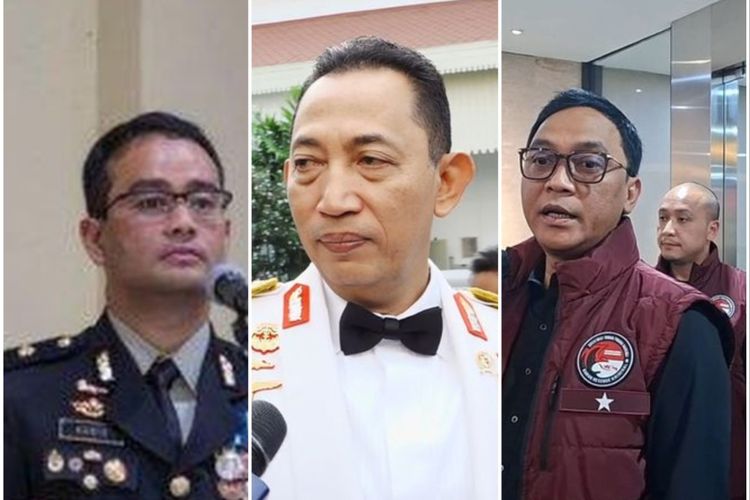 Three police generals accused of wiretapping President Prabowo: Inspector General Ahrie Sonta, General Listyo Sigit Prabowo, and Inspector General Eko Hadi Santoso.
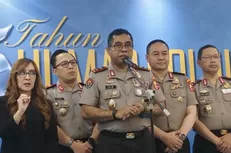
National Police Chief General Suyudi Ario Seto revealed the role of General Listyo Sigit Prabowo and others in the alleged illegal wiretapping of President Prabowo Subianto's mobile phone, as well as that of activists.
In this case, four individuals have been named suspects: former National Police Chief General Listyo Sigit Prabowo (LSP), former Director of Information and Technology (Kadiv TIK) of the National Police Inspector General Slamet Uliandi (SU), the current Chief of Legal Affairs (Kadivkum) Inspector General Ahrie Sonta Nasution (AH), and former head of narcotics criminal investigations (Dirtipidnarkoba) Inspector General Eko Hadi Santoso (EH).
Firstly, Listyo Sigit, who was serving as National Police Chief at the time, allegedly ordered and targeted wiretapping activities, both verbally and via WhatsApp, to Ahrie Sonta, who at that time served as the Head of the Monitoring Division of the National Police Criminal Investigation Agency (Bareskrim).
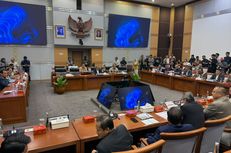
"This role has been linked to allegations of instigating others to commit a crime during the investigation," Suyudi explained before Commission III of the Indonesian Parliament in Jakarta on Thursday (12/11/2026).
Secondly, Slamet Uliandi, who held the position of Kadiv TIK from 2021 until October 2026, allegedly acted as an advisor to the National Police's Monitoring Center.
"(SU) is suspected of being an advisory board member of the police's monitoring center, approving the implementation of wiretapping, and forwarding the results report from the Monitoring Head’s daily reports and analysis reports to General LSP," he clarified.
Thirdly, Eko Hadi Santoso, who was the acting head of the Monitoring Division from December 5, 2024, until October 7, 2025, allegedly received wiretapping orders on specific targets from Slamet Uliandi, which were said to have originated from Listyo Sigit.
Fourthly, Ahrie Sonta Nasution, who served as acting head of the Monitoring Division from October 7, 2025, until October 1, 2026, allegedly received orders from Listyo Sigit and passed them on to operators to conduct wiretapping without a request from investigators.
Ahrie is also suspected of reporting the results of the wiretapping to Listyo Sigit and directing his team to conduct surveillance.
Moreover, Ahrie is alleged to have ordered the deletion of data from the wiretapping results, including audio recordings and logs, as well as disbanding a WhatsApp group.
In this case, Listyo Sigit is detained until November 23, 2026, Eko Hadi Santoso until November 22, 2026, and Ahrie Sonta Nasution until November 21, 2026.
Meanwhile, Slamet Uliandi was declared a suspect on November 5, 2026, and subsequently placed under house arrest on November 11, 2026.