
Reasons for Vice President's Resignation: Prabowo Talks Education, Gibran Denies Diploma Issues
-
News
-
4 minutes ago
This article was translated by AI. Read the original article on Kompas.com. See Original
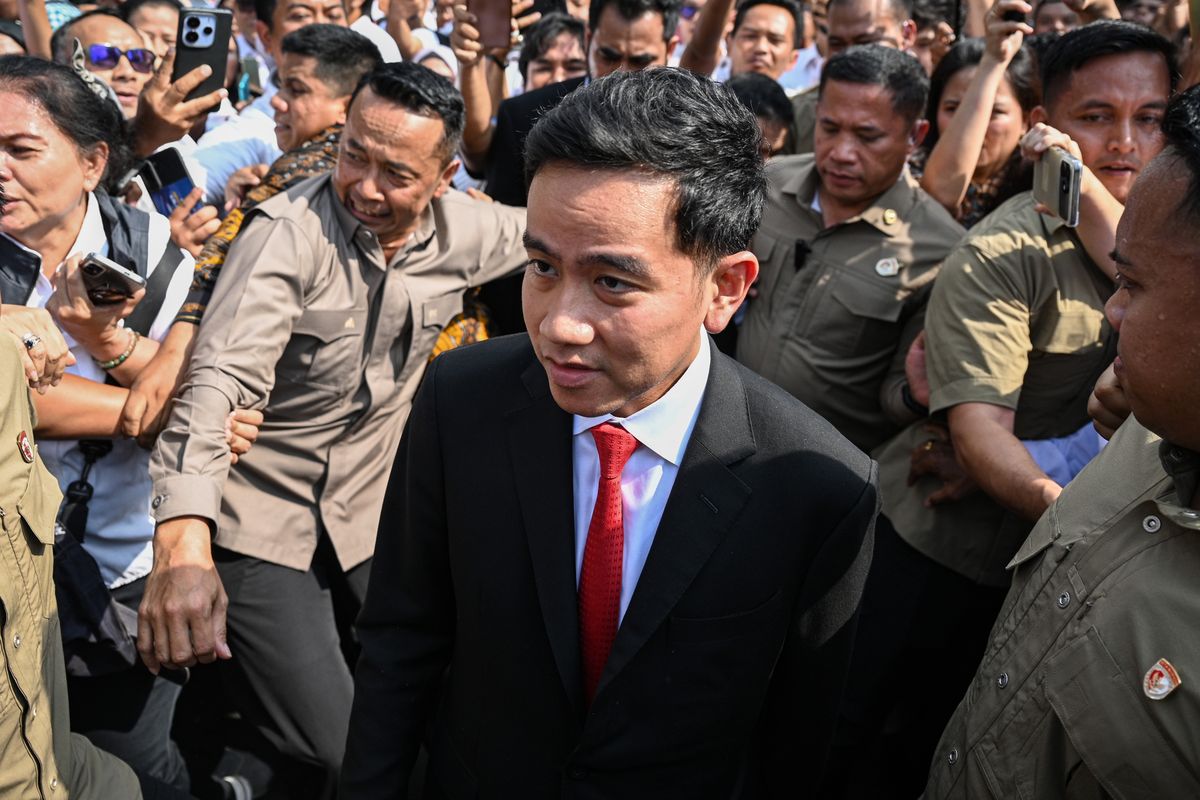
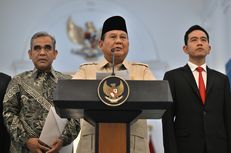
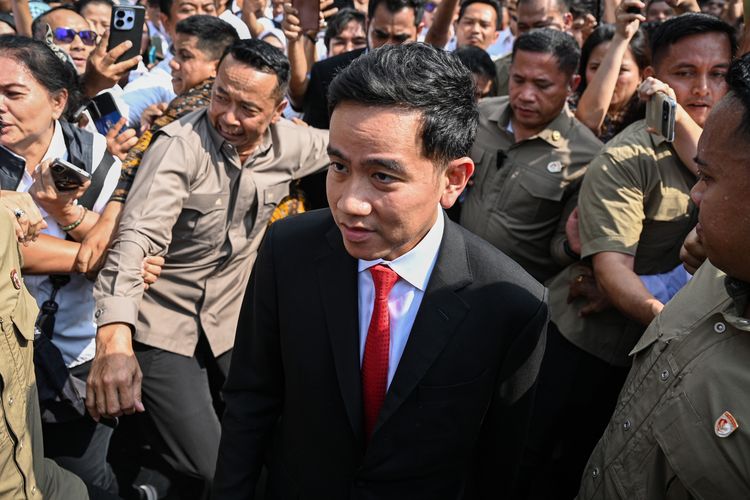
AFTER Gibran Rakabuming Raka resigned from his position as vice president, the People's Consultative Assembly (MPR) has a maximum of 60 days to convene a meeting to elect a new vice president, selecting one from two names proposed by the President.
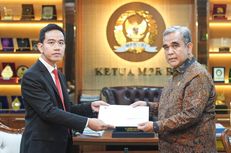
Gibran submitted his resignation to the President and MPR leadership on November 12, 2026.
Now, all political parties seem to be targeting this position, including large community organizations.
They are promoting the issue of their candidates' prominence across various media, including social media.
Politically, choosing a candidate from one party may disrupt the chemistry of relationships with other parties.
Similarly, when the President chooses a figure from a community organization, it can create the impression that the President favors that organization.
Therefore, considering proposing a religious leader who is accepted by all religious organizations, or is not perceived as a member or official of any one, could be a middle ground.
This figure is expected to be accepted by various groups, without making any political or community group feel favored.
A religious leader can create a conducive social climate, especially if the chosen individual is accepted by the majority across organizational and party lines.
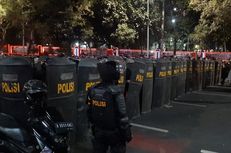
A senior religious leader with broad acceptance can help the President forge peace after the political escalation that strained relations among community groups leading up to Gibran's resignation.
Moreover, the challenges of public policy amid geopolitical instability, pressure on the rupiah exchange rate, investor confidence issues, and fiscal vulnerability require a practical figure who understands state affairs.
Developments in the MSCI index evaluation are also a concern for Indonesia's capital market.
In its November 2026 review, MSCI announced the removal of two stocks from the MSCI Indonesia Index, with no new stocks added.
The need for disaster mitigation, as repeatedly warned by the Meteorology, Climatology, and Geophysics Agency (BMKG), also expands these challenges.
The El Niño and La Niña dynamics, during their respective phases, affect agricultural economics and water availability.
In an early November 2026 warning, BMKG urged vigilance against drought, as well as forest and land fires amid a very strong El Niño, alongside the potential for heavy rains in several regions.
State affairs involve not only economic aspects but also multidimensional and interdisciplinary issues.
However, economics remains the primary focus in this discussion.
Threats of production stagnation due to declining purchasing power, rising prices of imports, and environmental disasters are interrelated issues in economic policy studies.
In addition, there are challenges in maintaining monetary stability, including exchange rates, as well as confidence in capital market trading activities. The risk of increased inflation also needs to be anticipated.
It is possible for the President to choose a practitioner specializing in economics as one of the vice presidential candidates.
Thus, the choice between a religious leader or a practitioner stems from two equally pressing needs: fostering social trust and strengthening the government's ability to resolve public issues.
Both can serve as a middle ground when filling the vice president position risks inciting new competition among the government's supporting factions.
For the President, proposing a figure with cross-group acceptance can diminish the perception that one party gains excessive power.
Supporting parties also have reasons to accept the figure without feeling they are handing a strategic position to a competitor.
The room for compromise opens up as the focus is on governance needs.
Nonetheless, broad acceptance must be supported by a solid track record.
A religious leader warrants consideration for their ability to nurture intergroup relationships, uphold moral authority, and advocate for collective interests.
Proximity to a single organization does not preclude possibility.
What matters is whether they have been able to transcend organizational boundaries when dealing with national issues.
A religious leader of this caliber can help the President listen to community anxieties that are not always captured through bureaucratic reports.
They can also deliver criticism in a soothing manner, without losing assertiveness against injustice.
Their moral authority will be valuable when translated into the courage to remind power holders and show concern for the most vulnerable citizens.
Meanwhile, a practitioner's main value lies in their experience of turning knowledge into decisions and tangible outcomes.
Mastery of economic theory needs to be complemented by an understanding of bureaucracy, central and regional relations, and social realities that determine policy success.
Experience in leading organizations must also be relevant to the responsibility of governing the country.
An economic practitioner under consideration must perceive the relationship between macroeconomic stability and daily life.
Investor confidence needs to proceed hand-in-hand with business certainties for small producers.
Inflation control must address food affordability. Fiscal resilience needs to be maintained while ensuring public services and social protections continue to function.
With clear task distribution from the President, the vice president can ensure cross-ministerial issues receive follow-up.
Matters of food, water, disasters, investments, and purchasing power require ongoing coordination, as their responsibilities are dispersed among numerous institutions.
Therefore, the President needs to clarify the demands that should be addressed through the two proposed names.
If the priority is to alleviate social tension, the capacity to embrace becomes a key consideration.
If the priority is to strengthen policy implementation, experience in managing complex issues should carry significant weight.
Both still require integrity, governance skills, and the ability to work alongside the President.
Political parties and community organizations can also showcase maturity by assessing candidates based on those needs.
The significant contributions to the coalition indeed have political implications, but filling the vice president position carries broader responsibilities than merely dividing positions among the government's supporters.
Both religious leaders and practitioners have the potential to become middle-ground candidates as long as they possess credibility that is acceptable across groups.
This middle ground must yield useful leadership: able to calm the public, strengthen government work, and maintain public trust.
Ultimately, the measure of the President's success in proposing Gibran's successor will be seen in that figure's ability to assist the country in facing increasingly complex issues.
The society needs a vice president whose presence is felt in their lives, providing a reason to believe again that the interests of the state and nation remain the primary basis for political decision-making.