
Jokowi, Gibran, and the Memory of PDI Perjuangan
-
News
-
Just now
This article was translated by AI. Read the original article on Kompas.com. See Original

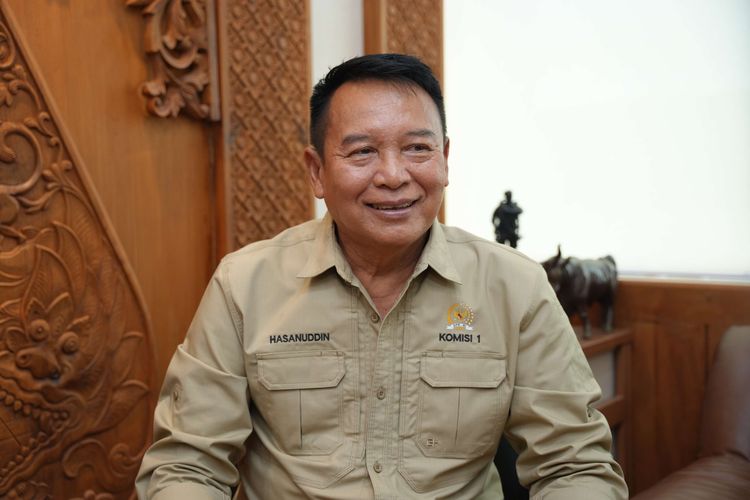
JAKARTA, KOMPAS.com - TB Hasanuddin, a member of the Indonesian House of Representatives' Commission I, emphasizes the urgent need for a specific law governing wiretapping to prevent the misuse of authority by state apparatus and agencies.
Currently, TB Hasanuddin stated, regulations regarding wiretapping are spread across several laws, each with differing mechanisms and powers, and there is no comprehensive law specifically addressing wiretapping.
"Essentially, we do not have a dedicated law regulating wiretapping comprehensively. However, wiretapping relates not only to law enforcement but also has the potential to be used for political, economic, social, and cultural purposes," he said on Friday (13/11/2026).
This call for legislation follows the exposure of alleged illegal wiretapping by former National Police Chief Listyo Sigit Prabowo and three other high-ranking police officials.
“The allegations of wiretapping involving the former National Police Chief should also be investigated objectively to ensure the legal basis and implementation procedures are followed,” said the PDI-P politician.
Furthermore, he noted that this case illustrates the necessity for clear limitations and oversight over the wiretapping authority held by officials, which should be outlined in a dedicated law.
TB Hasanuddin explained that the creation of a specific law on wiretapping is supported by legal foundations, including Constitutional Court Decisions Number 5/PUU-VIII/2010 and Number 012-016-019/PUU-IV/2006.
Additionally, Article 136 paragraph (2) of Law Number 20 Year 2025 on the Criminal Procedure Code states that wiretapping for investigative purposes must be regulated by a specific law.
"This means there is already a legal foundation to advocate for the formation of a specific wiretapping law. It now depends on how the government and the parliament act on this," TB Hasanuddin clarified.
He added that the proposed law should regulate the authority of agencies, licensing procedures, time limits for wiretapping, oversight mechanisms, management of wiretapping results, and penalties for those who abuse their power.
TB Hasanuddin also advocated for restrictions on the ownership and use of wiretapping equipment, limiting it to only authorized agencies.
"Organizations and individuals lacking such authority should be prohibited from owning or using these tools," he asserted.
It is noteworthy that the Criminal Investigation Agency (Bareskrim) of the National Police has named Listyo Sigit and three other police inspectors generals as suspects in the alleged wiretapping without following proper procedures.
The three high-ranking officials involved are Inspector General Ahrie Sonta, Inspector General Eko Hadi Santoso, and Inspector General Slamet Uliandi.
Police Chief Commissioner Asep Safrudin stated that the suspects are accused of conducting wiretapping without following the proper protocols against various parties, including the President of Indonesia, state officials, political figures, media, and civil society organizations.