
Accompanying Prabowo, Gibran Stands Next to Muzani at the National Hero Title Award Ceremony
-
News
-
1 minute ago
This article was translated by AI. Read the original article on Kompas.com. See Original
RAFFI Ahmad once again made headlines on Tuesday morning, November 10, 2026, coinciding with Indonesia's Heroes Day. On a smartphone screen, one number made fingers stop scrolling: Rp 14,696,955,002.
The day prior, Indonesia Corruption Watch (ICW) revealed this figure as the total value of eight influencer service packages from two ministries awarded to PT Rans Animasi Indonesia, a company affiliated with Raffi.
These packages are recorded in the INAPROC procurement data for 2024-2026. The actual amount paid still needs verification from payment documents.
On a day we remember what others have given to the republic, this number prompts us to question what is being returned to the populace.
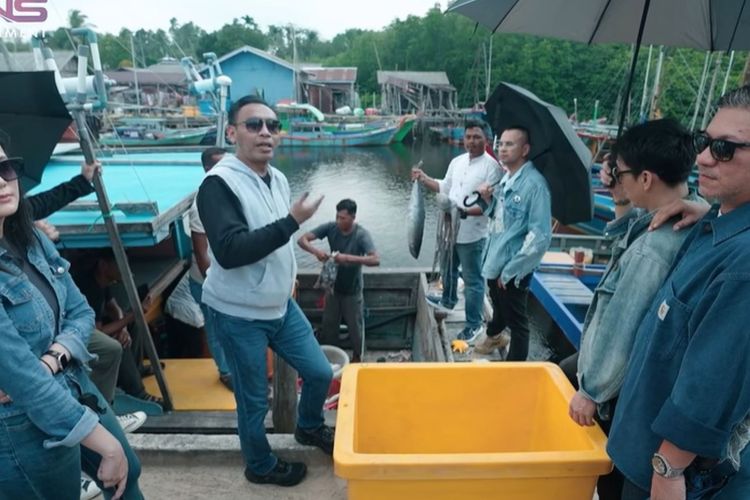
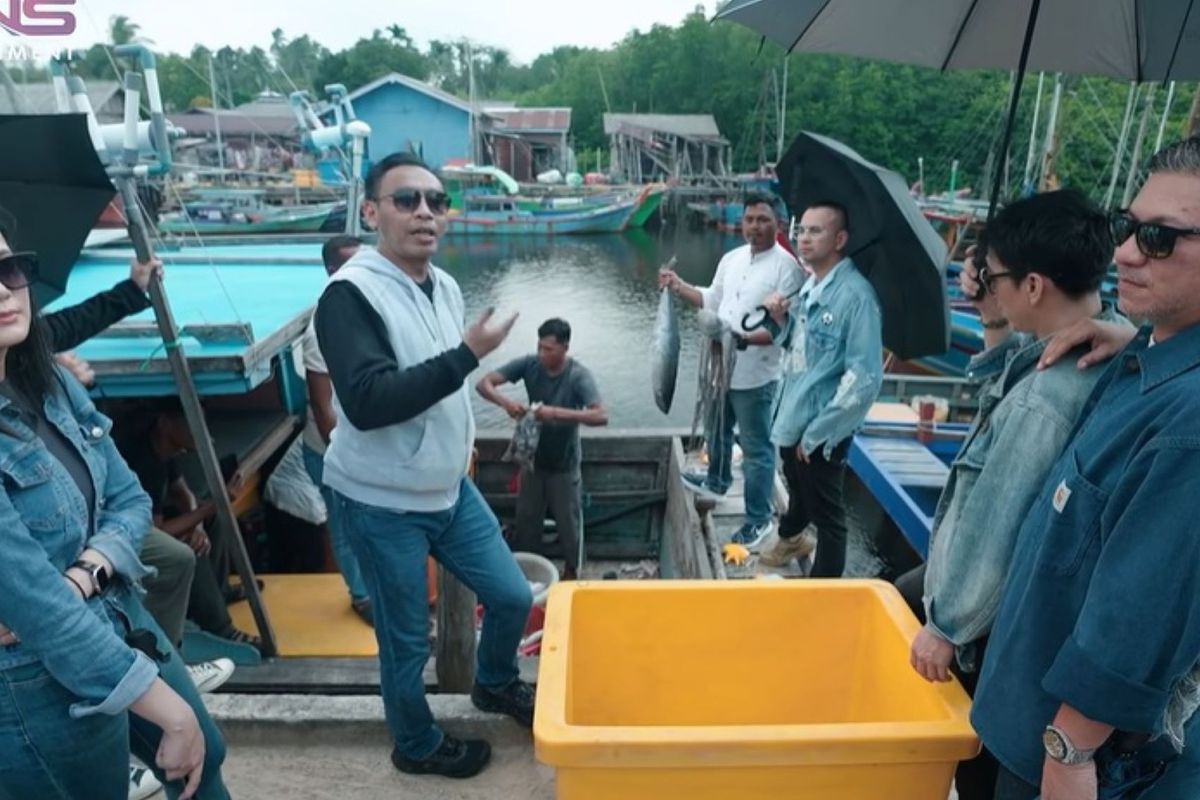
One of the packages raises this question in a fishing village in Natuna (ICW, November 9, 2026, reported by Tirto, November 10, 2026).
Something quickly passes on the screen. An Instagram Story, for instance. In state budget documents, its footprint is much larger.
From five packages related to the Ministry of Education, Culture, Research, and Technology worth Rp 3.9 billion, Rp 575.7 million is allocated for an Instagram Story package and Rp 2.52 billion for Raffi's attendance at an event.
How many posts, how many events, and what was conducted? The package name only provides us a title. The narrative lies within the contract (ICW, cited by Suara.com, November 9, 2026).
Then come three nearly identical figures.
Three packages from the Ministry of Maritime Affairs and Fisheries (KKP) each valued at around Rp 3.6 billion. Together, they total nearly Rp 10.8 billion, approximately 73 percent of the overall value highlighted by ICW.
Two packages are recorded in 2025, the year the government set a target for state budget efficiency at Rp 306.7 trillion.
Amid that policy, what communication needs underlie these two packages? How does KKP gauge that the benefits match the costs? (ICW, cited by Suara.com, November 9, 2026, and Presidential Instruction Number 1 of 2025, January 22, 2025).
Among those numbers lies a date. On October 22, 2024, the President appointed Raffi Ahmad as the Presidential Special Envoy for Youth Development and Arts Workers. The three KKP packages were recorded thereafter.
To determine whether this position influenced the procurement, we need to see who prepared the specifications, who made the decisions, and how the interests of the parties are expressed and managed (Presidential Secretariat, October 22, 2024, and ICW, cited by Suara.com, November 9, 2026).
Tirto reached out to Raffi and his manager, Prio Bagja Anugrah, for comments. As of this report published at 10:16 AM WIB, neither had responded.
Other reports referenced that morning also lacked explanations from the relevant ministries (KabarBaik.co and Tirto, November 10, 2026).
“Sunlight is said to be the best of disinfectants,” wrote Louis D. Brandeis (Harper’s Weekly, December 20, 1913).
Here, that light could take the form of work guidelines, accessible contract sections, payment information, and performance reports.
If the Estimated Price (HPS) is compiled, Article 26 paragraphs (2) and (3) of the Presidential Regulation on Government Goods/Services Procurement differentiates between the non-confidential value of the HPS and its secret details. Access to other documents follows public information disclosure regulations.
Examining procurement files, auditors can assess price comparisons and match payments with the work accepted by the state (Presidential Regulation Number 12 of 2021, February 2, 2021, Presidential Regulation Number 46 of 2025, April 30, 2025, and Information Commission Regulation Number 1 of 2021).
The contract can explain what was purchased. To understand its usefulness, we need to hear from the intended audience.
In a review tracking 40 influencer service packages valued at Rp 90.45 billion, ICW found, among other things, socialization for new student enrollment.
For a mother who rarely visits the education department’s website, a post can be valuable if it informs her about application deadlines and how to fill out forms (ICW, August 2020).
“Knowledge will forever govern ignorance,” wrote James Madison to W. T. Barry (August 4, 1822).
In evaluating government communications in England, three questions help us see what happens after a message is disseminated.
Who was reached, what did they understand, and what did they subsequently do? (Government Communication Service, February 2024).
In Ontario, Canada, auditors examine something else. For whose benefit is the message conveyed? They highlighted five campaigns worth C$63.7 million, approximately 62 percent of provincial advertising expenditures in the fiscal year 2023/2024.
In Let’s Build Ontario, some advertisements were assessed as creating a positive impression of the province with implicit messages favorable to the ruling party (Auditor General of Ontario, December 3, 2024).
The public relations package for the Merah Putih Fishing Village program in Cemaga Utara, Natuna, is valued at Rp 3.6 billion. When the project was reviewed on August 27, 2026, most facilities had been completed, while the freezer warehouse and ice factory were still under construction.
Who is intended to be reached by this package? If the target is the wider community, measure what they understand about the program.
If the target is local fishermen, ask whether they know when the services open, what the rates are, and who to contact.
The decision to use the facility also depends on ice prices, warehouse capacity, and the distance they have to travel (Tirto, November 10, 2026, and Natuna Fisheries Office, September 8, 2026).
Imagine a fisherman just landing in Cemaga Utara. He shifts his fish box to the edge of his boat and asks a person dockside, “If I want to store fish, where do I need to go?”
The public communication budget should work to help people find answers to such simple questions.