

Vice Presidential Election, Bahlil: Prabowo's Choice, Golkar's Choice
-
News
-
3 hours ago
This article was translated by AI. Read the original article on Kompas.com. See Original
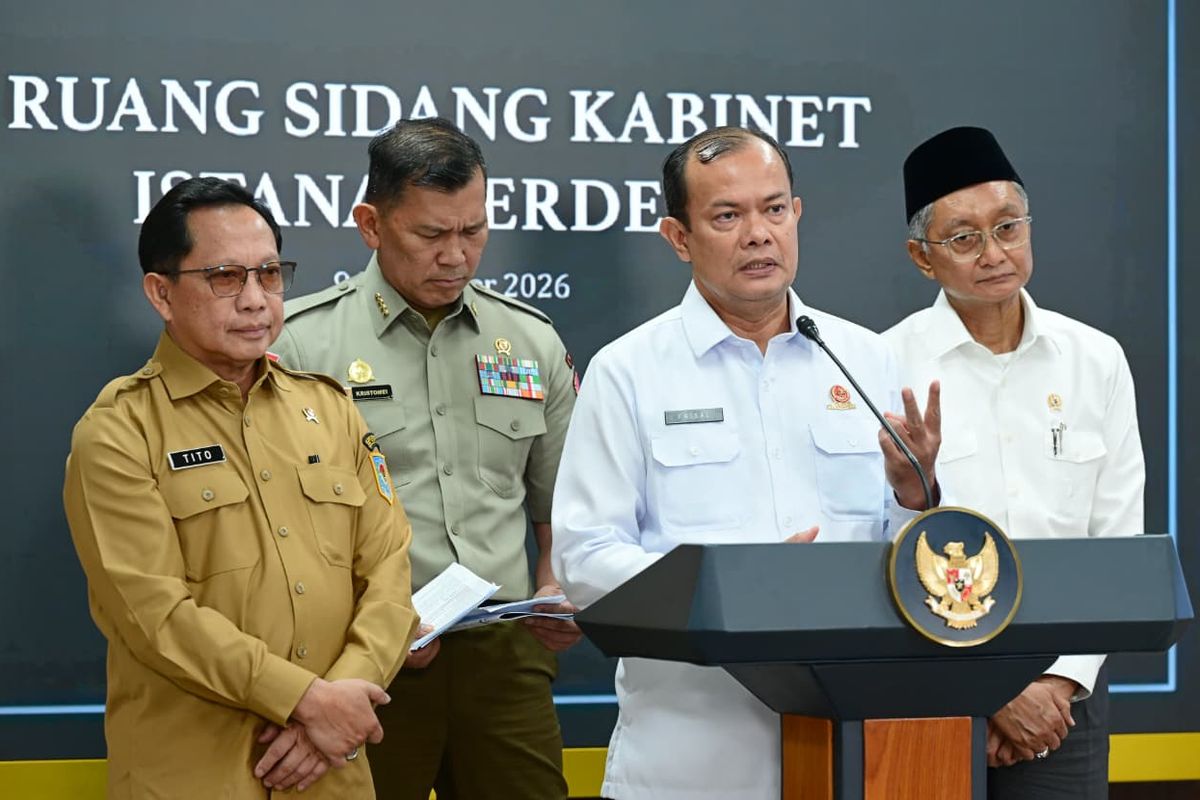
JAKARTA, KOMPAS.com - The head of the Meteorology, Climatology, and Geophysics Agency (BMKG), Teuku Faisal Fathani, stated that the peak of the rainy season is expected to occur at the end of 2026 and the beginning of 2027.
Specifically, BMKG, in collaboration with the National Disaster Mitigation Agency (BNPB), will prepare weather modification operations (OMC) for three provinces in Sumatra that are still recovering, particularly in areas where rivers have not yet been normalized.
"We aim to prevent rain from falling in areas that are not ready. There are ongoing constructions that we need to protect from extreme rain that could lead to subsequent disasters," Teuku said after a meeting with President Prabowo Subianto at the presidential palace complex in Jakarta on Monday (9/11/2026).
He noted that OMC could be implemented for provinces that declare a state of emergency to avoid extreme flooding.
According to him, OMC can be carried out in two ways.
First, by directing rainfall from the upstream of cloud formation to ensure it falls in water bodies or areas that are safe.
Second, using seed material smaller than 2 microns or flares to prevent condensation, causing the clouds to disperse and avoiding rain.
"BNPB, supervised by BMKG, will be able to conduct weather modification operations using these two methods," he stated.
On this occasion, the government will also continue to strengthen measures to anticipate the potential for hydrometeorological disasters as the rainy season approaches.
Teuku predicts that the peak of the rainy season will occur from December 2026 to February 2027.
“The onset of the rainy season this year has been delayed by 20 to 30 days, and the peak will span three months: December 2026, January, and February 2027,” said the head of BMKG.
Given this prediction, the government is enhancing its preparedness for potential flooding and landslides due to extreme rainfall.
BMKG has also prepared a warning system that provides information on weather potential at the district level, ranging from several hours ahead to monthly projections.
“This way, we can indicate which districts in Indonesia are on alert, standby, or warning status,” he added.