
Vice Presidential Election, Bahlil: Prabowo's Choice, Golkar's Choice
-
News
-
5 hours ago
This article was translated by AI. Read the original article on Kompas.com. See Original
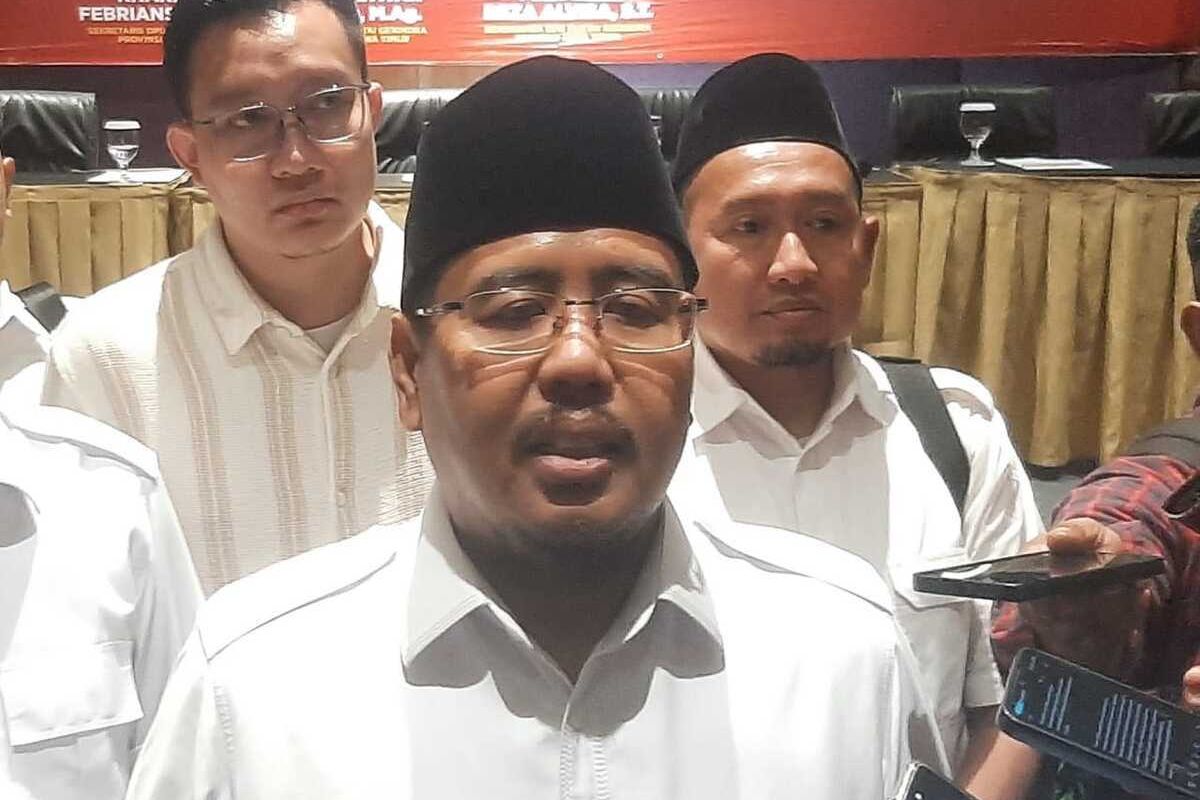
JAKARTA, KOMPAS.com - The Corruption Eradication Commission (KPK) has summoned Indonesian House of Representatives member Anwar Sadad regarding a corruption case involving funding for community groups from the East Java Regional Budget (APBD) for the Fiscal Year (FY) 2021–2022.
“The examination is being conducted at the KPK Red and White Building,” said KPK spokesperson Budi Prasetyo in a statement on Monday (9/11/2026).
In addition to Anwar Sadad, KPK has also summoned another witness named Bagus Wahyudyono, a private individual.
However, Budi did not disclose the specifics that will be investigated during the witness examination.
The KPK stated that three suspects in the corruption case regarding the management of funds for community groups from the East Java APBD allegedly offered a bribe of IDR 6.9 billion to Anwar Sadad, who was serving as Deputy Chair of the East Java Provincial Parliament from 2019 to 2022.
“AY, RWR, and MF manipulated the situation to obtain their respective allocations. As a result, AS (Anwar Sadad) allegedly received a 'bribe' of at least IDR 6.9 billion through BGS (Bagus Wahyudiono, staff of the regional parliament member),” said Ahmad Taufik Husein, Acting Director of KPK's Investigation, at the Red and White Building in Jakarta on Wednesday (22/7/2026).
The KPK claimed that the bribe was given to Anwar Sadad by the three suspects to arrange the allocation of grant funds for community groups in their regions.
The three suspects are Achmad Yahya (AY), a private individual from Pasuruan Regency; M. Fathullah (MF), a private individual from Pasuruan Regency; and Ra Wahid Ruslan (RWR), a private individual from Bangkalan Regency.
Specifically, Achmad Yahya provided IDR 1.87 billion to secure a grant of IDR 14.8 billion; Ra Wahid Ruslan provided IDR 1.42 billion for a grant of IDR 28.9 billion; and M. Fathullah provided IDR 3.61 billion for a grant of IDR 24 billion.
Taufik explained that the corruption case in this second cluster began when Anwar Sadad, along with the Fraction Chair of the regional parliament, held meetings to determine the allocation amounts for grant funding per Regional Parliament member based on the total allocation of East Java Provincial grant funds designated as the council's thought process (Pokir).
Subsequently, the Secretariat staff of the East Java Regional Parliament compiled the allocation amounts for each member and collected proposals from each member.
From this allocation distribution, Anwar Sadad allegedly received a total allocation of grant funds reaching IDR 291.5 billion, including IDR 48.9 billion (2019); IDR 37.6 billion (2020); IDR 121.3 billion (2021); and IDR 83.7 billion (2022).
“From each quota of East Java Provincial grant funds for 2019–2022, AS (Anwar Sadad) required a commitment fee of between 15 percent to 20 percent from several Field Coordinators or East Java Regional Parliament members requesting allocation shifts among members,” he stated.
Taufik indicated that Anwar Sadad facilitated allocation shifts among parliament members to a colleague named Mahud, who serves in the East Java Provincial Parliament from 2019 to 2024.
He noted that for those Field Coordinators willing to offer a commitment fee, they would form community groups or utilize certain institutions to create funding proposals.
“Subsequently, the proposals created by the Field Coordinators are submitted to the parliament member or their representative,” he explained.
Under the agreement, Field Coordinators expecting to receive grant allocations 'allocated' by Anwar Sadad paid a commitment fee of between 20 percent and 25 percent through three methods: direct cash to AS, cash or transfer via Bayu Wahyudiono, a trusted individual of Anwar Sadad, and coverage of his personal expenses.
“From the payment of the commitment fees, AS received a fee of 20 percent, while BGS received 5 percent,” he said.
Moreover, from the total grant funds disbursed to each community group, between 20 percent to 30 percent was “cut” by the Field Coordinators.
“Thus, the actual funds used for community programs only account for approximately 55 percent to 70 percent of the initial budget,” he added.