
KPAI Calls for Parents and Schools to Share Responsibility for Child Violence
-
News
-
6 minutes ago
This article was translated by AI. Read the original article on Kompas.com. See Original
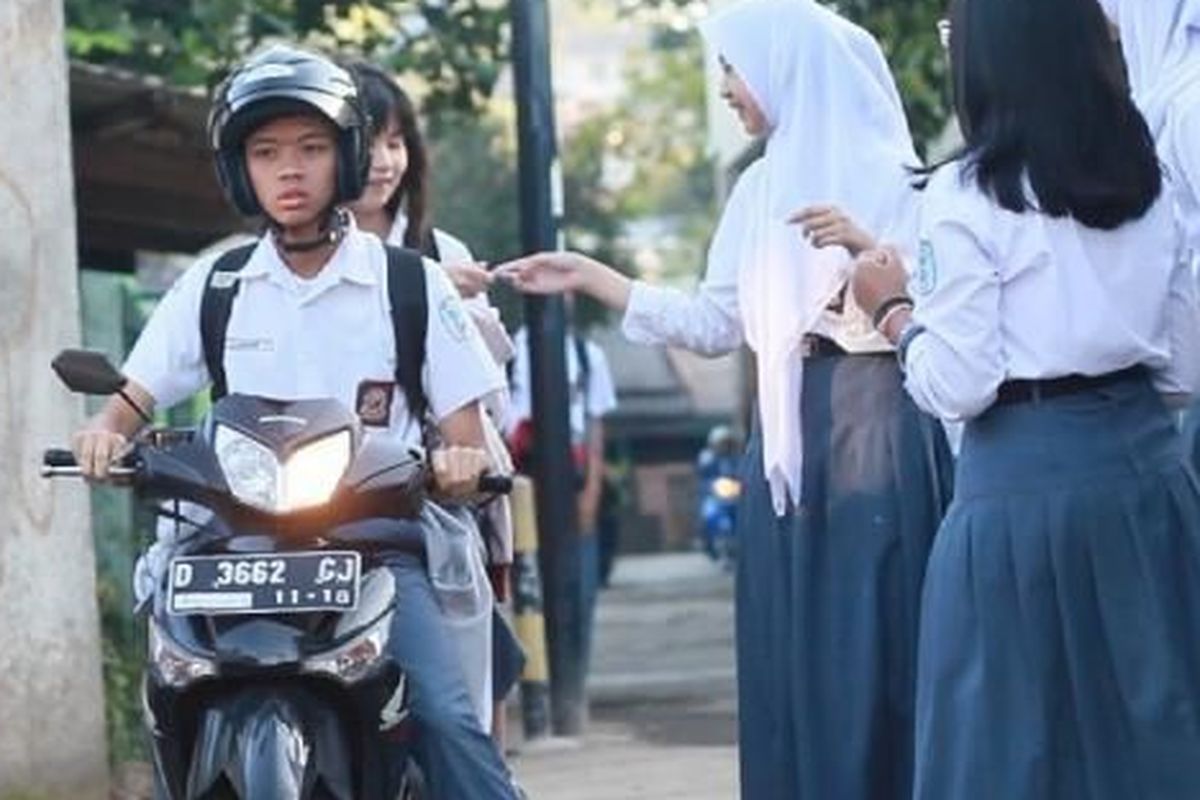
JAKARTA, KOMPAS.com - The government plans to revive the division of subjects in high school education, which was previously abolished. The shifting educational policies have drawn scrutiny.
"Education policies should not change too easily without strong evaluation, as the impacts are directly felt by schools, teachers, students, and parents," said Lalu Hadrian Irfani, Deputy Chairman of the House of Representatives' Commission X, to Kompas.com on Saturday (11/7/2026).
Following its elimination under Minister of Education, Culture, Research, and Technology Nadiem Makarim through the Merdeka Curriculum, the divisions of Science, Social Studies, and Language will be reinstated starting in the 2027/2028 academic year.
Basic and Secondary Education Minister Abdul Mu'ti stated that reinstating this subject division is necessary to strengthen students' foundational knowledge before entering higher education.
This change raises questions about the direction of national education policy.
So, should the subject division really be reinstated, or should the government be looking for a more sustainable approach so that educational policies do not keep changing with ministerial transitions?
Education observer Totok Amin Soefijanto believes that every approach to the educational system has its advantages and disadvantages.
Therefore, the government needs to find a model of subject division that can maintain students' academic foundation without limiting their space to develop interests and abilities in other fields.
Totok argued that the traditional science, social science, and language division tends to be too rigid.
Conversely, the subject cluster system under the Merdeka Curriculum allows greater flexibility for students in choosing subjects.
However, its implementation is still seen as needing adequate control and preparation.
"The ideal interest-based system for the future should not be rigid like the traditional divisions, nor should it be as free as the Merdeka Curriculum, which seems uncontrolled," Totok told Kompas.com on Friday (11/6/2026).
The Boston University doctoral graduate in education offers a middle-ground approach which does not entirely eliminate the core subjects but still allows students to take interdisciplinary elective courses.
In this model, students would have a primary major, such as Science and Technology, Social Sciences and Humanities, or Language and Culture.
This core major ensures that students receive a strong academic foundation.
However, students would also be required to take one or two elective subjects related to the advancements in knowledge and future needs.
"The middle ground is that students maintain a core major (e.g., Science/Technology, Social Sciences/Humanities, or Language/Culture) to ensure a strong foundation, but are required to take one or two interdisciplinary electives that align with current developments," he explained.
For instance, students in the Science major could learn about digital business.
Meanwhile, Social Studies students could take courses on artificial intelligence, computer science, or big data.
According to Totok, this approach can safeguard students' mastery of essential knowledge while preventing rigid specialization in high school.
Given the ongoing advancements in knowledge and the workforce, interdisciplinary convergence is increasingly possible.
Totok also emphasizes that the main issue in educational policy changes lies not just in curriculum design but in schools' readiness to implement them.
He urges the government to prepare comprehensive technical guidelines at least one to two years before the new subject division system is implemented.