

Vice Presidential Election, Bahlil: Prabowo's Choice, Golkar's Choice
-
News
-
4 hours ago
This article was translated by AI. Read the original article on Kompas.com. See Original
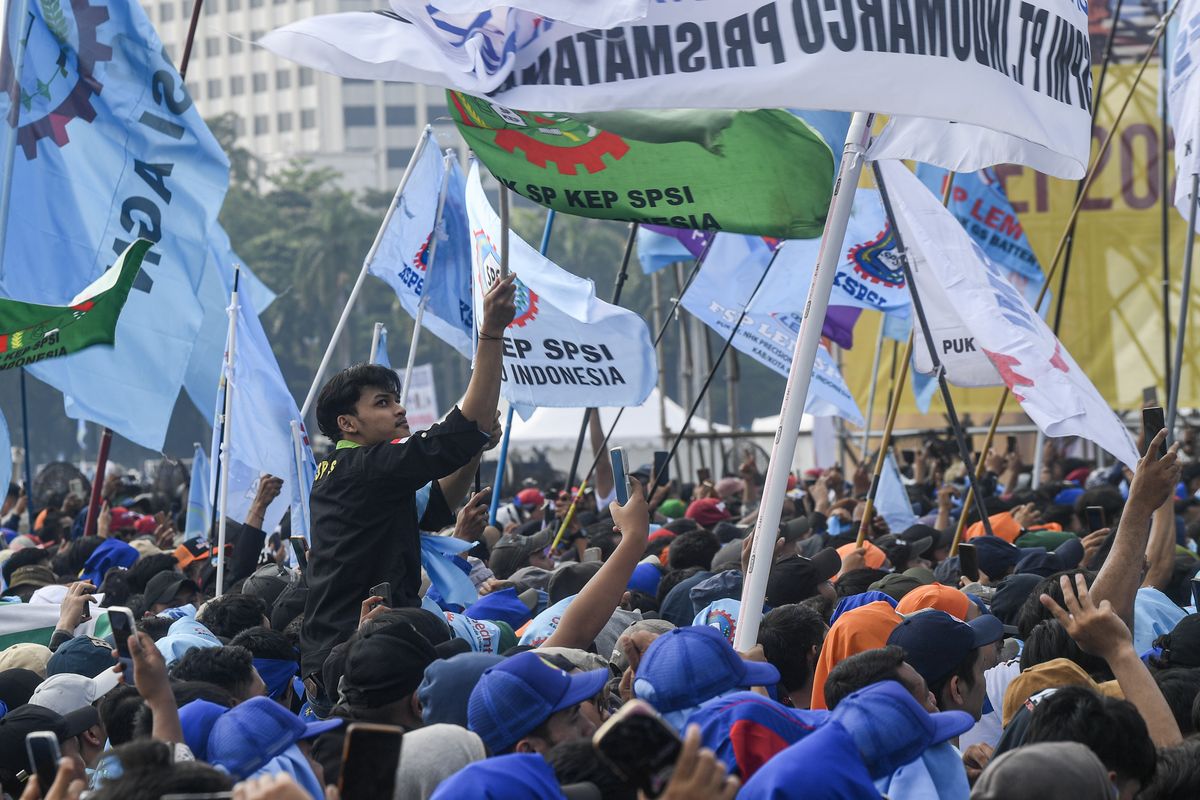
JAKARTA, KOMPAS.com - Law Number 27 of 2026 on Labor Protection prohibits employers or companies from withholding the diplomas or personal documents of their employees.
This is stipulated in Article 78 of the Labor Protection Law, which has been enacted by the government.
"In making employment agreements, employers are prohibited from: a. requiring the diploma and/or personal documents of employees; and/or b. withholding the diploma and/or personal documents of employees as collateral in employment relationships," states Article 78 paragraph (1) of the Labor Protection Law, which is accessible via the Legal Documentation and Information Network (JDIH) of the Minister of State Secretariat.
Meanwhile, Article 78 paragraph (2) specifies that this prohibition does not apply for legally justified purposes concerning diplomas and/or personal documents obtained through training financed by the company based on a written employment agreement.
In addition to companies, labor placement agencies are also prohibited from withholding diplomas belonging to job seekers.
"Labor placement agencies as referred to in Article 48 paragraph (1) are prohibited from: b. withholding diplomas and/or personal documents belonging to job seekers as collateral in job placement," states Article 50 paragraph (1) of the Labor Protection Law.
Furthermore, the Labor Protection Law mandates that companies, the government, and labor unions must take measures to prevent termination of employment (layoffs).
"Employers, employees, labor unions, central government, and local governments must make every effort to prevent termination of employment," states Article 228 paragraph (1) of the Labor Protection Law.
Additionally, Article 228 paragraph (2) of the Labor Protection Law outlines ten steps to prevent layoffs, including:
If layoffs cannot be avoided, termination must go through bipartite negotiations aimed at consensus between the employer and the labor union or the employees.
"If bipartite negotiations mentioned in paragraph (3) do not reach an agreement, then the employer and employee or labor union shall resolve the termination dispute through the industrial relations dispute resolution procedures in accordance with the prevailing laws," states Article 228 paragraph (5) of the Labor Protection Law.
"Termination of employment without agreement or a decision from an industrial relations dispute resolution institution that is legally binding renders the termination void, and the employer must re-employ the affected employee," states Article 228 paragraph (7) of the Labor Protection Law.