

Immigration Director General: Foreign National Residence Permit and Visa Applications No Longer Require Agents
-
News
-
13 minutes ago
This article was translated by AI. Read the original article on Kompas.com. See Original
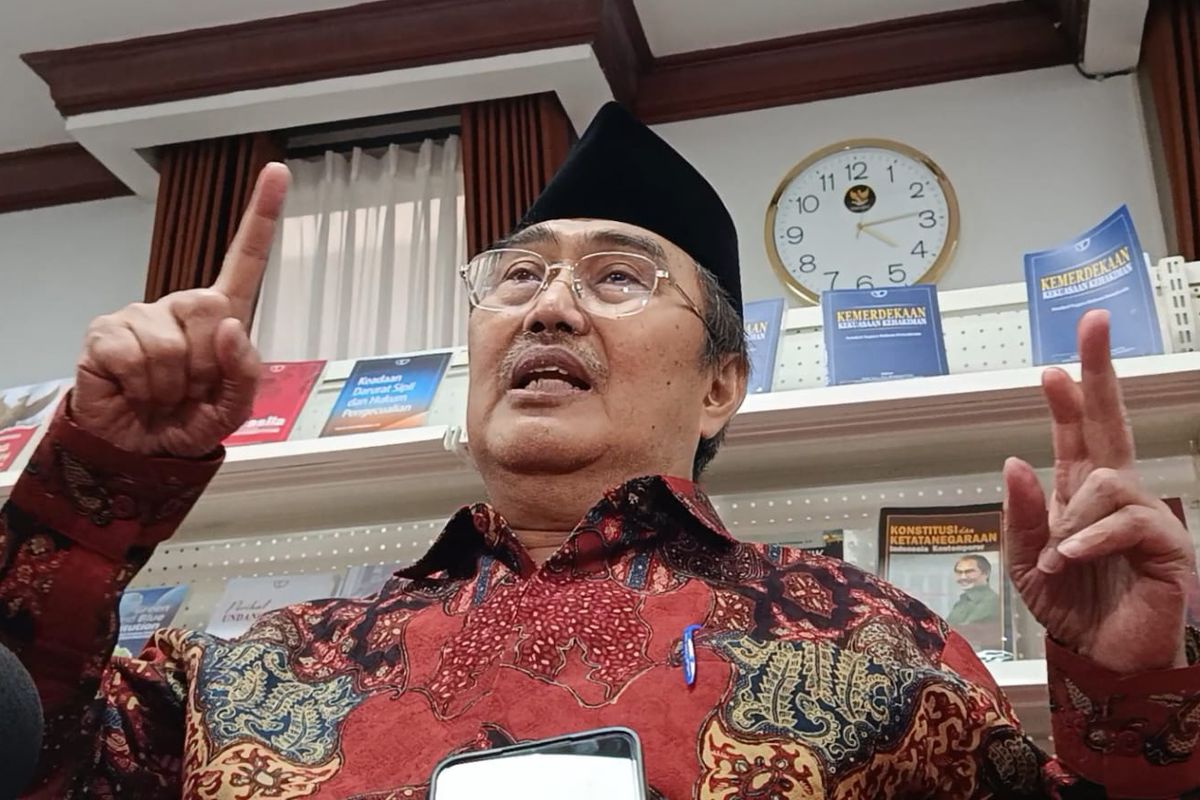
JAKARTA, KOMPAS.com - Former Chairman of the Police Reform Acceleration Commission (KPRP) Jimly Asshiddiqie has met with the Chief of the National Police of the Republic of Indonesia, General Suyudi Ario Seto, to discuss recommendations for police reform.
The meeting, which took place on Friday (November 7, 2026), aimed to ensure that the recommendations compiled by the KPRP, reflecting public aspirations for police reform, would not be overlooked.
"Some aspects were neglected by the House of Representatives recently. However, most of the recommendations have been approved by the President, so they only need to be implemented by the Chief of Police," Jimly stated, as reported by ANTARA on Sunday (November 8, 2026).
He emphasized the importance of supporting the current law enforcement efforts led by the Chief of Police while allowing for internal reforms to take place.
According to him, this is not only crucial for the police institution but also essential for restoring public trust in law enforcement in Indonesia.
"Additionally, it is hoped that court rulings from the Supreme Court and the Constitutional Court will be followed up by the House of Representatives as they should," he added.
The KPRP has submitted a comprehensive report, consisting of 10 volumes (approximately 3,000 pages), to President Prabowo Subianto on May 5, 2026, summarizing the essence of its recommendations into six main points.
First, the police will remain under the President's authority. The KPRP agrees not to propose the establishment of a new ministry, ensuring that the police continue to operate under the existing regulations directly accountable to the President.
Second, strengthening the National Police Commission (Kompolnas). Kompolnas will be transformed into an independent external oversight body (with its membership no longer ex-officio) with expanded authority.
Recommendations and decisions from Kompolnas will later carry binding/executory status at certain levels, encompassing oversight of governance, operations, and investigations related to the professional code of conduct of the police.
Third, the mechanism for appointing the Chief of Police will continue as it is now, involving approval from the House of Representatives, but will include a more transparent and clear career path structure.
Fourth, there will be restrictions on police assignments outside the structure. Assignments of police members outside the police institution will be regulated more strictly and limitatively through legislation, government regulations (PP), presidential regulations (perpres), and presidential instructions (inpres).
Fifth, improvements in institutional and managerial aspects (good governance). Enhancements will focus on internal governance within the police, including professional development, strengthening criminal investigation functions, and digitizing public services.
Sixth, regulatory revisions are targeted until 2029. There is a push to revise Law Number 2 of 2002 concerning the police, along with adjustments to related regulations, including approximately eight police regulations (perpol) and 24 chief of police regulations (perkap), with gradual implementation of reforms planned until 2029.