

Amran Vs Sugiono: Analysts Weigh Public and Elite Acceptability
-
News
-
1 hour ago
This article was translated by AI. Read the original article on Kompas.com. See Original
A photo can sometimes shape an opinion faster than a thousand pages of explanation.
In politics, the power of an image can even transcend the events it captures.
People are no longer busy trying to find out what really happened. They are instead guided to feel something.
The incident at the East Jakarta District Court on Thursday (5/11/2026) illustrates this mechanism at work.
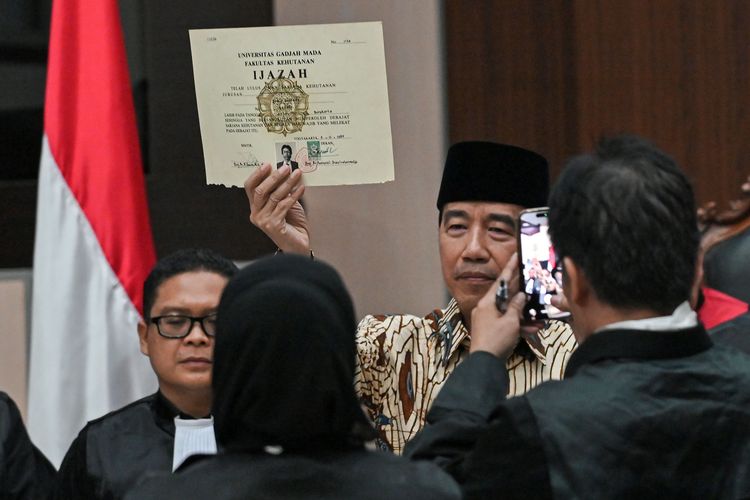
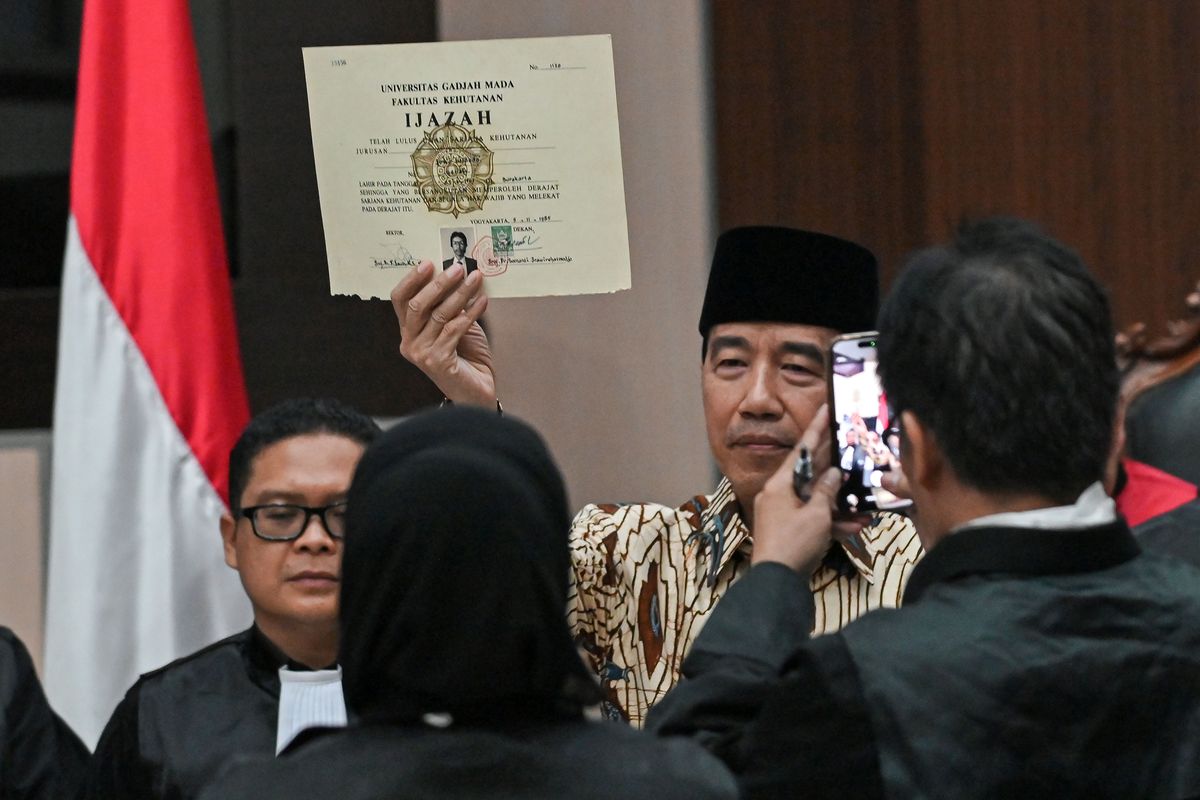
Indonesia's 7th President, Joko Widodo, appeared as a witness in a case involving defamation allegations related to accusations about his diploma.
During the trial, a camera recorded him bending down to pick up and arrange documents that had fallen on the floor.
This moment quickly circulated widely. The official account of the Indonesian Solidarity Party (PSI) posted the photo with the caption, "Who wouldn't be moved by this scene?"
Jokowi's aide, Syarif Muhammad Fitriansyah, also issued an apology for not being quick enough to assist.
He explained that there are rules during the trial that limit movement.
In a short time, a simple gesture transformed into a narrative about humility, resilience, and sacrifice.
Many expressed their emotions, some even crying. What began as an event in a courtroom quickly turned into an emotional spectacle in the public sphere.
We need to pause to examine how this narrative was constructed. Jokowi was undergoing examination as a witness.
There are courtroom protocols, limits on access, and an obligation for everyone to respect the ongoing process.
The explanation from his aide regarding the courtroom rules provided important context.
It is not accurate to conclude that there was unfair treatment just from a photo of someone picking up papers off the floor.
However, the PSI post took that photo into a different realm.
The phrase, "Who wouldn't be moved?" is not a neutral description of an event. It serves as an invitation to feel something.
The public is not just asked to view the photo; they are directed to immerse themselves in the atmosphere of sentimentality.
This choice of words is significant because it comes from an official political party account, rather than just a personal post from a citizen.
We are witnessing how political communication functions through emotion. Not all political messages are conveyed through speeches, press conferences, or official statements.
Some messages are crafted through images, gestures, music, video clips, and short phrases that are easily shareable.
All of these can shape impressions about who is suffering, who deserves support, and who is deemed unfeeling.
In political dramaturgy, an image does not always require lengthy explanations. A single photo can serve as a stage.
A person bending down to pick up documents can be interpreted as a humble figure enduring unpleasant treatment.
Yet, the photo does not capture the entire courtroom atmosphere, does not explain access rules, and does not provide a complete account of what happened before or after.
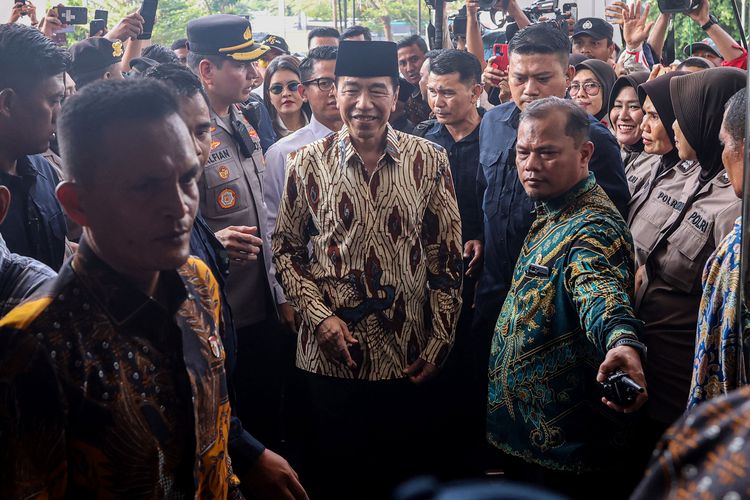 Indonesia's 7th President Joko Widodo (center) arrives to testify in the ongoing defamation case regarding accusations of a fake diploma against defendants Roy Suryo and Tifauzia Tyassuma at the East Jakarta District Court on Thursday (5/11/2026). Indonesia's 7th President Joko Widodo was called as a witness in the trial.
We have no evidence that this scene was staged or deliberately arranged. There is also no reason to doubt the sincerity of those who felt moved.
However, the framing after the photo circulated can be critically examined.
Especially when the entity sharing it is a political organization with interests in shaping an image and connecting with the public.
The challenge in our political awareness is the habit of receiving snippets of events along with prepared interpretations.
Before context can be examined, emotion often takes precedence.
Sympathy can evolve into defensiveness, admiration can morph into loyalty, while those questioning the narrative risk being considered lacking empathy.
In reality, sympathizing with someone does not require us to accept every message attached to them.
Respecting Jokowi as a former president does not mean every move he makes must be interpreted as exemplary.
He is entitled to humane and dignified treatment, just like any citizen involved in legal proceedings.
The courtroom is not a stage to determine who deserves sympathy the most.
The principle of equality before the law demands that social status, past positions, and popularity do not alter how someone undergoes legal processes.
When Jokowi appears as a witness, what should matter are his statements, the evidence presented, and how the process of proof unfolds.
Not how touching a photo is.
We must also ask why public energy is so easily drawn to one scene, while the substance of the matter requires far more serious attention.
The diploma controversy has persisted for years, entangling many parties.
The trial should serve as a space to validate testimonies and evidence, not an arena for sympathy contests.
If public focus continues to shift from substance to image, public debate loses the opportunity to understand issues more clearly.
Politics indeed requires support and trust. However, trust that stems from understanding is different from emotional attachment that leaves no room for questions.
Democracy loses its critical essence when citizens feel compelled to defend someone simply because they appear to be suffering.
Power and the people around it should not be absolved from public scrutiny just because they manage to create a poignant atmosphere.
We do not have to be heartless. People can cry, feel touched, and admire anyone.
But tears do not have the authority to judge a case.
A photo cannot replace facts. Sympathy cannot determine who is right and who is wrong.
The public needs to maintain a distance between what they see and what they believe.
Examine who spreads the images, read the accompanying descriptions, seek the context missing from the frame, and assess events based on facts.
This is not a cynical attitude. It is a mark of political maturity.
Perhaps the measure of democratic maturity lies not only in the freedom to express sympathy but also in the ability to maintain distance from emotionally charged narratives.
We can feel touched, express sympathy, and even cry. However, once the tears dry, rational thought must continue to operate.
Politics should be tested through facts, ideas, and accountability, not through one's ability to evoke sentimentality.
The public has a right to feel sympathy but also a responsibility to think critically.