

Amran Vs Sugiono: Analysts Weigh Public and Elite Acceptability
-
News
-
2 hours ago
This article was translated by AI. Read the original article on Kompas.com. See Original
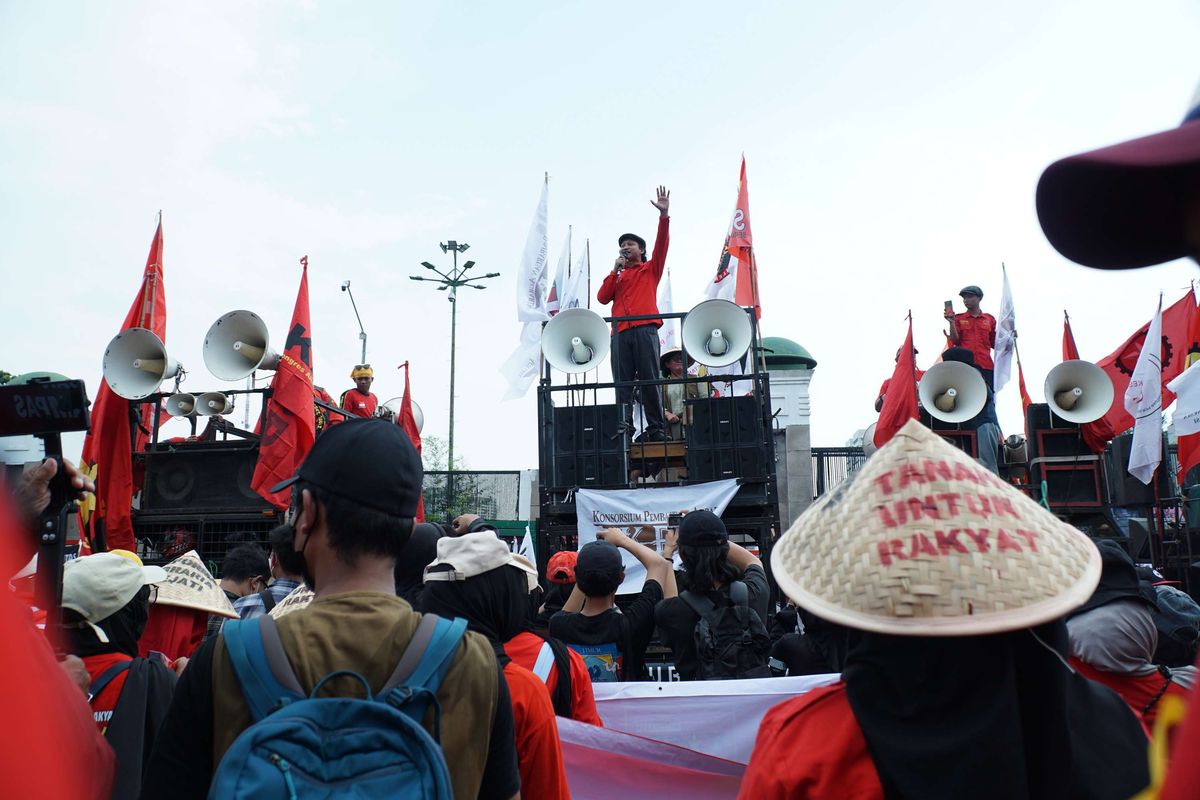
JAKARTA, KOMPAS.com - Law No. 27 of 2026 on Employment Protection stipulates that companies are prohibited from terminating the employment of unionized workers.
This is outlined in Article 230 paragraph (1) of the Employment Protection Law, which prohibits companies from terminating employment for 10 specific reasons, namely:
"Termination of Employment based on the reasons stated in paragraph (1) is null and void, and the Employer must re-employ the affected Worker/Laborer," states Article 230 paragraph (2) of the Employment Protection Law retrieved from the Legal Documentation and Information Network (JDIH) of the State Secretariat on Friday (6/11/2026).
In addition, the Employment Protection Law officially mandates that companies, the government, and trade unions must work to prevent layoffs.
"Employers, Workers/Laborers, Trade Unions, Central and Regional Governments are obliged to make every effort to prevent Termination of Employment," states Article 228 paragraph (1) of the Employment Protection Law retrieved from the JDIH of the State Secretariat on Friday (6/11/2026).
Further, Article 228 paragraph (2) of the Employment Protection Law outlines 10 steps to prevent layoffs, which include:
If layoffs cannot be avoided, terminations must be executed through bipartite negotiations in a consensus between employers and trade unions or the affected workers.
"If the bipartite negotiations mentioned in paragraph (3) do not reach an agreement, the Employer and Workers/Laborers or Trade Unions will resolve the Termination dispute through the process of Industrial Dispute Settlement according to statutory provisions," states Article 228 paragraph (5) of the Employment Protection Law.
"Termination of Employment without an agreement or decision from an Industrial Dispute Settlement body that has permanent legal force renders the Termination null and void, and the Employer must re-employ the affected Worker/Laborer," states Article 228 paragraph (7) of the Employment Protection Law.