
601 Tons of Narcotics Destroyed, Prabowo Says Value Could Fund Renovation of 60,000 Schools
-
News
-
5 minutes ago
This article was translated by AI. Read the original article on Kompas.com. See Original
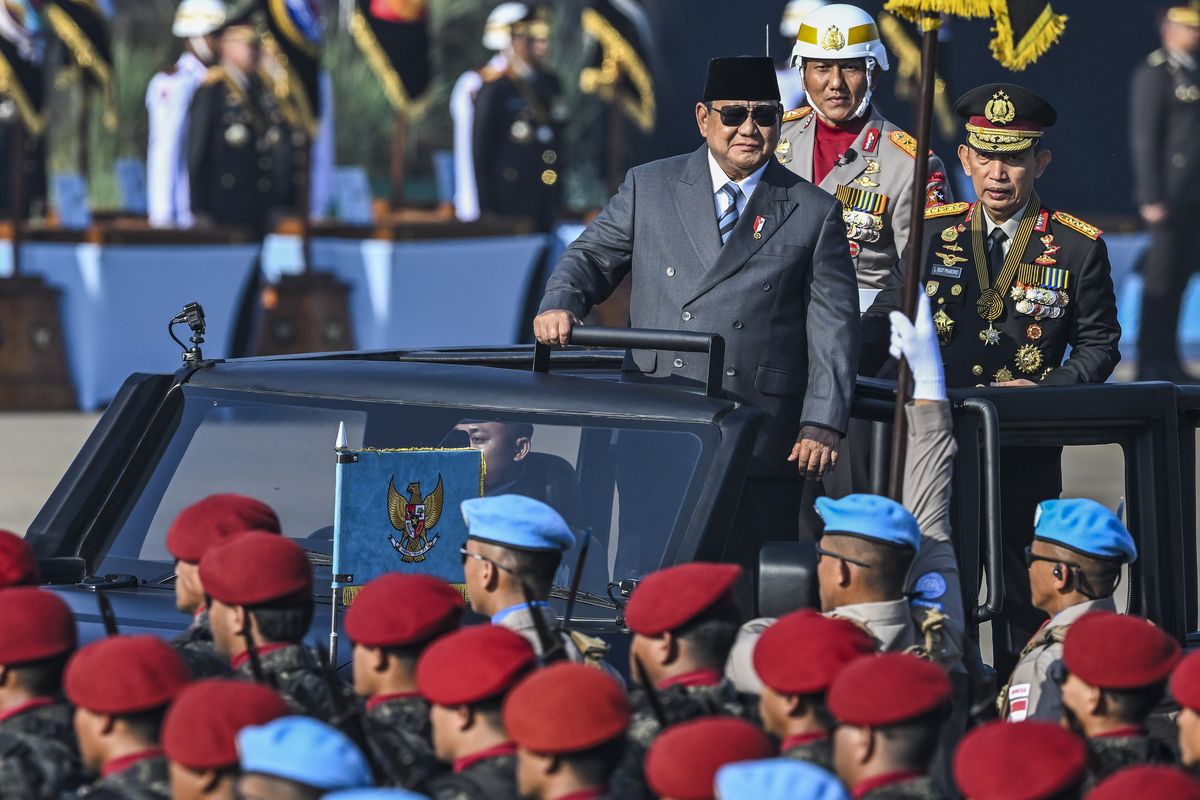
JAKARTA, KOMPAS.com - The eavesdropping on a president goes beyond a violation of privacy; it also poses potential risks to national security and government continuity.
However, can every act of eavesdropping against a head of state be classified as treason?
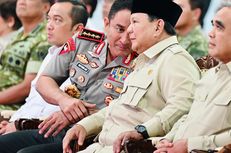
This debate arose after reports of eavesdropping on President Prabowo Subianto, implicating former National Police Chief General Listyo Sigit Prabowo and several high-ranking police officers, were referred to as acts of treason.
Nonetheless, illegal eavesdropping and treason are two offenses that involve different legal elements.
So, where is the line between illegal eavesdropping and treason?
To what extent can acts of eavesdropping against the President fulfill the elements of the treason offense?
Criminal Law Expert from Trisakti University, Abdul Fickar Hadjar, explains that treason fundamentally involves an attempt to seize legitimate power through illegal means.
According to the National Criminal Code (KUHP), treason is categorized into three groups.
First, treason against the President and/or Vice President as stipulated in Article 191 of the KUHP.
Second, treason with the intention to separate from the Unitary State of the Republic of Indonesia (NKRI) as specified in Article 192 of the KUHP.
Third, treason with the intent to overthrow the government as defined in Articles 193 through 195 of the KUHP.
Fickar states that eavesdropping on the President could be categorized as treason if the action aims at incapacitating the President from performing governmental functions.
"Eavesdropping on the President, if intended (as the ultimate goal) to incapacitate the President from governing, could be classified as treason," Fickar told Kompas.com on Thursday (5/11/2026).
According to him, what needs to be examined is not just the act of eavesdropping but also the intent and purpose behind it.
Because eavesdropping conducted to obtain information does not automatically imply a goal to seize or undermine the legitimate power of the government.
"Treason, as explained above, involves the unlawful seizure of legitimate power," he said.
Thus, investigators need to determine whether the eavesdropping on Prabowo is merely an illegal act or part of an effort designed to incapacitate the President.
Professor of Law at Al-Azhar Indonesia University Suparji Ahmad cautions against hastily categorizing this case as treason.
According to Suparji, illegal eavesdropping and treason represent two distinct constructs of crime.
Each has different objectives and actions, as defined in the National KUHP.
"Therefore, the fact that there are allegations of eavesdropping against state officials, including the President, cannot automatically be concluded as treason," Suparji told Kompas.com.
He emphasizes that treason requires proof of a specific intent and actions that meet the criteria specified by law.
"It's not enough to rely solely on the status of the official being eavesdropped on, the identity of the alleged eavesdropper, or the suspected motives circulating in the community," he stated.
Suparji highlights that the case involving Listyo Sigit and two high-ranking police officers relates to allegations of illegal eavesdropping, illegal access to electronic systems, and the deletion of electronic data.
He suggests that these factors should guide public understanding of this case.
"It is inappropriate to frame a case still linked to allegations of eavesdropping into a conclusion that suggests acts of treason have occurred by law enforcement against the state," Suparji remarked.
He believes that such framing of public opinion could not only obscure the substantive aspects of the case but might also foster widespread distrust toward state institutions.
"The Indonesian public has a sensitive historical experience regarding power conflicts, abuse of authority, and threats to governmental stability. Using narratives unsupported by legal facts can rekindle those concerns," he said.
Hence, Suparji urges all parties to be cautious in using the term treason, especially since it carries significant implications for national security.
"Such caution does not mean closing the door on further developments should new evidence come to light later. However, every development of suspicion must be based on solid evidence and fulfillment of criminal elements, not on pressures or speculation circulating in the public space," he stated.
He reminds that in a rule of law context, conclusions regarding an individual's guilt must be established through proof, not prejudice.
Additionally, Fickar underscores the importance of distinguishing illegal eavesdropping from espionage.
He explains that eavesdropping is part of a forceful attempt in enforcing criminal law that requires court approval, similar to searches, seizures, or blocking actions.
"Eavesdropping is part of a law enforcement action that must receive court permission, like other coercive actions (searches, seizures, eavesdropping, blocking, etc.)," Fickar explained.
If eavesdropping is conducted without court permission, it can be classified as illegal.
In contrast, Fickar states that espionage, in simple terms, involves spying.
However, such actions are not always considered a crime if carried out without harming others or public interests.
"If done without harming others (public interests), it can be permissible," he said.
So, what must investigators prove if the alleged eavesdropping on the President is to be developed into a treason charge?
Fickar explains that proof of treason is fundamentally not different from proving other criminal cases.
Investigators must gather mutually corroborative evidence that points to the fulfillment of the elements of the crime.
"As in other criminal cases, proof of treason is done through witness testimonies, expert statements, documentary evidence, including electronic information/documents and the suspect's statements," Fickar noted.
However, he maintains that all evidence must point towards proving an unlawful attempt to seize power.
In other words, proving does not stop at the fact that eavesdropping was carried out on the President without permission.
"It needs to be directed and synchronized toward proving an unlawful seizure of power," he said.
Fickar stresses that if there is sufficient evidence regarding an illegal attempt to seize power, the elements of treason can be proven.
Meanwhile, Suparji reminds that the development of the case must adhere to legal stipulations and should not be influenced by public opinion pressure.
According to him, the use of the term treason must be approached carefully to avoid obscuring the distinction between alleged criminal offenses and acts against the government.
"In a rule of law, conclusions about someone's guilt must be built on proof, not prejudice," Suparji said.