
Lawyer Silmy Karim: Illegal Service Agencies Are a Problem in Immigration Services
-
News
-
2 hours ago
This article was translated by AI. Read the original article on Kompas.com. See Original
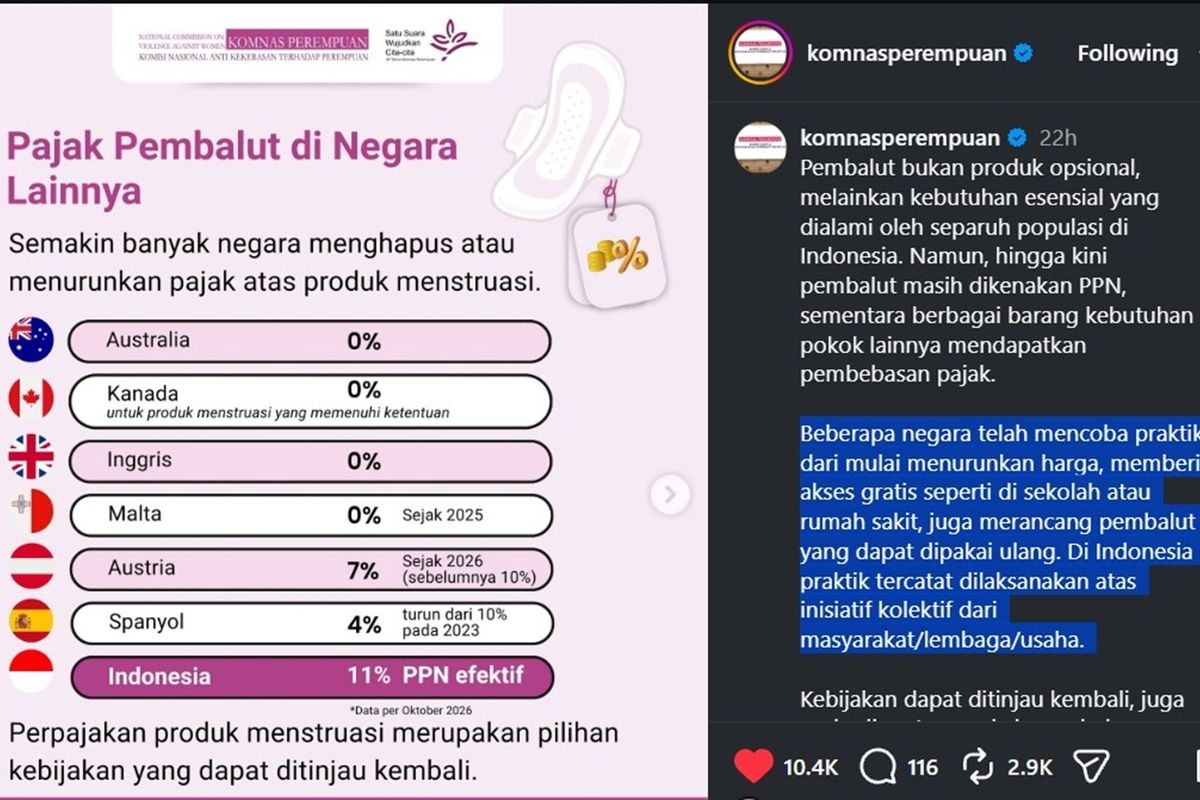
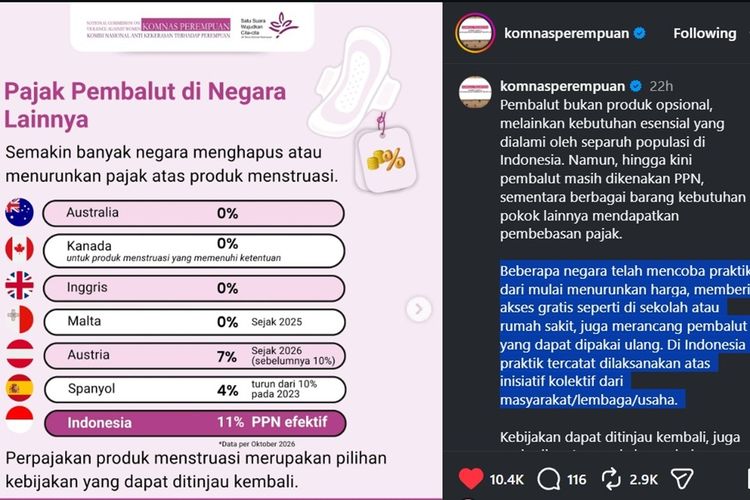
JAKARTA, KOMPAS.com - The petitioners challenging the constitutionality of Law No. 7 of 2021 on Tax Regulation Harmonization (UU HPP) at the Constitutional Court have compared the implementation of Value Added Tax (VAT) on women's sanitary napkins in Indonesia with tax policies in various countries.
This tax comparison serves as an argument for the petitioners that taxation on menstrual sanitation products is a rational fiscal policy option already adopted by several countries.
"The evidence highlights that tax reductions or exemptions are viable policy options worth considering," the petitioners stated, as quoted by the Constitutional Court (MK) on Friday (6/11/2026).
In their filing, the petitioners explained that currently, Indonesia imposes an effective VAT rate of 11 percent on women's sanitary napkins.
This situation contrasts with Malaysia, which reportedly applies a 0 percent sales tax on sanitary napkins, tampons, and panty liners, and Myanmar, which exempts monthly female sanitation products from commercial tax.
Additionally, Vietnam has a lower specific VAT rate of 5 percent for certain medical sanitary napkins.
"Malaysia has a 0 percent sales tax for various menstrual products, while Myanmar exempts female sanitation products for monthly use from commercial tax," the filing specified.
Similarly, Vietnam charges a 5 percent tax rate for certain medical sanitary napkin categories.
However, some Southeast Asian countries, including Singapore, Thailand, Laos, and the Philippines, still impose consumption taxes on sanitary napkins.
This case has been officially registered at the Constitutional Court under number 406/PUU-XXIV/2026 and submitted by an Indonesian citizen named Bernita Matondang.
The articles being challenged include Article 16B paragraph (1a) subparagraph j number 1 and the Explanation of Article 16B paragraph (1a) subparagraph j number 1 of Law No. 7 of 2021 regarding the UU HPP.
The petitioners argue that these provisions violate the right to fair legal certainty, protection from discriminatory treatment, and substantive equality as regulated in Articles 28D paragraph (1), 28I paragraph (2), and 28H paragraph (2) of the 1945 Constitution of the Republic of Indonesia.
In their request, the petitioners urge the Constitutional Court to interpret the contested article so that the determination of essential goods eligible for VAT facilities must objectively, rationally, and proportionally consider essential needs related to human biological processes, including menstrual sanitation products or sanitary napkins.