
DPR Members Demand Polri to Uncover Key Actors in Scam Syndicate in the Philippines Involving 141 Indonesians
-
News
-
1 hour ago
This article was translated by AI. Read the original article on Kompas.com. See Original
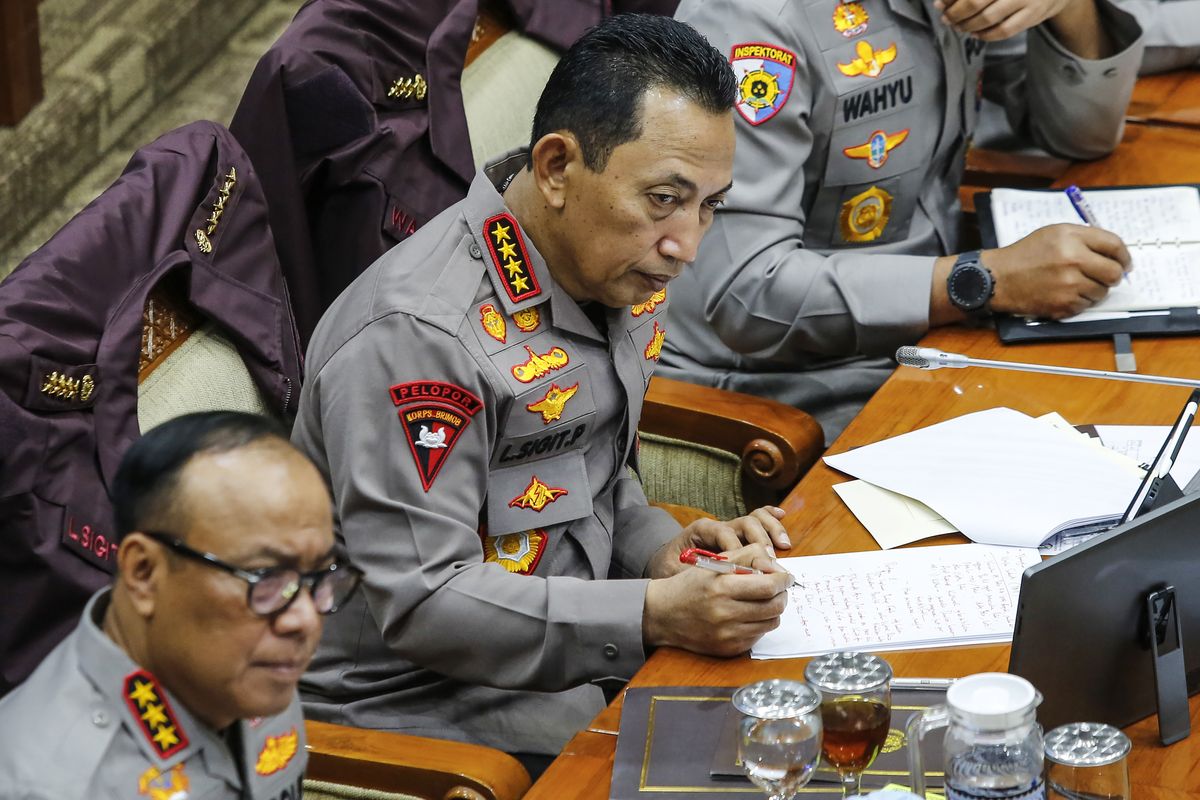
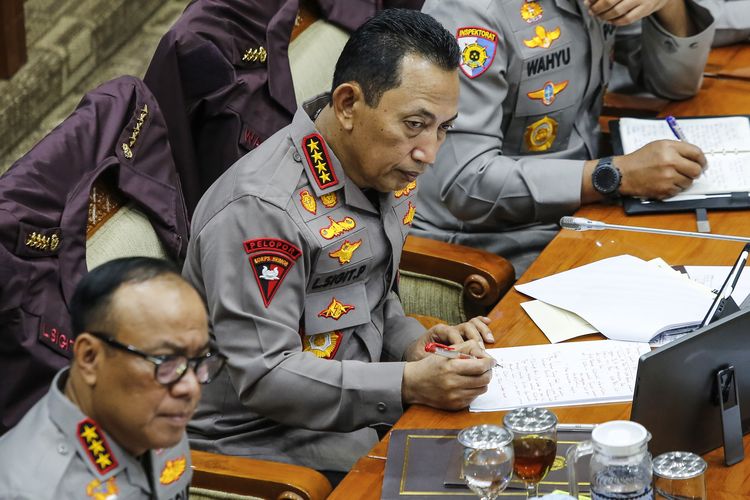
REVELATION of the alleged wiretapping case involving former National Police Chief General Listyo Sigit Prabowo (LSP) and two other suspects raises broader questions.
Could it be that unlawful wiretapping has become a common practice, hidden behind secrecy and the power dynamics within institutions?
This question arises from how the case came to light. According to investigators, an officer aware of the alleged wiretapping and the order to erase the related documents filed a police report on October 30, 2026.
This internal report became the entry point for exposing the case.
What if that officer had not reported? Would this activity have ever come to the public’s attention? Can oversight mechanisms uncover such practices without waiting for someone to bravely disclose what occurs within their own workplace?
This case has not yet proven that arbitrary wiretapping has become customary.
However, the manner of its uncovering provides reason to question the possibility of similar undisclosed practices.
Moreover, according to investigators, the targets of the wiretapping include state officials, political figures, media, community organizations, NGOs, and entrepreneurs. Such concerns surpass the safety of a President's communications.
In the legal struggle, the suspects can certainly present defenses. They may argue that the President, being a citizen, holds the same legal standing as anyone else.
They might also cite reasons of anticipation or law enforcement interest. This could be a line of argument presented by the suspects in court.
Another argument they might raise is that Police Regulation Number 5 of 2010 represents an internal procedure that can be revised by the Police Chief, even by LSP while in office.
However, the possibility of revising the Police Regulation does not absolve the obligation to comply with applicable regulations at the time of the action.
The authority of the Police Chief to wiretap, as permitted by law, does not automatically become unfettered authority without procedures when it comes to tapping anyone.
The President is not above the law and holds the same status in front of the law as other citizens; therefore, in the pursuit of law enforcement, authorities may wiretap him.
Nevertheless, wiretapping must adhere to the established internal procedures. Officials remain legally bound when exercising their wiretapping authority.
The suspects can seek a pre-trial hearing to challenge the legality of the investigators' actions against them. This represents the legal battle dimension.
The political dimension becomes increasingly pronounced as one of the wiretap targets is the President.
According to Coordinating Minister Yusril Ihza Mahendra, President Prabowo learned of the alleged wiretapping through a report from Police Chief General Suyudi Ario Seto.
Politically, this revelation can be interpreted as an opportunity for the new leadership of the National Police, General Suyudi, to reaffirm loyalty to the President while demonstrating control over the institution.
Leadership changes can indeed reshape internal balances. Influential officials may lose control, while subordinates gain space to take a different stance.
Irregularities that were previously difficult to address may now be exposed as protection and loyalty relationships shift.
However, civil society should not have to wait for elite disputes to gain protection.
If the wiretapping of the President can be uncovered through internal reporting, what about ordinary citizens who lack political influence and may not even know that their communications are being monitored?
Two lessons should be drawn.
First, the rationale of “for law enforcement” should not become a catch-all excuse. Every wiretap must have a clear legal basis, accountable purpose, restricted access, and a review mechanism to detect misuse.
Whistleblower protections should empower members of law enforcement institutions to disclose irregularities without waiting for a change in leadership.
Secondly, any leadership change must be accompanied by a thorough restructuring of officials beneath them, including when a President changes.
Changes in strategic positions are warranted to break personal dependencies and prevent the emergence of shadow command lines from former leaders.
The restructuring should be based on integrity, competence, and accountability to ensure that it does not merely replace old loyalist groups with new loyalist ones.
Loyalty must be towards the law, the institution, and legitimate leadership.
Meanwhile, the public deserves assurance that state apparatus is not used to arbitrarily surveil their lives, regardless of who is in power.