
DPR Members Demand Polri to Uncover Key Actors in Scam Syndicate in the Philippines Involving 141 Indonesians
-
News
-
15 minutes ago
This article was translated by AI. Read the original article on Kompas.com. See Original
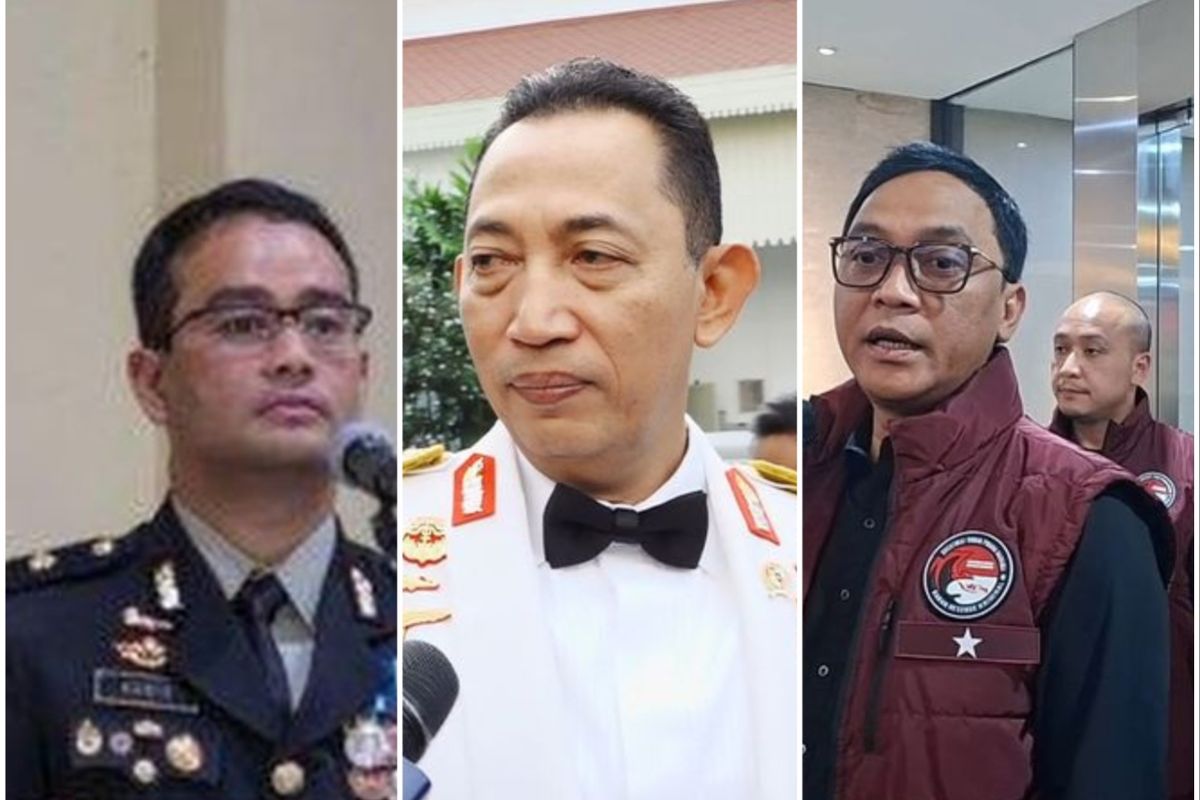
JAKARTA, KOMPAS.com - The case of alleged illegal wiretapping of President Prabowo Subianto involves former National Police Chief General Listyo Sigit Prabowo, who served as the Chief of Presidential Staff after stepping down from leading the police.
Listyo, along with the Head of the Legal Division of the National Police, Inspector General Ahrie Sonta Nasution, and Inspector General Pol Eko Hadi Santoso, has been named a suspect in the case of alleged wiretapping conducted without proper procedures.
The Inspector General of Police, ComGen Asep Edi Suheri, emphasized that the alleged wiretapping was the act of individuals and not a policy of the National Police institution.
He also stated that the Inspectorate General is overseeing the investigation process based on Police Regulation No. 4 of 2025.
So, how serious is the threat of misuse of wiretapping facilities against national security?
How can we ensure that the authority for monitoring and securing communications of state officials does not turn into a tool for controlling information?
Police observer and former Commissioner of the National Police Commission, Poengky Indarti, believes that the allegations of illegal wiretapping against the President and several figures should be thoroughly investigated.
According to her, investigators need to uncover the purpose, motives, and parties suspected of ordering or being involved in such actions.
"The allegations of illegal wiretapping against the President and other figures need serious examination to clarify the motives, who ordered it, who is involved, and so forth," Poengky told Kompas.com on Wednesday (4/11/2026).
She stressed that the investigation process should employ 'scientific crime investigation' methods to ensure valid and accountable results.
Thus, investigators can reveal whether there are specific purposes or motives behind the alleged wiretapping.
However, Poengky reminded that the legal process must still respect the presumption of innocence.
Both suspects and parties being examined retain rights that must be protected.
The potential abuse of wiretapping authority, according to Poengky, can arise when significant authority is not matched by adequate oversight.
"I see everyone’s authority could be abused if there is an opportunity and no oversight," she stated.
Therefore, she reminded that wiretapping for law enforcement purposes by the police has regulations and guidelines, including the obligation to obtain permission.
"If violated, there are certainly legal sanctions. To prevent it from happening again, strict oversight and law enforcement must be implemented," said Poengky.
Police analyst from the Institute for Security and Strategic Studies (ISESS), Bambang Rukminto, asserts that the allegations of illegal wiretapping are not just a common criminal matter.
This issue touches on how the state controls the authority of its apparatus so that it does not become a tool for power abuse.
Bambang relates the phenomenon of surveillance to the concept of "panopticism" introduced by philosopher Michel Foucault.
This concept illustrates how surveillance can create fear, leading individuals to restrain their behavior because they feel constantly monitored.
Bambang explained that if illegal wiretapping is indeed conducted against state officials, journalists, activists, and civil society, the repercussions extend beyond a violation of privacy.
"It could create a chilling effect on freedom of expression and democratic participation," Bambang remarked in his statement on Wednesday.
He noted that such conditions are dangerous as society may feel they lack private space for communication, expressing criticism, or sharing opinions.
Bambang also reminded that police power needs to be bound by law and democratic control mechanisms.
He referenced Mark Neocleous' thoughts on the potential evolution of police functions from law enforcement to instruments of societal regulation and control.
"Ironically, the institution that should protect society could become a threat to rights if its powers are unchecked," he said.
For this reason, the allegations of wiretapping against the President and several others should be viewed in the context of controlling the authority of the apparatus.
The issue is not merely the use of wiretapping technology but the limits and oversight of those who have access to use it.
The potential for wiretapping of state officials does not only stem from the abuse of authority by domestic apparatus.
Foreign threats also deserve attention, especially since communications of heads of state and strategic officials may contain vital information for national interests.
Poengky reminded that Indonesia has previously faced a wiretapping case involving the sixth President, Susilo Bambang Yudhoyono (SBY), by Australia.
"The potential for illegal wiretapping, both from within and outside the country, always exists. We still remember when President SBY was wiretapped by Australia," Poengky said.
According to her, the institutions tasked with safeguarding the communications of state officials must ensure that illegal wiretapping does not occur.
In this context, securing communications for state officials is not sufficient if it solely relies on physical protection.
Security also needs to consider the confidentiality of communications, use of devices, and potential access by unauthorized parties.
The Presidential Security Forces (Paspampres) play a primary role in the physical security of the President and Vice President.
Meanwhile, communication protection and handling intelligence threats involve functions and powers of related agencies.
Therefore, inter-agency coordination is needed to ensure protection for heads of state covers both physical and strategic information aspects.
Bambang believes that the case of alleged illegal wiretapping underscores the urgency for a specific wiretapping law.
So far, regulations on wiretapping are scattered across various sectoral laws, requiring harmonization to prevent loopholes for authority abuse.
"The Wiretapping Bill must regulate independent authorization, restrictions on targets and durations of tapping, audit technology, unmanipulatable recording of activities, and mechanisms for complaints and restitution for victims," Bambang outlined.
He also emphasized the importance of judicial oversight in the wiretapping mechanism.
According to him, oversight should not be entirely delegated to institutions conducting the wiretapping.
"Because the fundamental issue is how to ensure that the party with the authority to oversee does not abuse its own authority," Bambang said.
With more comprehensive regulations, the mechanisms for granting permissions, setting limitations, durations, and monitoring of wiretapping are expected to have clear standards.
This is also essential to ensure that any use of authority can be audited and accounted for.
Bambang also links this case to the agenda for Police Reform.
According to him, police improvement should not only target the behavior of members in the field, such as illegal levies, excessive violence, abuse of investigative power, and poor public service.
Reform, he says, must also address governance of power at the highest levels, including oversight and accountability mechanisms for officials with significant authority.
"The replacement of the police chief, officer rotations, structural changes, and launching new programs do not automatically produce reform if the mechanisms for oversight and accountability remain weak," Bambang stated.
He reminded that handling cases involving former high-ranking police officials needs to be a test of applying the principle of equality before the law.
The legal process should not turn into conflicts between internal groups or halt due to power interests.
"This case must serve as a moment to test whether the police genuinely adhere to the principle of equality before the law," he wrote.
Meanwhile, Poengky views the exposure of this alleged illegal wiretapping case as an opportunity to strengthen Police Reform.
Significant public oversight of the police institution, according to her, should be accompanied by a commitment to fulfill duties in accordance with regulations.