
DPR Members Demand Polri to Uncover Key Actors in Scam Syndicate in the Philippines Involving 141 Indonesians
-
News
-
58 minutes ago
This article was translated by AI. Read the original article on Kompas.com. See Original
JAKARTA, KOMPAS.com - The wiretapping case involving President Prabowo Subianto allegedly carried out by former National Police Chief General Listyo Sigit Prabowo and two other senior officers has shocked the public.
This incident is particularly concerning as wiretapping, typically reserved for individuals suspected of criminal activity, has now been turned against the highest-ranking official in the Republic.
Not only the president, but Listyo Sigit and his colleagues have also targeted political party leaders, community organizations, non-governmental organizations, the media, and business figures.
This raises the question: how can the state protect the privacy of ordinary citizens if even someone of the president's stature can become a wiretap victim?
Professor of Law at Al-Azhar University Indonesia Suparji Ahmad noted that wiretapping by law enforcement must not be conducted recklessly, as it is closely tied to an individual's privacy.
"The authority to conduct wiretaps is essentially a special law enforcement instrument, as it directly relates to the privacy rights and communication protection of citizens," Suparji told Kompas.com on Wednesday (November 4, 2026).
He emphasized that any actions by state officials, including law enforcement, must have a legitimate legal basis and be conducted in accordance with applicable laws.
Thus, wiretapping cannot be performed arbitrarily based on personal desires or interests outside the realm of law enforcement.
This provision is actually stated in Article 258 of Law Number 1 of 2023 concerning the Criminal Code, which regulates the crime of unlawful wiretapping of electronic information transmissions or documents that are not public.
"This provision establishes that actions of wiretapping without a valid legal basis may result in criminal liability," Suparji explained.
This article states that individuals who illegally record or wiretap may face a maximum prison sentence of 10 years.
However, applying criminal provisions cannot be done automatically simply because procedural violations are found, including in the case where Listyo Sigit is alleged to have wiretapped Prabowo.
Investigators must still prove the elements of the alleged crime, including the nature of the act, the unlawfulness involved, and the responsibility of each party.
Additionally, the application of law must also consider the time of the act, as the National Criminal Code just went into effect on January 2, 2026, while the alleged wiretapping is said to have occurred since 2025.
Therefore, the determination of criminal provisions must take into account the principle of legality and regulations regarding changes in criminal law.
Within the National Police, the wiretapping procedures are regulated under Regulation Number 5 of 2010 concerning the Procedures for Wiretapping by the Indonesian National Police Monitoring Center.
This regulation encompasses principles of legality, human rights protection, legal certainty, as well as procedures and oversight for wiretapping.
"Based on this regulation, wiretapping is not an authority that can be freely exercised based on personal desires or interests outside law enforcement," Suparji stated.
Thus, the authority to wiretap should be used in accordance with legally justified purposes; positions or access to communication monitoring devices do not automatically grant anyone the right to determine wiretap targets.
From a cybersecurity perspective, Pratama Persadha, Chairman of the Indonesian Cyber Security Research Institute (CISSReC), explained that wiretapping is also related to the governance of the technology systems used by law enforcement.
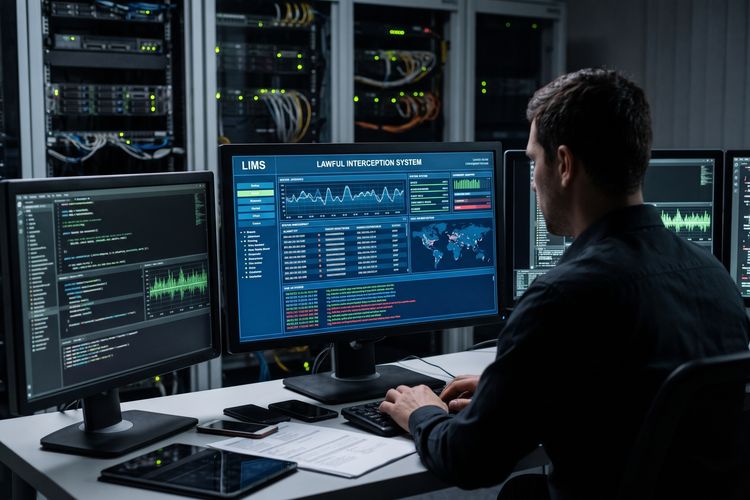
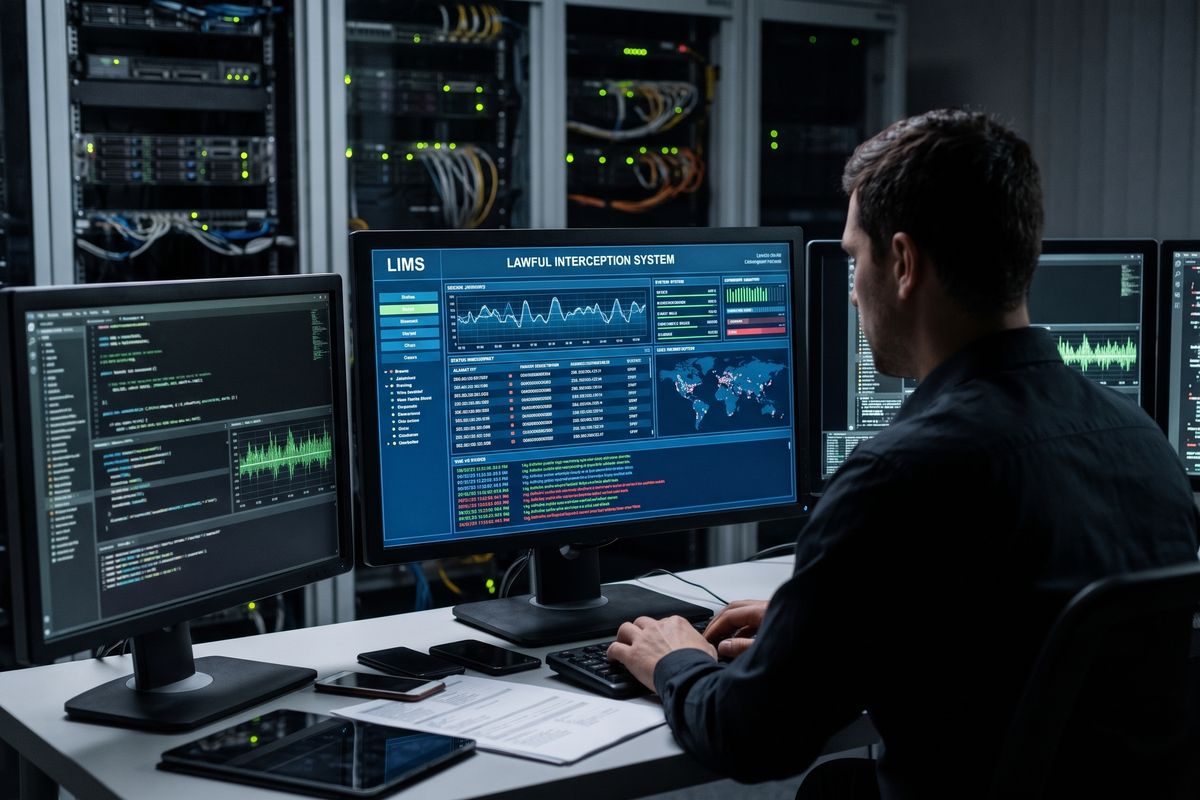
According to a statement from the Criminal Investigation Unit of the National Police on November 3, 2026, several phone numbers were allegedly entered into the Lawful Interception Management System (LIMS) server without proper verification or legal basis for investigation.
LIMS is a platform that connects law enforcement wiretapping needs with telecommunications operator infrastructure.
This system forwards interception instructions to the operator’s network and then copies the target communication to the authorized monitoring center.
The information obtained can include communication content, such as telephone conversations, as well as metadata, including interlocutor numbers, time, duration, and communication patterns.
However, access to communication content depends on the type of service and encryption systems used.
Communications with end-to-end encryption cannot automatically be read just because interception is executed through the operator's network.
Pratama explained that the use of wiretapping systems must be accompanied by access controls, authorization mechanisms, and proper oversight.
"The greatest issue with surveillance technology is not the sophistication of the equipment, but how the authority to operate that equipment is granted, controlled, and monitored," Pratama stated in his remarks on Wednesday.
According to him, several aspects must be considered to prevent misuse of the wiretapping system.
First, limit access rights. The authority to input targets, approve requests, conduct wiretaps, and manage the results should not rest with a single person.
Second, layered verification. Every wiretap target must have a legal basis, application documents, case identity, and official approval from authorized officials.
Third, logging activity or audit trails. Every activity in the system, from number additions, configuration changes, wiretap activation to result retrieval, must be recorded automatically and be resistant to manipulation.
Fourth, independent periodic supervision to ensure all wiretap activities adhere to procedures.
Pratama assessed that misuse of the system can occur when oversight is solely dependent on administrative compliance and the integrity of individuals with access.
Pratama added that oversight of the wiretapping system cannot rely solely on written rules but must also be supported by technical controls to prevent misuse by those with access.
One crucial aspect to note is the separation of authority between system administrators, those who grant approvals, and wiretap implementers.
Additionally, system activity logs should be stored in separate infrastructure so they cannot be easily altered or deleted by those with access to the main server.
Pratama also highlighted the alleged deletion of wiretap results files involving Prabowo and others by Listyo Sigit and his team.
"If true, this deletion was meant to destroy evidence, then it would jeopardize not only the wiretap authority but the integrity of the electronic evidence," Pratama remarked.
He noted that this allegation needs to be investigated through the examination of server logs, administrator account activity, network configurations, and recordings of communications between LIMS and the telecommunications operators.
He also suggested a comprehensive audit of all wiretapping equipment owned by the authorized institutions in Indonesia.
"The urgent first step is a thorough audit of all wiretapping equipment possessed by the authorized institutions in Indonesia," Pratama stated.
This audit should cover device mapping, the parties with operational authority, target determination mechanisms, approval processes, and the recording of all wiretap activities.
Pratama emphasized that the surveillance system must also be capable of preventing misuse from within the organization, or insider threats.
"Threats do not always come from external hackers. Threats can also arise from within the organization, from those who have legitimacy and authority over the system," he stated.